
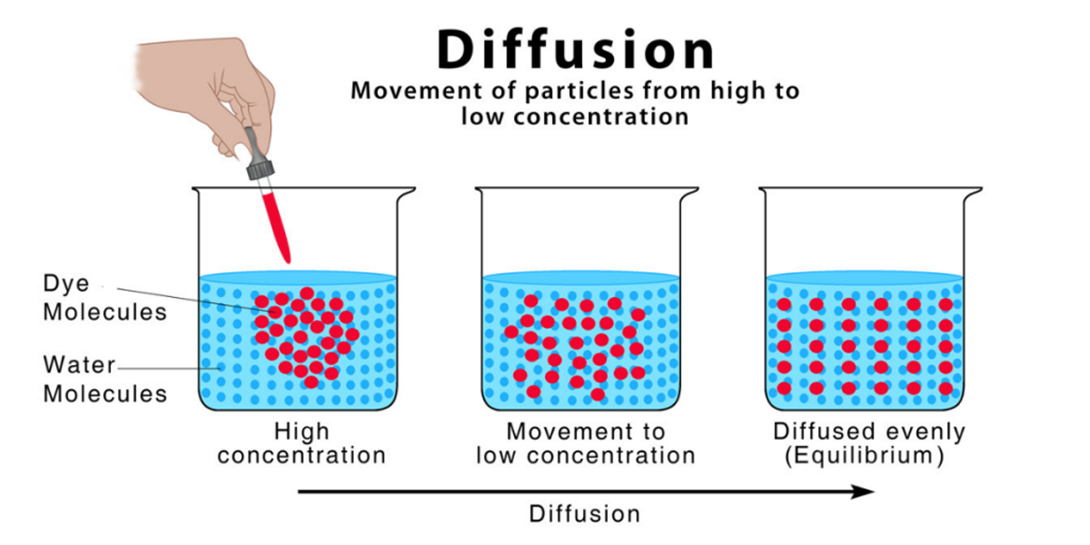
The nurse is aware that small ions such as glucose, oxygen, and carbon dioxide redistribute themselves through semipermeable membranes by a process called
The Correct Answer is {"dropdown-group-1":"A"}
Choice A reason: Diffusion is the process by which small ions such as glucose, oxygen, and carbon dioxide redistribute themselves through semipermeable membranes from areas of higher concentration to areas of lower concentration. This is how these molecules move across the cell membrane and the capillary wall.
Choice B reason: Osmosis is the process by which water moves through semipermeable membranes from areas of lower solute concentration to areas of higher solute concentration. This is how water balance is maintained across the cell membrane and the capillary wall.
Choice C reason: Blood pressure is the force exerted by the blood on the walls of the blood vessels. It is not a process by which small ions redistribute themselves through semipermeable membranes, but rather a factor that influences the movement of fluids and solutes across the capillary wall.
Choice D reason: Rehydration is the process of restoring the fluid balance in the body by drinking fluids or receiving intravenous fluids. It is not a process by which small ions redistribute themselves through semipermeable membranes, but rather a treatment for dehydration.
Nursing Test Bank
Naxlex Comprehensive Predictor Exams
Related Questions
Correct Answer is C
Explanation
Choice A reason: This is incorrect because diffusion is the movement of solutes (dissolved substances) from an area of higher concentration to an area of lower concentration, until equilibrium is reached.
Choice B reason: This is incorrect because hydrostatic pressure is the force exerted by a fluid against a wall or a membrane. Hydrostatic pressure can drive the movement of fluid and solutes across a membrane, but it is not the movement itself.
Choice C reason: This is correct because osmosis is the movement of a pure solvent (liquid) across a semipermeable membrane from an area of lower solute concentration to an area of higher solute concentration, until equilibrium is reached.
Choice D reason: This is incorrect because ATP is not a movement, but a molecule. ATP stands for adenosine triphosphate, which is the main source of energy for cellular processes. ATP can provide energy for some types of transport across membranes, such as active transport.
Correct Answer is B
Explanation
Choice A reason: Moist skin is not a sign of dehydration, but rather a sign of adequate hydration or sweating. Dehydration can cause dry skin, mucous membranes, and lips.
Choice B reason: Dark-colored urine is a sign of dehydration, as it indicates a high concentration of waste products and a low volume of water in the urine. Dehydration can cause the kidneys to conserve water and produce less urine.
Choice C reason: High blood pressure is not a sign of dehydration, but rather a sign of fluid overload or other factors such as stress, pain, or medication. Dehydration can cause low blood pressure, as it reduces the blood volume and the cardiac output.
Choice D reason: Distended neck veins are not a sign of dehydration, but rather a sign of fluid overload or right-sided heart failure. Dehydration can cause flat neck veins, as it reduces the venous return and the central venous pressure.
Whether you are a student looking to ace your exams or a practicing nurse seeking to enhance your expertise , our nursing education contents will empower you with the confidence and competence to make a difference in the lives of patients and become a respected leader in the healthcare field.
Visit Naxlex, invest in your future and unlock endless possibilities with our unparalleled nursing education contents today