
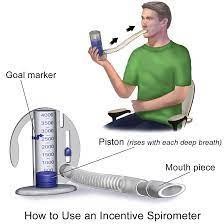
The nurse knows that teaching about the use of the spirometer incentive is effective when the client seals the lips around the mouthpiece and:
inhales slowly to raise the ball to the desired level, and attempts to keep the ball raised for several seconds
blows into the mouthpiece with a long slow expiration to keep the ball at the base of the spirometer.
begins breathing with a rapid, forceful inspiration to raise the ball as high as possible.
exhales slowly to raise the ball to the desired level, and quickly inhales to raise the ball again.
The Correct Answer is A
Choice A rationale: Inhaling slowly to raise the ball to the desired level and attempting to keep the ball raised for several seconds is the correct technique for using an incentive spirometer.
Choice B rationale: Blowing into the mouthpiece with a long slow expiration is not the correct technique for using an incentive spirometer.
Choice C rationale: Beginning breathing with a rapid, forceful inspiration is not the recommended technique for using an incentive spirometer.
Choice D rationale: Exhaling slowly to raise the ball and quickly inhaling is not the correct technique for using an incentive spirometer.
Nursing Test Bank
Naxlex Comprehensive Predictor Exams
Related Questions
Correct Answer is A
Explanation
Choice A rationale: A serum magnesium level of 1.8 mEq/L is lower than the normal range and can be associated with alcohol withdrawal.
Choice B rationale: Potassium level within the normal range is not specifically indicative of alcohol withdrawal.
Choice C rationale: Calcium level within the normal range is not specifically indicative of alcohol withdrawal.
Choice D rationale: Phosphorus level within the normal range is not specifically indicative of alcohol withdrawal.
Correct Answer is B
Explanation
Choice A rationale: Reading previous documentation provides historical information but may not reflect the current level of dyspnea.
Choice B rationale: Observing the client at rest and during activity is the best way to assess the current level of dyspnea.
Choice C rationale: Asking if shortness of breath is being experienced provides subjective information but may not be as reliable as direct observation.
Choice D rationale: Auscultating lung sounds is important for assessing respiratory function but may not provide a comprehensive picture of dyspnea.
Whether you are a student looking to ace your exams or a practicing nurse seeking to enhance your expertise , our nursing education contents will empower you with the confidence and competence to make a difference in the lives of patients and become a respected leader in the healthcare field.
Visit Naxlex, invest in your future and unlock endless possibilities with our unparalleled nursing education contents today