
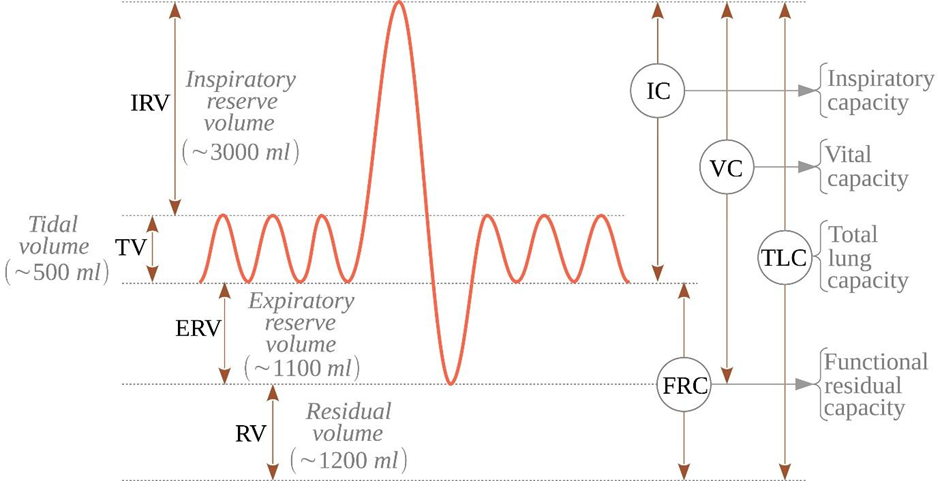
The vital capacity is equal to the sum of the:
inspiratory capacity and the residual volume.
inspiratory reserve volume, tidal volume, and expiratory reserve volume.
tidal volume, residual volume, and expiratory reserve volume.
inspiratory reserve volume, tidal volume, and inspiratory capacity.
The Correct Answer is B
A. inspiratory capacity and the residual volume: Residual volume cannot be exhaled and is therefore not part of vital capacity.
B. inspiratory reserve volume, tidal volume, and expiratory reserve volume: Vital Capacity (VC) is the maximum amount of air a person can expel from the lungs after maximum inhalation.
C. tidal volume, residual volume, and expiratory reserve volume: This is incorrect because it includes residual volume (air that stays in the lungs) and excludes inspiratory reserve.
D. inspiratory reserve volume, tidal volume, and inspiratory capacity: This is incorrect because inspiratory capacity already includes tidal volume, making the calculation redundant and incomplete.
Nursing Test Bank
Naxlex Comprehensive Predictor Exams
Related Questions
Correct Answer is B
Explanation
A. Forms glands: This is a core function of glandular epithelium (endocrine and exocrine).
B. Is important in communication and control: This is the primary characteristic of nervous tissue, not epithelial tissue.
C. Covers and protects body surfaces: This is the primary role of surface epithelium (like the skin).
D. Lines the interior of body cavities: This is the role of the endothelium and mesothelium, which are epithelial in nature.
Correct Answer is B
Explanation
A. inspiration occurs: Inspiration happens when intrapulmonary pressure is lower than atmospheric pressure, drawing air in.
B. expiration occurs: According to Boyle's Law, air moves from areas of high pressure to low pressure. If the pressure inside the lungs is higher than the outside air, air is forced out.
C. lung tissue has collapsed: A collapsed lung (pneumothorax) occurs when the pressure in the pleural space equals atmospheric pressure, not necessarily when lung pressure is higher.
D. the bronchioles are obstructed: Obstruction changes resistance to airflow, but the pressure gradient itself is what defines the phase of breathing.
Whether you are a student looking to ace your exams or a practicing nurse seeking to enhance your expertise , our nursing education contents will empower you with the confidence and competence to make a difference in the lives of patients and become a respected leader in the healthcare field.
Visit Naxlex, invest in your future and unlock endless possibilities with our unparalleled nursing education contents today