
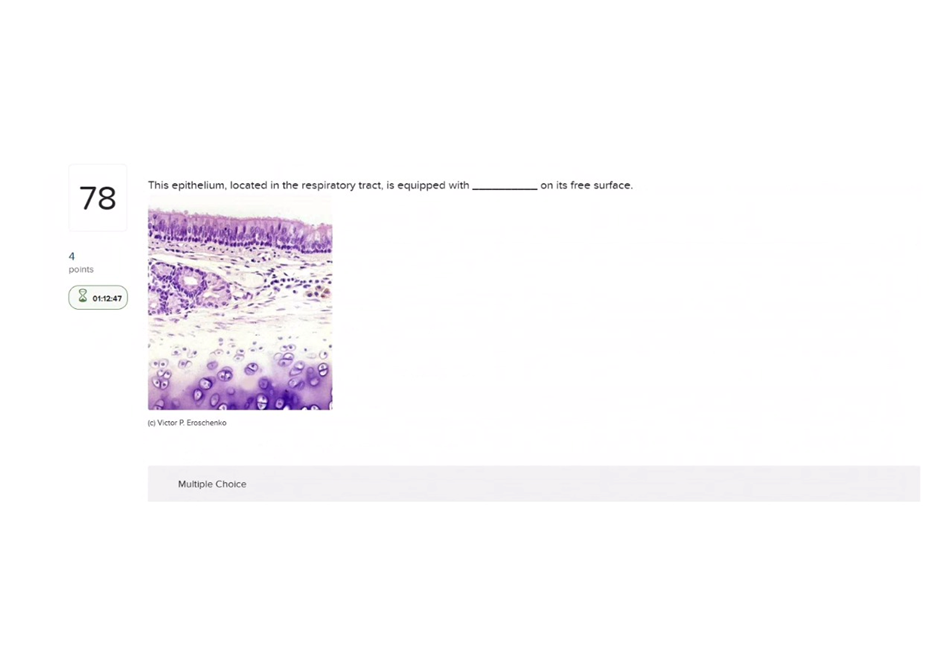
This epithelium, located in the respiratory tract, is equipped with
The Correct Answer is {"dropdown-group-1":"B"}
A. Microvilli: Microvilli increase surface area for absorption (common in intestines), not the hallmark of respiratory epithelium
B. Cilia: Respiratory epithelium (pseudostratified ciliated columnar) is equipped with cilia on its free surface to move mucus and trapped particles
C. Keratin: Keratinization occurs in skin epithelium (protective), not in the typical respiratory lining
D. Desmosomes: Desmosomes are cell junctions found in many epithelia but the question asks about free-surface specializations; cilia are the functional free-surface structures in respiratory epithelium
Nursing Test Bank
Naxlex Comprehensive Predictor Exams
Related Questions
Correct Answer is C
Explanation
A. Bronchomediastinal duct and subclavian duct: bronchomediastinal and subclavian are lymphatic trunks, not the two major collecting ducts.
B. Right and left thoracic ducts: there is a single thoracic duct (left-sided) and a separate right lymphatic duct; we do not have distinct “right and left thoracic ducts.”
C. Thoracic duct and right lymphatic duct: the thoracic duct drains most of the body into the left subclavian vein, and the right lymphatic duct drains the right head/neck, right upper limb, and right thorax into the right subclavian vein.
D. Lumbar duct and left lymphatic duct: “lumbar duct” is not a collecting duct term used in this context, and “left lymphatic duct” is another name sometimes used for the thoracic duct but paired with “lumbar duct” is not the standard two-collector pair.
Correct Answer is {"dropdown-group-1":"B","dropdown-group-2":"B"}
Explanation
A. lipase; lipids: lingual lipase (from tongue) begins lipid digestion, but major salivary secretion is amylase, not lipase.
B. amylase; carbohydrates: salivary (ptyalin) amylase begins digestion of starches (carbohydrates) into smaller sugars.
C. pepsin; proteins: pepsin is secreted as pepsinogen by the stomach, not salivary glands.
D. sucrase; sucrose: sucrase is a brush-border (intestinal) enzyme, not a major salivary gland secretion.
Whether you are a student looking to ace your exams or a practicing nurse seeking to enhance your expertise , our nursing education contents will empower you with the confidence and competence to make a difference in the lives of patients and become a respected leader in the healthcare field.
Visit Naxlex, invest in your future and unlock endless possibilities with our unparalleled nursing education contents today