
What is the most likely rhythm interpretation?
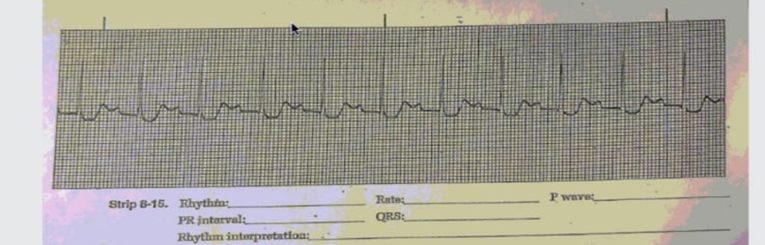
Second-degree AV block
First-degree AV block
Atrial fibrillation
Atrial flutter
The Correct Answer is B
Rhythm: Sinus, regular
Rate: 100 b/min
P wave: Present, normal
PR interval: Prolonged, 0.28 seconds
QRS: Narrow, 0.08 seconds
Rhythm interpretation: First degree AV block
Nursing Test Bank
Naxlex Comprehensive Predictor Exams
Related Questions
Correct Answer is ["A","B","E"]
Explanation
A. Rapid saline flush following administration: Adenosine has an extremely short half-life (less than 10 seconds), so a rapid saline flush immediately after the IV push is essential to ensure the medication reaches the heart quickly. This enhances its effectiveness in terminating SVT by transiently blocking AV nodal conduction.
B. Rapid IV push administration: Adenosine must be administered as a rapid IV bolus, ideally through a proximal vein, to achieve immediate therapeutic effect. Slow administration can reduce its efficacy because the drug is metabolized almost immediately by the vascular endothelium and lungs.
C. Initial recommended dosage of 12 mg IV bolus: The initial recommended dose for adenosine is typically 6 mg IV push, not 12 mg. The dose may be increased to 12 mg if the first dose is ineffective. Administering 12 mg initially is higher than standard protocol and could increase the risk of transient adverse effects.
D. Long half-life of adenosine, which may prolong adverse medication effects: Adenosine actually has a very short half-life (less than 10 seconds), so adverse effects are brief and self-limiting. It does not have a prolonged effect, making this statement inaccurate.
E. Constant EKG monitoring: Continuous ECG monitoring is critical during adenosine administration because transient asystole or AV block may occur. Monitoring allows the nurse to immediately identify arrhythmia termination or adverse effects, ensuring patient safety throughout the intervention.
Correct Answer is D
Explanation
A. Restrict the client's fluid intake: After cardiac catheterization, maintaining adequate hydration is important to help flush contrast dye from the kidneys and prevent contrast-induced nephropathy. Fluid restriction is generally not indicated unless the patient has a specific condition such as heart failure or renal failure.
B. Instruct the client to perform range-of-motion exercises to his lower extremities: After femoral artery catheterization, the affected leg should remain straight and immobile for several hours to prevent bleeding, hematoma, or arterial compromise. Early movement or exercises could dislodge the arterial closure site and cause complications.
C. Ambulate the client 1 hr following the procedure: Early ambulation increases the risk of bleeding and hematoma formation at the femoral access site. Standard post-catheterization protocols typically require several hours of bed rest with the leg kept straight before gradual ambulation, depending on the closure technique used.
D. Perform neurovascular checks with vital signs: Neurovascular assessments, including pulse, color, temperature, capillary refill, and sensation in the affected extremity, are critical after femoral artery catheterization. Frequent vital signs and site checks help detect early complications such as bleeding, hematoma, thrombosis, or impaired perfusion.
Whether you are a student looking to ace your exams or a practicing nurse seeking to enhance your expertise , our nursing education contents will empower you with the confidence and competence to make a difference in the lives of patients and become a respected leader in the healthcare field.
Visit Naxlex, invest in your future and unlock endless possibilities with our unparalleled nursing education contents today