
What is the most likely rhythm shown in this ECG strip?
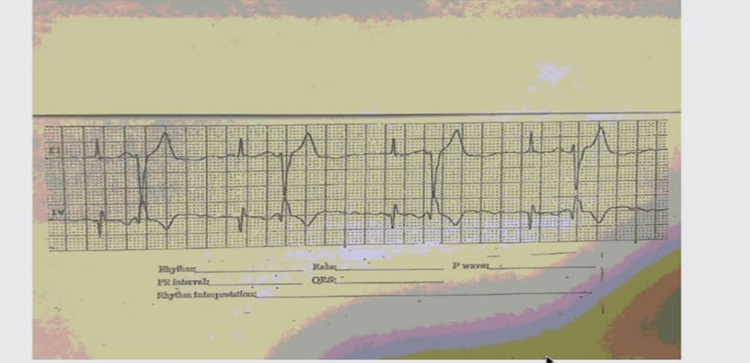
Sinus rhythm with ventricular Bigeminy
Atrial fibrillation
Ventricular tachycardia
Complete heart block
The Correct Answer is A
Rhythm: Irregular
Rate:80 b/min
P wave: Present before narrow complexes, absent before premature complexes
PR interval: Normal 0.16 seconds
QRS: Short, others wide 0.12 seconds
Rhythm interpretation: Normal sinus rhythm with ventricular Bigeminy
Nursing Test Bank
Naxlex Comprehensive Predictor Exams
Related Questions
Correct Answer is A
Explanation
A. "These tests help determine the degree of damage to the heart tissues.": Cardiac enzyme studies, such as troponin and creatine kinase-MB (CK-MB), are released into the bloodstream when myocardial cells are damaged. Measuring these enzyme levels helps quantify the extent of myocardial injury following an acute MI and guides treatment decisions and prognosis.
B. "Cardiac enzymes will identify the location of the MI.": Cardiac enzymes indicate that myocardial damage has occurred but do not provide information about the precise location of the infarction. Imaging studies, such as echocardiography or angiography, are needed to localize the affected area.
C. "Cardiac enzymes assist in diagnosing the presence of pulmonary congestion.": Pulmonary congestion is a sign of heart failure or fluid overload, not directly indicated by cardiac enzyme levels. Pulmonary status is assessed through clinical examination, chest X-ray, or hemodynamic monitoring.
D. "These tests will enable the provider to determine the heart structure and mobility of the heart valves.": Enzyme studies do not provide information about heart anatomy or valve function. Structural assessment requires echocardiography or other imaging modalities, which are separate from biochemical markers of myocardial injury.
Correct Answer is B
Explanation
A. Bundle branch block: A bundle branch block is a conduction delay in the ventricular pathways, which affects the QRS complex but does not itself cause tachyarrhythmias. Amiodarone is not indicated for isolated bundle branch block and would not correct this conduction abnormality.
B. Ventricular tachycardia: Amiodarone is a class III antiarrhythmic used to treat life-threatening ventricular arrhythmias, including sustained ventricular tachycardia and ventricular fibrillation. It works by prolonging the action potential and refractory period, stabilizing the myocardium and reducing the likelihood of recurrent episodes.
C. Junctional rhythm: Junctional rhythms originate from the AV node, typically with a slow rate. These rhythms are generally not treated with amiodarone unless they are associated with other dangerous arrhythmias. Junctional rhythms are usually managed based on rate and hemodynamic stability.
D. Sinus bradycardia: Sinus bradycardia is characterized by a slow but regular heart rhythm originating from the SA node. Amiodarone can actually worsen bradycardia and is not indicated for this rhythm. Management typically involves observation or medications such as atropine if symptomatic.
Whether you are a student looking to ace your exams or a practicing nurse seeking to enhance your expertise , our nursing education contents will empower you with the confidence and competence to make a difference in the lives of patients and become a respected leader in the healthcare field.
Visit Naxlex, invest in your future and unlock endless possibilities with our unparalleled nursing education contents today