
Which of the following describes a closed traumatic brain injury?
Injury from chemicals
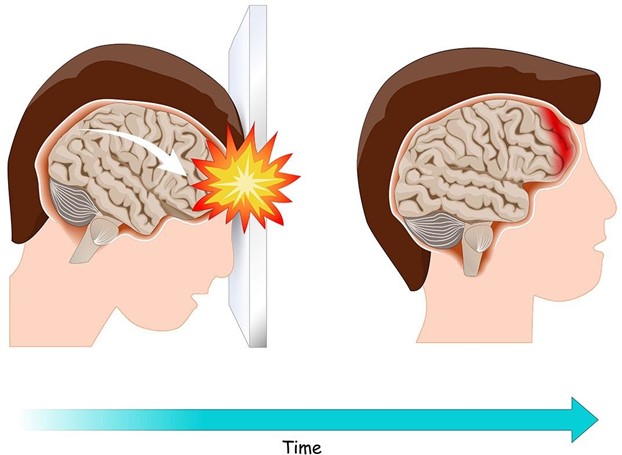
Acceleration/deceleration injury occurs when the head accelerates and then rapidly decelerates, damaging brain tissue
Stressed injury to the brain
Object penetrates the brain or trauma is so severe that the scalp and skull are opened
The Correct Answer is B
Choice A: Injury from chemicals is incorrect because it is not a type of traumatic brain injury. Injury from chemicals is a type of toxic brain injury, which occurs when a substance such as alcohol, drugs, or carbon monoxide enters the bloodstream and affects the brain function or structure. It can cause symptoms such as confusion, memory loss, or seizures.
Choice B: Acceleration/deceleration injury occurs when the head accelerates and then rapidly decelerates, damaging brain tissue is correct because it is the definition of a closed traumatic brain injury. A closed traumatic brain injury occurs when the head moves violently without breaking the skull. This can cause the brain to hit against the inner wall of the skull or twist within the skull, resulting in bruising, tearing, or shearing of the brain tissue.
Choice C: Stressed injury to the brain is incorrect because it is not a type of traumatic brain injury. Stressed injury to the brain is a type of psychological brain injury, which occurs when a person experiences a traumatic event such as violence, abuse, or war. It can cause symptoms such as flashbacks, nightmares, or post-traumatic stress disorder.
Choice D: Object penetrates the brain or trauma is so severe that the scalp and skull are opened is incorrect because it is not a closed traumatic brain injury. It is a type of open traumatic brain injury, which occurs when a foreign object such as a bullet, knife, or bone fragment enters the brain or when a blunt force trauma such as a fall, collision, or assault causes a fracture or laceration of the skull. This can damage the brain tissue, blood vessels, and nerves and cause bleeding, swelling, or infection.
Nursing Test Bank
Naxlex Comprehensive Predictor Exams
Related Questions
Correct Answer is C
Explanation
Choice A: Paralysis of the joints is not a description of dysarthria, but rather a possible complication of stroke or other neurological disorders.
Choice B: Blindness over half the field of vision is not a description of dysarthria, but rather a sign/symptom of hemianopia or visual field loss.
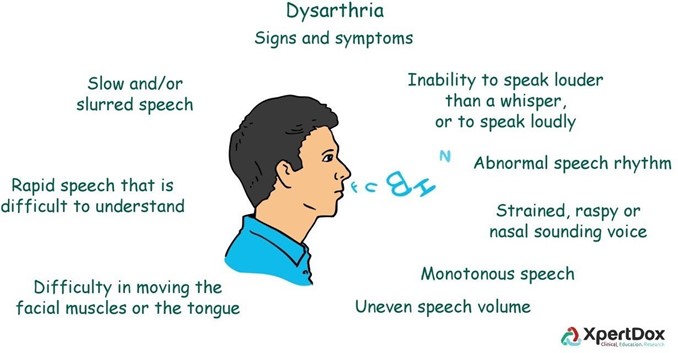
Choice C: Difficult or unclear articulation of speech is a description of dysarthria, as it is a motor speech disorder caused by weakness or paralysis of the muscles involved in speech production.
Choice D: Paralysis of one side of the body is not a description of dysarthria, but rather a sign/symptom of hemiplegia or unilateral weakness.
Correct Answer is B
Explanation
Choice A: Injury from chemicals is incorrect because it is not a type of traumatic brain injury. Injury from chemicals is a type of toxic brain injury, which occurs when a substance such as alcohol, drugs, or carbon monoxide enters the bloodstream and affects the brain function or structure. It can cause symptoms such as confusion, memory loss, or seizures.
Choice B: Acceleration/deceleration injury occurs when the head accelerates and then rapidly decelerates, damaging brain tissue is correct because it is the definition of a closed traumatic brain injury. A closed traumatic brain injury occurs when the head moves violently without breaking the skull. This can cause the brain to hit against the inner wall of the skull or twist within the skull, resulting in bruising, tearing, or shearing of the brain tissue.
Choice C: Stressed injury to the brain is incorrect because it is not a type of traumatic brain injury. Stressed injury to the brain is a type of psychological brain injury, which occurs when a person experiences a traumatic event such as violence, abuse, or war. It can cause symptoms such as flashbacks, nightmares, or post-traumatic stress disorder.
Choice D: Object penetrates the brain or trauma is so severe that the scalp and skull are opened is incorrect because it is not a closed traumatic brain injury. It is a type of open traumatic brain injury, which occurs when a foreign object such as a bullet, knife, or bone fragment enters the brain or when a blunt force trauma such as a fall, collision, or assault causes a fracture or laceration of the skull. This can damage the brain tissue, blood vessels, and nerves and cause bleeding, swelling, or infection.
Whether you are a student looking to ace your exams or a practicing nurse seeking to enhance your expertise , our nursing education contents will empower you with the confidence and competence to make a difference in the lives of patients and become a respected leader in the healthcare field.
Visit Naxlex, invest in your future and unlock endless possibilities with our unparalleled nursing education contents today