
Which oral medication can the nurse safely cut in half? OA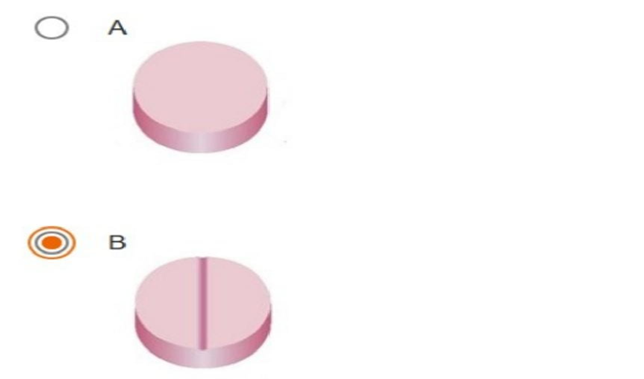
A
B
The Correct Answer is B
Rationale:
A. Tablet without a score line: Tablets that lack a score line are not designed to be split. Cutting these tablets can result in uneven dosing and reduced effectiveness, and may increase the risk of adverse effects.
B. Tablet with a score line: A scored tablet is specifically manufactured to be divided safely. Splitting along the score line allows for accurate dosing when a half-dose is prescribed, ensuring therapeutic effectiveness and patient safety.
Nursing Test Bank
Naxlex Comprehensive Predictor Exams
Related Questions
Correct Answer is A
Explanation
Rationale:
A. Pulmonary emboli resolved: Alteplase is a thrombolytic that converts plasminogen to plasmin, leading to fibrin degradation and active clot dissolution. Resolution of an existing thrombus, such as a pulmonary embolism, directly reflects the intended pharmacologic effect. Clinical or imaging evidence of clot resolution indicates therapeutic success.
B. Central venous line patent, flushes and aspirates freely: Alteplase may be used in low doses to restore catheter patency, but this outcome does not reflect systemic thrombolytic effectiveness. Catheter clearance does not indicate treatment of a pathologic thrombus. This finding is procedure-specific rather than therapeutic for thromboembolism.
C. Prothrombin time (PT) remains 1.5 times higher than the control: PT is used to monitor warfarin therapy and is not a marker of alteplase efficacy. Thrombolytics act by lysing clots rather than altering clotting factor synthesis. Changes in PT do not indicate successful fibrinolysis.
D. No deep venous thrombosis: Absence of a new DVT reflects prevention rather than active clot breakdown. Alteplase is administered to dissolve existing thrombi, not as primary prophylaxis. Lack of DVT does not demonstrate that fibrinolysis has occurred.
Correct Answer is ["A","B","D"]
Explanation
Rationale:
A. Have the client demonstrate technique used to monitor blood glucose levels: Incorrect testing technique, improper calibration, or contaminated test strips can lead to falsely elevated or inaccurate readings. Direct observation allows the nurse to assess technique accuracy and identify user-related errors. This intervention addresses a common, correctable cause of poor glycemic control.
B. Have the client describe a typical day at work, home, and social activities: Daily routines influence glucose levels through stress, physical activity, meal timing, and adherence to insulin therapy. Identifying lifestyle patterns helps uncover factors such as missed doses, irregular meals, or stress-related hyperglycemia. This assessment supports individualized diabetes education.
C. Determine if the client is using a new insulin needle each administration: While using a new needle is a best practice for infection control and comfort, reusing a needle (though not recommended) does not typically cause a blood glucose reading of 325 mg/dL. This does not address the root cause of the hyperglycemia.
D. Evaluate the client's asthma medications that can elevate the blood glucose: Certain asthma medications, particularly systemic or high-dose inhaled corticosteroids, increase insulin resistance and hepatic glucose production. These drugs can significantly worsen glycemic control in clients with type 1 diabetes. Medication review is critical in recurrent hyperglycemia.
E. Ask the client if they want a different manufacturer's glucose monitoring device: Switching devices does not address underlying causes of persistent hyperglycemia. Most FDA-approved glucometers have acceptable accuracy when used correctly.
Whether you are a student looking to ace your exams or a practicing nurse seeking to enhance your expertise , our nursing education contents will empower you with the confidence and competence to make a difference in the lives of patients and become a respected leader in the healthcare field.
Visit Naxlex, invest in your future and unlock endless possibilities with our unparalleled nursing education contents today