
Which valves are connected to chordae tendineae?
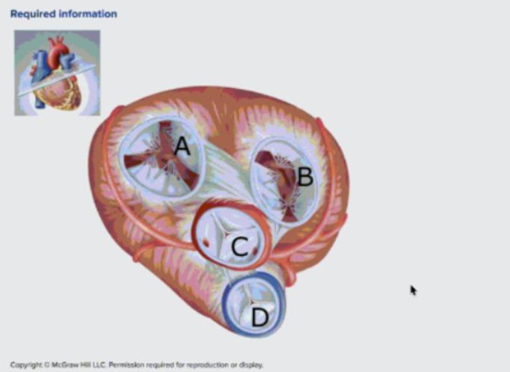
A
B
C
D
E
Correct Answer : A,C
A. Sinoatrial (SA) node: This structure is located in the right atrium near the opening of the superior vena cava. It initiates the electrical impulse that starts each heartbeat. Because it has the highest intrinsic firing rate (about 60–100 beats per minute), it determines the heart’s rhythm and is therefore called the pacemaker of the heart.
B. Atrioventricular (AV) node: The AV node is located in the lower part of the right atrium near the interatrial septum. Its main function is to delay the electrical impulse coming from the atria before passing it to the ventricles. This delay allows the ventricles time to fill with blood before they contract. It can act as a backup pacemaker, but its intrinsic rate is slower (40–60 bpm), so it is not the primary pacemaker.
C. Atrioventricular (AV) bundle (Bundle of His): This structure carries the impulse from the AV node into the interventricular septum. It is the only normal electrical connection between the atria and ventricles. It conducts impulses but does not normally initiate them, so it is not the pacemaker.
D. Bundle branches: These pathways run down the right and left sides of the interventricular septum. They rapidly conduct electrical impulses toward the apex of the heart. Their role is conduction, not impulse generation, so they are not pacemakers.
E. Purkinje fibers spread throughout the ventricular myocardium. They distribute the impulse to ventricular muscle cells, causing coordinated ventricular contraction. Although they have an intrinsic firing ability, it is very slow (20–40 bpm) and only takes over if higher pacemakers fail. Therefore, they are not the normal pacemaker.
Nursing Test Bank
Naxlex Comprehensive Predictor Exams
Related Questions
Correct Answer is A
Explanation
A. Water: Water is primarily absorbed through the intestinal epithelium directly into the blood capillaries via osmosis. It follows the osmotic gradient created by the absorption of solutes like sodium. The lymphatic system is not the primary route for the uptake of dietary water.
B. Glucose: This monosaccharide is transported across the enterocyte membrane and enters the villus blood capillaries via facilitated diffusion. From there, it travels through the hepatic portal vein to the liver. It is a water-soluble molecule that does not require the specialized transport of lacteals.
C. Vitamins: Water-soluble vitamins are absorbed directly into the bloodstream, while fat-soluble vitamins are packaged into chylomicrotons. While some vitamins utilize the lymphatic route, the question specifies the primary dietary bulk restricted from capillaries. Vitamins are micronutrients rather than the primary cargo of lacteals.
D. amino acids: Following protein hydrolysis, individual amino acids are transported into the blood capillaries of the intestinal villi. They are highly soluble in plasma and do not require lymphatic transport. They bypass the lacteals to reach the liver for systemic distribution.
E. lipids: Large lipid droplets are processed into chylomicrons within enterocytes, which are too large to enter the tight junctions of blood capillaries. These lipoproteins enter the highly permeable lacteals to be transported via the thoracic duct. This ensures that dietary fats reach the systemic circulation safely.
Correct Answer is B
Explanation
A. natural active: This form of immunity is acquired through natural exposure to a pathogen during an environmental infection. The body develops its own antibodies and memory cells following the clinical or subclinical course of the disease. It does not involve medical intervention like the administration of a vaccine.
B. artificial active: Vaccination involves the deliberate clinical introduction of attenuated or inactivated antigens into the body. This medical intervention stimulates the recipient’s immune system to produce its own antibodies and long-lived memory cells without causing the disease. It provides long-lasting protection through an induced immune response.
C. natural passive: This immunity occurs through the natural transfer of preformed antibodies from one individual to another, such as from mother to fetus via the placenta. It provides immediate but temporary protection because the recipient’s own immune system is not activated. No memory cells are produced during this process.
D. artificial passive: This involves the clinical injection of exogenous antibodies or antivenoms to provide immediate protection against a specific toxin or pathogen. The immunity is temporary as the injected proteins are eventually degraded and no memory cells are created. It is used for post-exposure prophylaxis rather than long-term prevention.
E. innate: Innate immunity refers to the non-specific, first-line defense mechanisms that are present from birth. It includes physical barriers like the skin and generic cellular responses like phagocytosis. Unlike vaccination, it does not involve the recognition of specific antigens or the development of immunological memory.
Whether you are a student looking to ace your exams or a practicing nurse seeking to enhance your expertise , our nursing education contents will empower you with the confidence and competence to make a difference in the lives of patients and become a respected leader in the healthcare field.
Visit Naxlex, invest in your future and unlock endless possibilities with our unparalleled nursing education contents today