
Why is water sometimes called the "universal solvent"?
Because water dissolves all solutes equally well.
Because water is a nonpolar solvent.
Because water is good at dissolving ions and polar molecules.
Because water is poor at dissolving nonpolar molecules.
The Correct Answer is C
Water is sometimes called the “universal solvent” because it dissolves more substances than any other liquid.
This is due to its polarity and ability to form hydrogen bonds, which allows it to dissolve ions and polar molecules.
Choice A) Because water dissolves all solutes equally well is incorrect because water does not dissolve all solutes equally well.
Choice B) Because water is a nonpolar solvent is incorrect because water is a polar solvent.
Choice D) Because water is poor at dissolving nonpolar molecules is incorrect because it does not explain why water is called the “universal solvent”.
Nursing Test Bank
Naxlex Comprehensive Predictor Exams
Related Questions
Correct Answer is C
Explanation
Innate immunity represents the first line of defense to an intruding pathogen.
The innate immune system is a series of nonspecific defenses that make up the innate immune system.
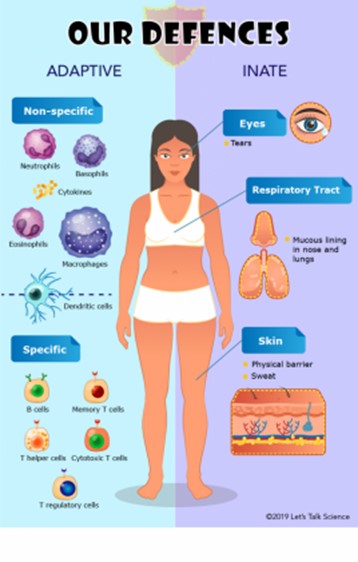
These defenses are not directed against any one pathogen but instead provide a guard against all infection.
Choice A is incorrect because adaptive immunity is activated when pathogens are able to bypass innate immune defenses.
Choice B is incorrect because antibodies are part of the adaptive immune system and are produced by B cells.
Choice D is incorrect because T cells are part of the adaptive immune system and assist B cells or directly kill infected cells.
Correct Answer is B
Explanation
Carbon monoxide binds to the haemoglobin to create a molecule called carboxyhemoglobin (COHb), which interferes with the body’s ability to transport and use oxygen, especially in the brain.
Choice A is incorrect because carbon monoxide poisoning occurs when carbon monoxide builds up in your bloodstream.
Choice C is incorrect because carbon monoxide poisoning does not increase the production of red blood cells.
Choice D is incorrect because decreased pulmonary function is not a potential complication of carbon monoxide poisoning.
Whether you are a student looking to ace your exams or a practicing nurse seeking to enhance your expertise , our nursing education contents will empower you with the confidence and competence to make a difference in the lives of patients and become a respected leader in the healthcare field.
Visit Naxlex, invest in your future and unlock endless possibilities with our unparalleled nursing education contents today