
You have a client admitted to the unit having suffered a cerebral vascular accident. You are planning the plan of care for the client. What nursing diagnosis would be included in the client's plan of care? Select all that apply.
Pain.
Incontinence.
Impaired verbal communication.
Impaired swallowing.
Self-care deficit.
Correct Answer : B,C,D,E
"Impaired verbal communication," "Impaired swallowing," and "Self-care deficit." These are all potential nursing diagnoses for a client who has suffered a cerebral vascular accident. Pain may not be a priority nursing diagnosis in this situation.
Nursing Test Bank
Naxlex Comprehensive Predictor Exams
Related Questions
Correct Answer is D
Explanation
Radiographic confirmation. Radiographic confirmation is the most reliable method to verify the placement of nasogastric tubes, and it is considered the gold standard. The nurse should use it to confirm placement initially and periodically to ensure that the tube is in the stomach and not in the lungs or esophagus.
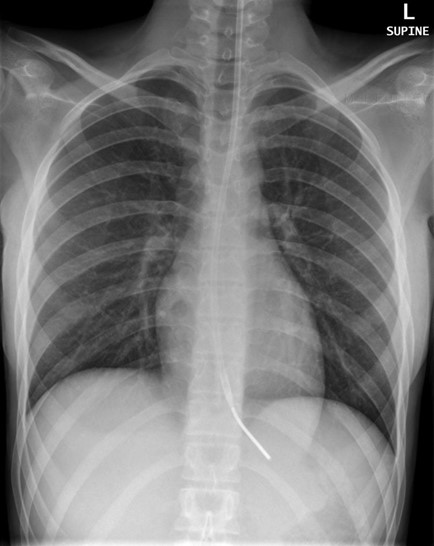
Option A, placing the end of the tube in water and observing for bubbling, is incorrect because it is not a reliable method, and it can cause aspiration or infection.
Option B, using the auscultation technique, is incorrect because it can lead to misinterpretation of bowel sounds, and it is not reliable.
Option C, measuring pH of aspirates, is incorrect because it is not a reliable method, and it can be affected by several factors, including medications, stress, and nutritional status.
Correct Answer is B
Explanation
cryptorchidism as an infant. Cryptorchidism, or undescended testicles, is a known risk factor for testicular cancer. During fetal development, the testicles form in the abdomen and descend into the scrotum before birth. Failure of one or both testicles to descend into the scrotum can increase the risk of testicular cancer later in life. Therefore, a history of cryptorchidism as an infant is the most important assessment finding to identify clients at higher risk of developing testicular cancer.
Choice A, previous sexually transmitted infection (STI), is incorrect because although STIs can increase the risk of certain types of cancer, they are not a significant risk factor for testicular cancer.
Choice C, low sperm count, is incorrect because although low sperm count can be associated with testicular cancer, it is not a reliable indicator for determining a higher risk for testicular cancer. Low sperm count may also be caused by various other factors, such as hormonal imbalances, infections, varicocele, and genetic abnormalities. While it is important to monitor and treat low sperm count, it is not a definitive indicator of testicular cancer risk.
Whether you are a student looking to ace your exams or a practicing nurse seeking to enhance your expertise , our nursing education contents will empower you with the confidence and competence to make a difference in the lives of patients and become a respected leader in the healthcare field.
Visit Naxlex, invest in your future and unlock endless possibilities with our unparalleled nursing education contents today