
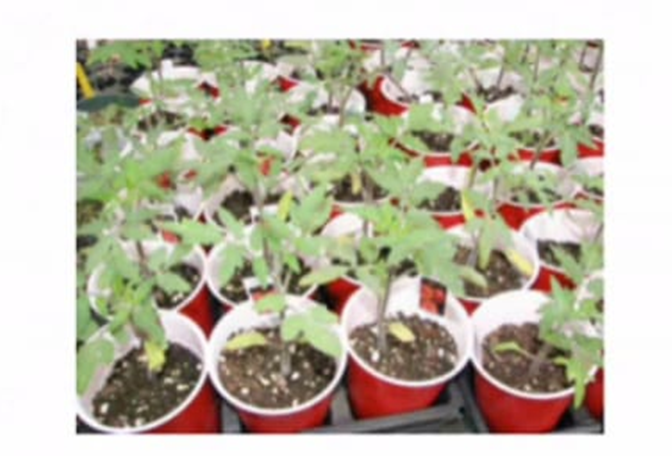
You want to conduct an experiment to see if a fertilizer increases the rate of growth of tomato plants. An appropriate control would be
growing corn plants with various amounts of fertilizer
growing tomato plants with various amounts of fertilizer
growing corn plants without fertilizer
growing tomato plants without fertilizer
The Correct Answer is D
A. growing corn plants with various amounts of fertilizer: Using corn plants introduces a different species, which makes results irrelevant to the effect of fertilizer on tomato plants.
B. growing tomato plants with various amounts of fertilizer: This is part of the experimental group rather than a control, as it tests different fertilizer levels rather than providing a baseline for comparison.
C. growing corn plants without fertilizer: Corn plants are not suitable because the research question focuses on tomato plants. A valid control must match the species being studied.
D. growing tomato plants without fertilizer: This is the correct control, as it provides a baseline growth rate for tomato plants without fertilizer, allowing meaningful comparison with fertilized groups.
Nursing Test Bank
Naxlex Comprehensive Predictor Exams
Related Questions
Correct Answer is A
Explanation
A. Protozoa: Protozoa are single-celled eukaryotic organisms that lack a rigid cell wall, allowing them greater flexibility and movement. Instead, they have a cell membrane that provides structural support.
B. Algae: Algae are photosynthetic organisms that typically have cell walls made of cellulose or other polysaccharides, which provide structure and protection.
C. Fungi: Fungi possess cell walls composed mainly of chitin, which gives them rigidity and structural strength, important for their survival.
D. Bacteria: Most bacteria have cell walls, usually made of peptidoglycan, which helps maintain their shape and protects them from osmotic pressure.
Correct Answer is D
Explanation
A. Collect data: Collecting data occurs after observations are made and experiments are conducted. It is essential for analysis but is not the initial step in the scientific method.
B. Draw conclusions: Drawing conclusions comes at the end of the scientific method, after analyzing data and determining whether the hypothesis is supported. It is a final step rather than the first.
C. State a hypothesis: Stating a hypothesis follows making observations. A hypothesis is an educated prediction based on prior knowledge or observed patterns, but it cannot be formulated before initial observations.
D. Make an observation: Making an observation is the first step of the scientific method. It involves noticing and describing phenomena, which forms the basis for asking questions and developing a hypothesis.
E. Design an experiment: Designing an experiment is a later step used to test the hypothesis. Experiments are planned based on observations and hypotheses, not as the starting point.
Whether you are a student looking to ace your exams or a practicing nurse seeking to enhance your expertise , our nursing education contents will empower you with the confidence and competence to make a difference in the lives of patients and become a respected leader in the healthcare field.
Visit Naxlex, invest in your future and unlock endless possibilities with our unparalleled nursing education contents today