
Assessment and Diagnostic Tests
Assessment and Diagnostic Tests for Aneurysms:
- Physical Examination: A healthcare provider may perform a thorough physical examination to check for signs of aneurysm, such as a pulsating mass, tenderness, or bruits (abnormal sounds) over the affected area.
- Imaging Tests:
- Ultrasound: This non-invasive test uses sound waves to create images of the blood vessels and can help visualize aneurysms.
- CT Scan (Computed Tomography): CT scans provide detailed cross-sectional images of blood vessels and can help identify the location and size of aneurysms.
- MRI (Magnetic Resonance Imaging): MRI can produce high-resolution images of blood vessels, aiding in the detection and assessment of aneurysms.
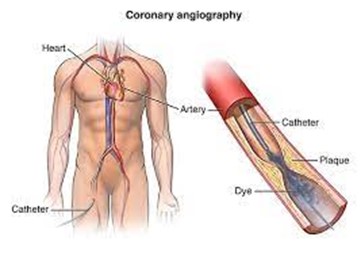
- Angiography: In this procedure, a contrast dye is injected into the blood vessels, followed by X-rays or other imaging techniques, to visualize the blood flow and identify aneurysms.
- Cerebrospinal Fluid Analysis: In cases of suspected ruptured cerebral aneurysms, a lumbar puncture may be performed to examine the cerebrospinal fluid for signs of bleeding and other abnormalities.
Assessment and Diagnostic Tests for Peripheral Vascular Disorders:
- AnkleBrachial Index (ABI): ABI is a simple and non-invasive test that compares the blood pressure in the ankles to that in the arms. It is used to assess peripheral artery disease (PAD) and determine the extent of arterial blockage.
- Doppler Ultrasound: This test uses sound waves to measure blood flow in the arteries and veins, helping to diagnose PAD and assess blood flow in peripheral vessels.
- Angiography: Similar to the procedure for aneurysms, angiography can also be used to visualize the blood flow in peripheral arteries and identify blockages or narrowing.
- Treadmill Exercise Testing: This test is used to evaluate the severity of PAD by monitoring the patient's ability to walk on a treadmill and assessing any symptoms of claudication (pain or discomfort in the legs during walking).
- Computed Tomography Angiography (CTA) and Magnetic Resonance Angiography (MRA): Both CTA and MRA are imaging tests that provide detailed images of blood vessels to evaluate peripheral vascular disorders.
- Arteriography: In this procedure, a contrast dye is injected directly into the arteries, and X-rays are taken to visualize the blood flow and identify any abnormalities.
- Blood Tests: Blood tests can be used to assess lipid levels, glucose levels (in the case of diabetes), and other markers of inflammation and vascular health that may contribute to peripheral vascular disorders.
- Nerve Conduction Studies: For conditions involving peripheral neuropathy, nerve conduction studies may be performed to assess nerve function and detect abnormalities in nerve signals.
Nursing Test Bank
Test Bank #1: RN Pharmacology Exams
Test Bank #2: RN Medical-Surgical Exams
Test Bank #3: RN Fundamentals Exams
Test Bank #4: RN Maternal-Newborn Exams
Test Bank #5: RN Anatomy and Physiology Exams
Test Bank #6: RN Obstetrics and Pediatrics Exams
Test Bank #7: RN Fluid and Electrolytes Exams
Test Bank #9: RN Adult Health
Test Bank #10: RN Dosage Calculation
Test Bank #11: RN Community Health Exams
Test Bank #12: RN Psychology Exams
Test Bank #13: RN Nursing Care Of Children
Test Bank #14: RN Foundations of Nursing Exams
Naxlex Comprehensive Predictor Exams
Exam #1: RN Comprehensive predictor 2023 proctored exam
Exam #2: Ati rn vati comprehensive predictor proctored exam
Exam #3: Ati Rn Comprehensive Predictor Proctored Exam 2023
Exam #4: Rn Comprehensive Predictor 2023 Proctored Exam - St. Joseph
Exam #5: RN Comprehensive Predictor Proctored Exam (National U CA San Diego)
Exam #6: Ati rn comprehensive predictor 2023 retake proctored exam
Exam #7: RN Hesi Exit Proctored Exam
Exam #8: Hesi RN Exit proctored exam
Exam #9: Hesi rn exit proctored exam
Exam #10: Hesi Rn compass exit B proctored exam
Questions on Assessment and Diagnostic Tests
Correct Answer is D
Explanation
Correct - Medical management with lifestyle changes, such as quitting smoking, controlling blood pressure and cholesterol levels, and regular exercise, is often the first-line treatment for PAD. This approach aims to improve blood flow and manage symptoms before considering more invasive interventions.
Correct Answer is C
Explanation
Incorrect - A sedentary lifestyle is a behavioral risk factor for aneurysms, not a genetic one. Lack of physical activity can contribute to hypertension and other risk factors.
Correct Answer is B
Explanation
Incorrect - Capillary refill of the fingers is important but is not the priority assessment in the immediate post-procedure period following femoral artery cannulation.
Correct Answer is B
Explanation
Incorrect - Waiting until fully recovered before engaging in any physical activity is unnecessary and may delay the client's recovery process. Controlled and gradual activity resumption is usually preferred.
Correct Answer is A
Explanation
Incorrect - Reducing physical activity is not recommended as a way to reduce the risk of peripheral vascular disorders. Regular physical exercise is essential for maintaining cardiovascular health and reducing the risk of many vascular conditions.
Correct Answer is C
Explanation
Incorrect - A lumbar puncture is not used to assess blood flow in the lower extremities. It is a procedure for obtaining cerebrospinal fluid for diagnostic purposes in certain neurological conditions.
Correct Answer is A
Explanation
Incorrect - It is essential to stay hydrated after cerebral angiography to help flush out the contrast dye from the system. The client should be encouraged to drink fluids, unless contraindicated for another reason.
Correct Answer is A
Explanation
Incorrect - Beginning a rigorous exercise routine immediately after the procedure is not recommended. Clients should gradually resume physical activity as guided by their healthcare provider to avoid complications and promote proper healing.
Correct Answer is B
Explanation
Incorrect - Checking vital signs every 4 hours is a standard nursing intervention, but it is not the priority in the immediate postoperative period after EVAR, especially when graft occlusion may pose a more immediate threat.Questions
Correct Answer is C
Explanation
Incorrect - Monitoring blood glucose levels is relevant for some clients, but it is not the priority in this situation, unless the client has a specific history of diabetes or altered glucose levels that could impact their recovery.Questions
Correct Answer is C
Explanation
Incorrect - Monitoring abdominal girth is not directly related to peripheral artery bypass surgery. It may be relevant for assessing other conditions, but it does not specifically monitor the success of the procedure.
Correct Answer is B
Explanation
<p>Incorrect - Endovascular repair may be an option for some AAAs, but it is not the best treatment for all cases, especially small, asymptomatic ones. The appropriate treatment plan will depend on the client's specific circumstances.</p>
Correct Answer is C
Explanation
<p>Incorrect - Sudden onset of chest pain is not directly related to the AAA repair and may indicate a different medical emergency that requires immediate attention.</p>
Correct Answer is C
Explanation
<p>Incorrect - Conservative management with lifestyle changes may be recommended in certain cases, but it is not the definitive therapy for popliteal artery aneurysms, especially when the aneurysm poses a significant risk of rupture.</p>
Correct Answer is A
Explanation
No explanation
Correct Answer is C
Explanation
Incorrect - Over-the-counter painkillers may provide temporary relief but do not address the underlying cause of intermittent claudication. Relying solely on painkillers may lead to delayed diagnosis and treatment of PVD.
Correct Answer is C
Explanation
No explanation