
As a person climbing a mountain increases walking speed, the rate of calories burned, height traveled, and energy expended also increase. Which of the following is the independent variable?
Walking speed
Energy
Calories
Height
Correct Answer : A
An independent variable is a change that when modified brings a change in other variables. In this case, the person increases his climbing rate, calories burned, distance traveled and energy used increases. Therefore, the walking speed is the independent variable while other variables are dependent.
TEAS 7 Exam Quiz Bank
HESI A2 Exam Quiz Bank
Find More Questions 📚
Teas 7 Questions: We got the latest updated TEAS 7 questions
100% Money Refund: 100% money back guarantee if you take our full
assessment pass with 80% and fail the actual exam.
Live Tutoring: Fully customized live tutoring lessons.
Guaranteed A Grade: All students who use our services pass with 90%
guarantee.
Related Questions
Correct Answer is D
Explanation
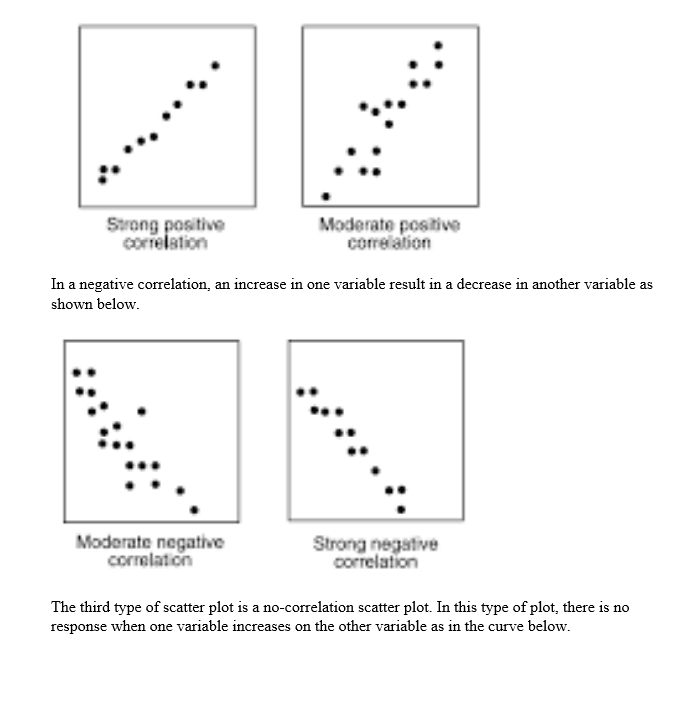
Scatter plots can depict three correlations: positive, negative and no correlation. A positive correlation scatter plot reveals that as one variable increases, the other variable also increases as shown below
Correct Answer is D
Explanation
Here we convert between feet and yards. We know 1 yard =3 feet. Then, 27 feet to yards will be:
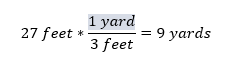
Thus, 9 yards is equal to 27 ft.
Correct Answer is A
Explanation
The truck carries a whole cargo which equals 1. If we let the weight of the cargo to be p, then we set up a proportion equation with weight as numerator and fraction of cargo as denominator.

Solve for value of p by cross products

Multiply both sides by 3/2 a reciprocal of 2/3
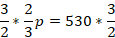

The truck carries a cargo weighing 795 lb.
Correct Answer is C
Explanation
to find the average time the athlete runs in 1 mile; we find total distance and total time the athlete takes in running.
Total distance run by athlete=7+3=10 miles
Total time=45+15 =60 minutes
The athlete runs 10 miles in 60 minutes. For the athlete to cover 1 mile, he will run for a time less than 60 minutes. Thus, in 1 mile, the athlete takes:

So, in 6 minutes, the athlete covers 1 mile.
Correct Answer is A
Explanation
We analyze the given statement with the graph given as follows:
For option a: the points per game decreased five times between 1996 and 2015. So, the statement is true.
For option b: the lowest points scored per game was in 1998-99 season. So, the statement is false.
For option c: 2008-09 was the season the chargers scored the greatest number of points per game and not 2002-03 as claimed in the statement. So, this statement is not true.
Correct Answer is D
Explanation
To form an equation from the word problem, first break the given statement into smaller statements.
First, we are given the width of the rectangle as x. We are told, the length is three times width. Mathematically, this means
Length=3*width=3*x=3x
Again, the length is 4 less than 3 times width of the rectangle. Thus, the length of rectangle in terms of width becomes:
Length =3x-4
This is the required equation.
Correct Answer is C
Explanation
A whole pizza represents 1, and two friends eat ¼ of the pizza. The remaining fraction of pizza is:
Remaining amount = 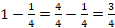
Thus, 3/4 of pizza is left for three friends to share equally.
Now, the other three friends will each get
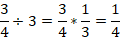
So, the other three friends will each get 1/4 of the pizza.
Correct Answer is A
Explanation
We need to form a mathematical expression from the given word problem.
Let the unknown number be x.
Thrice a number is three times = 3x
Twelve less than thrice a number = 3x-12
Thus, the mathematical expression from the word problem is 3x-12
Correct Answer is A
Explanation
A ratio is of the form a : b but can also be converted to a fraction of the form a/b, where b is not equal to zero. Besides, to in ration means per in fraction form.
In the class of 40 students, 22 are girls and 18 are boys. Thus, the ratio of girls to boys becomes:

The above fraction can be reduced further since 2 is a common factor in both 22 and 18. Thus
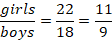
In ratio form, girls: boys=11:9
Thus, the ratio of girls to boys in a class of 40 students is 11 to 9.
Correct Answer is D
Explanation
Before finding the area of the pizza, we need to find the radius of the pizza.
Find radius of the pizza in terms of diameter
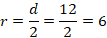
Next, find area of the pizza using the radius of 6 inches

Substituting r=6 in the equation of the area of a circle

Thus, the pizza has an area of 36 π in2.
This question was extracted from the actual TEAS Exam. Ace your TEAS exam with the actual TEAS 7 questions, Start your journey with us today
Visit Naxlex, the Most Trusted TEAS TEST Platform With Guaranteed Pass of 90%.
Money back guarantee if you use our service and fail the actual exam. Option of personalised live tutor on your area of weakness.