
Four hundred milligrams is equal to how many grams?
4 g
0.4 g
400,000 g
0.00004 g
Correct Answer : B
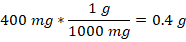
we are asked to change 400 mg to g. We use the conversion 1g=1000mg, which we can write as:

So, 400 mg to g becomes
TEAS 7 Exam Quiz Bank
HESI A2 Exam Quiz Bank
Find More Questions 📚
Teas 7 Questions: We got the latest updated TEAS 7 questions
100% Money Refund: 100% money back guarantee if you take our full
assessment pass with 80% and fail the actual exam.
Live Tutoring: Fully customized live tutoring lessons.
Guaranteed A Grade: All students who use our services pass with 90%
guarantee.
Related Questions
Correct Answer is B
Explanation
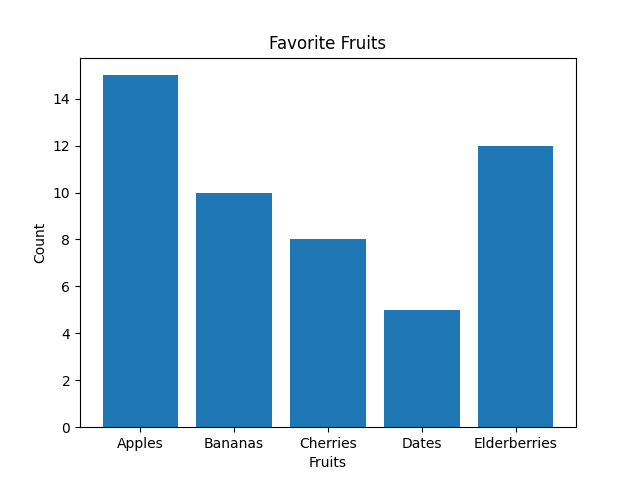
The best way to display the frequency of each day of the week when students get up after 8 a.m. is by using a bar graph. Bar graphs are well-suited for representing categorical data, where each day of the week is a separate category, and the height of each bar corresponds to the count or frequency of students waking up late on that specific day.
Note: Histograms, on the other hand, are more appropriate for visualizing continuous or numerical data and are not ideal for categorical data like days of the week.Histograms are useful for understanding the distribution of data, identifying patterns, and assessing the shape of the data distribution, such as whether it's normally distributed, skewed, or has multiple modes.
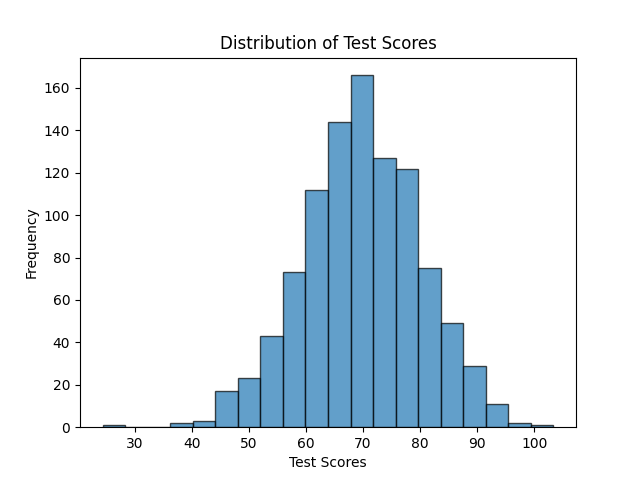
As you can see below, the Histogram is used to depict a pattern/continuous data. While a bar graph does just fine even with discrete data.
Correct Answer is C
Explanation
We need to perform a series of numerical dimensional analysis to find the number of bags sugar needed for 300 people.
We are told that 50 people need 4 cups of sugar. This can be interpretated as:
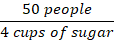
Or
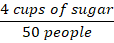
Also, one bag of sugar contains 6 cups. This can also be presented as:
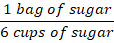
Or
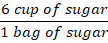
We use the second option relating number of people and cups, and second option relating cups of sugar and bag of sugar to find for number of bags of sugar needed for 300 people.

Therefore, 300 people will need 4 bags of sugar.
Correct Answer is B
Explanation
In the simple interest, we utilize the following formula to find the simple interest after a period of time in years.
I=P*r*t
I is the interest
P=Principal or initial deposit
r=rate
t=time in years
From the given problem, P=$600, r=6%=6/100=0.06, t=5 years. Then
I=$600*0.06*5=$180
After 5 years, Pat will earn an interest of $180.
Correct Answer is B
Explanation
from the provided table, the first option represents the amount of gas in gallons while the second column shows the distance in miles. Thus, (6, 144) will denote that the car can 144 miles by consuming 6 gallons of a gas.
Correct Answer is B
Explanation
The median temperature can be found by organizing the temperature values from the smallest to the largest value as follows:
98.6, 98.7, 99.0, 99.0,99.2, 99.3, 99.7, 100.0
(for an even set of numbers, Median = frac{(frac{n}{2})th observation + (frac{n}{2} + 1) th observation}{2})
From the data set above, there are 8temperature values. The median is the temperature value in the middle position, which falls between the(frac{n}{2} th)and((frac{n}{2} + 1) th) position. Here N=8and median is found as:
(frac{(frac{n}{2})th + (frac{n}{2} + 1) th}{2} = )(frac{(frac{8}{2})th + (frac{8}{2} + 1) th }{2} = 4.5th position)
The element in the 4.5th position is the average of the 4th and 5th element.
(frac{99.0 + 99.2}{2} = 99.1)
Thus 99.1 is the median temperature.
Correct Answer is A
Explanation
We are given a mix of fractions and decimals and to compare the numbers, we convert the given decimals to fractions.
4.4 becomes 44/10
4.25 becomes 425/100
Now the set of fractions for comparison are: 9/2, 10/3, 44/10, and 425/100. The least common denominator for 2, 3 and 10 is 300. Then,
9/2*300=1350
10/3*300=1000
44/10*300=1320
425/10*300=1275
From the above products, 9/2 gives the greatest value when the fractions are compared with the least common denominator of the given denominators.
Correct Answer is A
Explanation
to do a comparison of the given data set, we convert the fraction numbers into the approximate decimals.
4/3=1.333
2720=1.35
Now, we have 1.333, 1.35, 1.369, 1.357. These numbers are arranged from the smallest to the largest number, we look at the number in the second decimal place value
1.333 the number in second decimal place value is 3
1.35 the number in third decimal place value is 5
1.369 the number in third decimal place value is 6
1.357 the number in third decimal place value is 5
However, 1.35 and 1.357 have 5 in the second-place vale. We use the ird place value to compare the two number:
1.35 is same as 1.350 and the number in the third-place value is 0
1.357 the number in the third-place value is 7
Now, 0 is less than 7, and thus 1.35 is less than 1.357
Overall, 3 is less than 5, and 5 less than 6 and the provided numbers can be arranged from the smallest to the largest as:
1.333, 1.35, 1.357, 1.369
Thus, the corresponding given numbers organized from the smallest to the largest become:
4/3, 27/20, 1.357, 1.369
The greatest value is 1.369
Correct Answer is A
Explanation
Let xxx be the amount the friend paid for their car. The problem states:
48,000=2x−2,000
Step 1: Solve for x
Add 2,000 to both sides:
48,000+2,000=2x
Divide by 2:
x=25,000
Correct Answer is B
Explanation
A dependent variable is one that when another variable changes, it also changes. In our case, the insurance premium changes if the age, model, mileage of car changes. Thus, insurance premium is the dependent variable while the other three are independent variable.
Correct Answer is D
Explanation
A teaspoon can approximately hold 5 mL.
Although the capacity of a teaspoon could be more or less, choice D remains the most correct answer as the other choices have amounts too much for a small teaspoon.
This question was extracted from the actual TEAS Exam. Ace your TEAS exam with the actual TEAS 7 questions, Start your journey with us today
Visit Naxlex, the Most Trusted TEAS TEST Platform With Guaranteed Pass of 90%.
Money back guarantee if you use our service and fail the actual exam. Option of personalised live tutor on your area of weakness.