
Jacob has $100. She spends 87% of the money. She then invests the remaining amount and earns a profit of 75%. How much money does she now have?
$13.00
$87.00
$22.75
$9.75
Correct Answer : C
We are needed to find the amount Jacob will be left with after spending and reinvesting the rest using the given information.
Amount Jacob spends=87% of $100=87/100*100=$87
Amount left to invest=$(100-87)=$13
Jacob is left with $13, which she invests and earns a profit of 75%.
Profit earned on invested amount=75% of $13=75/100*13=$9.75
So, Jacob will have $13+$9.75=$22.75
TEAS 7 Exam Quiz Bank
HESI A2 Exam Quiz Bank
Find More Questions 📚
Teas 7 Questions: We got the latest updated TEAS 7 questions
100% Money Refund: 100% money back guarantee if you take our full
assessment pass with 80% and fail the actual exam.
Live Tutoring: Fully customized live tutoring lessons.
Guaranteed A Grade: All students who use our services pass with 90%
guarantee.
Related Questions
Correct Answer is D
Explanation
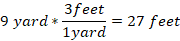
The interconversion of yards to feet utilizes the relationship 1 yard =3 feet. Then, 9 yards to ft becomes
 t
t
There, 9 yards is equal to 27 ft.
Correct Answer is C
Explanation
We usea calculator to find the product of
1.6*0.93=1.488
Correct Answer is B
Explanation
We follow the order operations to solve for the unknown value of x.
3(2x+5)=11x+5
Open the bracket on the LHS by multiplying each term by 3
(3*2x)+(3*5)=11x+5
6x+15=11x+5
Subtract 15 from both sides
6x+15-15=11x+5-15
6x=11x-10
Subtract 11x on both sides
6x-11x=11x-11x-10
-5x=-10
Divide both sides by -5
-5x/-5=-10/-5
x= 2
Thus, the value of unknown value of x is 2.
Correct Answer is A
Explanation
: In order to solve for the value of x, we use the order of operations as follows:
The first step is to divide both sides by 3


Add 2 to both sides to eliminate it from the left-hand side of the equation
x-2+2=4+2
x = 6
Thus, the value of x is 6.
Correct Answer is D
Explanation
The net income is the salary of the teacher gets after deducting total taxes.
Weekly net income=weekly gross income-total tax
Total tax=federal income tax+state income tax+Social Security tax
Total tax=$(72.00+35.00+65.00)
Total tax=$172.00
Weekly net income=$(730.00-172.00)=$558.00
The net income the teacher gets in 4 weeks is what she gets in one week multiplied by 4

The teacher will earn a net income of $2,232.00 in 4 weeks after taxes are deducted.
Correct Answer is D
Explanation
When solving percent problems, the following words and their meaning becomes handy.
- Is means equals
- Of means multiply
- What means unknown (variable)
If we let x represent the amount of tip the couple want to leave behind, then

So, the couple will leave a tip of $2.84, which is about $3.00
Correct Answer is C
Explanation
We asked to convert kg to pounds. There are two ways of converting between kg and pounds

And

Since we are to find pounds, we use the second option for kg to cancel
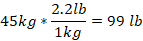
The pound equivalent of 45 kg is 99 lb.
Correct Answer is D
Explanation
Here we need to find the actual values of the additions and see the trend the student will use to estimate the given problem. The exact sum is as follows
35+192=227
258+350=608
947+1032=1979
From the above calculations, it is evident that the student rounds up or down the ones place values. So, in the problem we need to approximate 694+7618.
694+7618=8312
We can approximate 8312 based on the provided choices is 8310.
Correct Answer is B
Explanation
An independent variable is a variable that when changed result in a change to other variables under investigation. From the given scenario, if the stock of the company increases, then the production, sales, and investment increase. Therefore, stock is the independent variable while other variables are dependent.
Correct Answer is D
Explanation
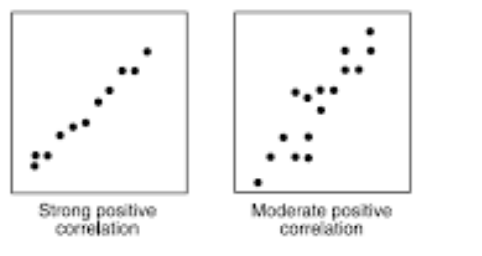
correlations fall into positive, negative, and no correlation. A positive correlation shows that an increase in one variable increase results in an increase on the other variable increases as shown.
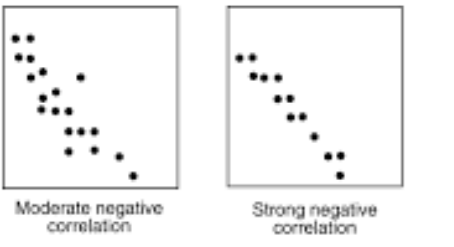
A negative correlation scatter plot shows that an increase in one variable results in a decrease on the other one.
The no-correlation scatter plot demonstrates that there is no response between variables. A change in one variable has no effect on the other variable.
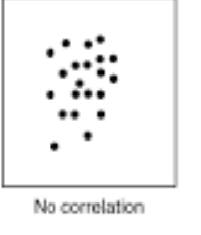
Looking at the provided scatter plot, the heights of the students does not have any relationship on the students’ scores. Thus, the type of correlation is no correlation.
This question was extracted from the actual TEAS Exam. Ace your TEAS exam with the actual TEAS 7 questions, Start your journey with us today
Visit Naxlex, the Most Trusted TEAS TEST Platform With Guaranteed Pass of 90%.
Money back guarantee if you use our service and fail the actual exam. Option of personalised live tutor on your area of weakness.