
Parasitic worm infestation is hypothesized to be damaging to the host.
However, scientists have recently discovered that worm infestation can relieve the effects of certain autoimmune disorders.
In which of the following ways should the hypothesis be modified, given the new findings?
Worm infestation prevents the body from immune malfunction
Worm infestation reduces the severity of certain autoimmune disorders
Worm infestations exacerbate the body's immune reactions
Lack of worm infestations is the cause of some autoimmune disorders
Correct Answer : B
The hypothesis should be modified to include the new findings that worm infestation can relieve the effects of certain autoimmune disorders.
A possible modification could be: “Parasitic worm infestation can have both damaging and beneficial effects on the host.
While it can cause harm, it has also been found to reduce the severity of certain autoimmune disorders.”
Choice A.
Worm infestation prevents the body from immune malfunction is not correct because it overstates the findings and implies that worm infestation completely prevents immune malfunction, which is not supported by the evidence.
Choice C.
Worm infestations exacerbate the body’s immune reactions is not correct because it contradicts the new findings that worm infestation can relieve the effects of certain autoimmune disorders.
Choice D.
Lack of worm infestations is the cause of some autoimmune disorders is not correct because it overstates the findings and implies a causal relationship between lack of worm infestations and autoimmune disorders, which is not supported by the evidence.
TEAS 7 Exam Quiz Bank
HESI A2 Exam Quiz Bank
Find More Questions 📚
Teas 7 Questions: We got the latest updated TEAS 7 questions
100% Money Refund: 100% money back guarantee if you take our full
assessment pass with 80% and fail the actual exam.
Live Tutoring: Fully customized live tutoring lessons.
Guaranteed A Grade: All students who use our services pass with 90%
guarantee.
Related Questions
Correct Answer is C
Explanation
The pH scale is a logarithmic scale that measures the acidity or alkalinity of a solution.
A solution with a pH of 7 is neutral, while a solution with a pH less than 7 is acidic and a solution with a pH greater than 7 is alkaline.
Because the pH scale is logarithmic, each whole number change in pH represents a tenfold change in acidity or alkalinity.
Therefore, a substance with a pH of 3 is 10 times more acidic than a substance with a pH of 4.
Choice A.
A substance with a pH of 3 is two times more alkaline than a substance with a pH of 4 is not correct because it incorrectly states that the substance with a lower pH is more alkaline and also incorrectly states the magnitude of the difference in acidity or alkalinity.
Choice B.
A substance with a pH of 3 is two times more acidic than a substance with a pH of 4 is not correct because it correctly states that the substance with a lower pH is more acidic but incorrectly states the magnitude of the difference in acidity.
Choice D.
A substance with a pH of 3 is 10 times more alkaline than a substance with a pH of 4 is not correct because it incorrectly states that the substance with a lower pH is more alkaline.
Correct Answer is C
Explanation
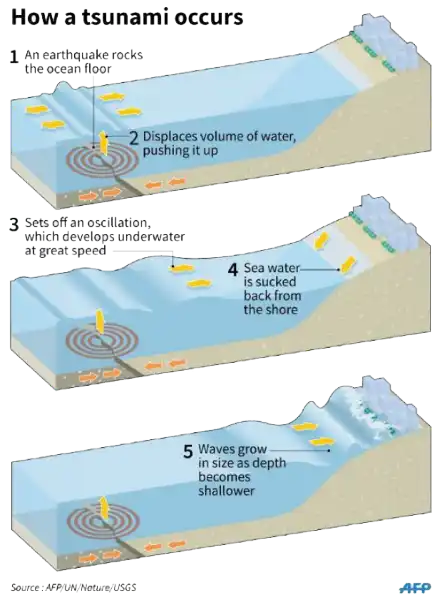
A tsunami is a catastrophic ocean wave that is usually caused by a submarine earthquake.
It can also be caused by an underwater or coastal landslide, the eruption of a volcano, or the impact of a meteor or comet in a body of water.
Choice A is not correct because sunspot activity does not cause tsunamis.
Choice B is not correct because lightning strikes do not cause tsunamis.
Choice D is not correct because flooding does not cause tsunamis.
Correct Answer is D
Explanation
Testosterone is classified as an androgen hormone.
Androgens are a type of sex hormone that primarily regulates the development and maintenance of male characteristics, such as body hair growth, muscle mass, and deepening of the voice.
Testosterone is produced primarily in the testes in males and in smaller amounts in the ovaries and adrenal glands in females.
Option A, estrogen, is a female hormone that regulates the development of female sexual characteristics, such as breast growth and menstruation.
While estrogen and testosterone are both steroid hormones and can be converted to one another in the body, testosterone is not categorized as estrogen.
Option B, progestin, is a synthetic form of the hormone progesterone.
Progesterone is a female hormone that plays a role in the menstrual cycle and pregnancy.
Testosterone and progestin are not related, and testosterone is not categorized as progestin.
Option C, aldosterone, is a mineralocorticoid hormone that regulates salt and water balance in the body.
It is produced in the adrenal gland and plays a role in regulating blood pressure.
Testosterone and aldosterone are not related, and testosterone is not categorized as aldosterone.
Correct Answer is D
Explanation
The pleura is a double-layered serous membrane that covers each lung and lines the thoracic cage
The pleura is a vital part of the respiratory tract.
Its role is to cushion the lung and reduce any friction that may develop between the lung, rib cage, and chest cavity.
Each pleura (there are two) consists of a two-layered membrane that covers each lung.
The layers are separated by a small amount of viscous (thick) lubricant known as pleural fluid.
The pleura is comprised of two distinct layers: the visceral pleura and the parietal pleura.
The visceral pleura is the thin, slippery membrane that covers the surface of the lungs and dips into the areas separating the different lobes of the lungs (called the hilum).
Correct Answer is B
Explanation
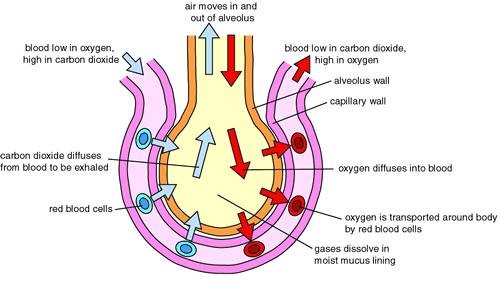
Diffusion down a concentration gradient causes most of the carbon dioxide from the blood to move into the alveoli.
The alveoli are tiny air sacs in the lungs where gas exchange occurs.
Carbon dioxide is a waste product of cellular respiration and is carried by the blood to the lungs to be exhaled.
In the lungs, carbon dioxide diffuses from the blood (where its concentration is high) into the alveoli (where its concentration is lower) down its concentration gradient.
Choice A is incorrect because carbon dioxide is not converted to carbon monoxide in the body.
Choice C is incorrect because passive transport using carrier proteins is not the primary mechanism by which carbon dioxide moves from the blood into the alveoli.
Choice D is incorrect because active transport using energy is not involved in the movement of carbon dioxide from the blood into the alveoli.
Correct Answer is B
Explanation
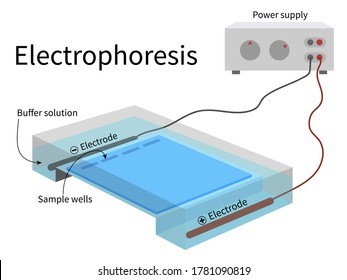
Electrophoresis is the most useful laboratory method for separating genomic DNA fragments by size.
Electrophoresis is a technique that uses an electric field to separate charged molecules, such as DNA fragments, based on their size and charge.
Choice A is not correct because titration is a laboratory method used to determine the concentration of a solution.
Choice C is not correct because filtration is a laboratory method used to separate solids from liquids.
Choice D is not correct because spectrophotometry is a laboratory method used to measure the absorbance of light by a solution.
Correct Answer is A
Explanation
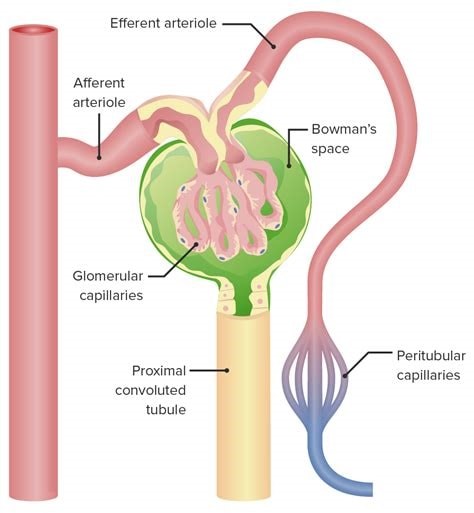
The glomerulus is the main filtering unit of the kidney.
It is formed by a network of small blood vessels (capillaries) enclosed within a sac called the Bowman’s capsule.
The blood supply to the glomerulus is provided via the afferent arteriole.
The blood then flows through the capillary network, where it gets filtered, and then leaves the glomerulus via the efferent arteriole.
Choice B.
Proximal tubule is not correct because it is where the ultrafiltrate collected in the Bowman’s space drains directly into.
Choice C.
Distal tubule is not correct because it is not mentioned in relation to blood exiting the glomerulus.
Choice D.
Afferent arteriole is not correct because it provides blood supply to the glomerulus.
Correct Answer is D
Explanation
The cytoskeleton of a cell is comprised of protein fibers that provide structural support and help maintain the shape of the cell.
These protein fibers include microfilaments, intermediate filaments, and microtubules.
Choice A.
Carbohydrates is not the correct answer because carbohydrates are a type of macromolecule that provides energy to cells and are not a component of the cytoskeleton.
Choice B.
Nucleic acids is not the correct answer because nucleic acids are macromolecules that store and transmit genetic information and are not a component of the cytoskeleton.
Choice C.
Lipids is not the correct answer because lipids are a type of macromolecule that makes up cell membranes and are not a component of the cytoskeleton.
Correct Answer is D
Explanation
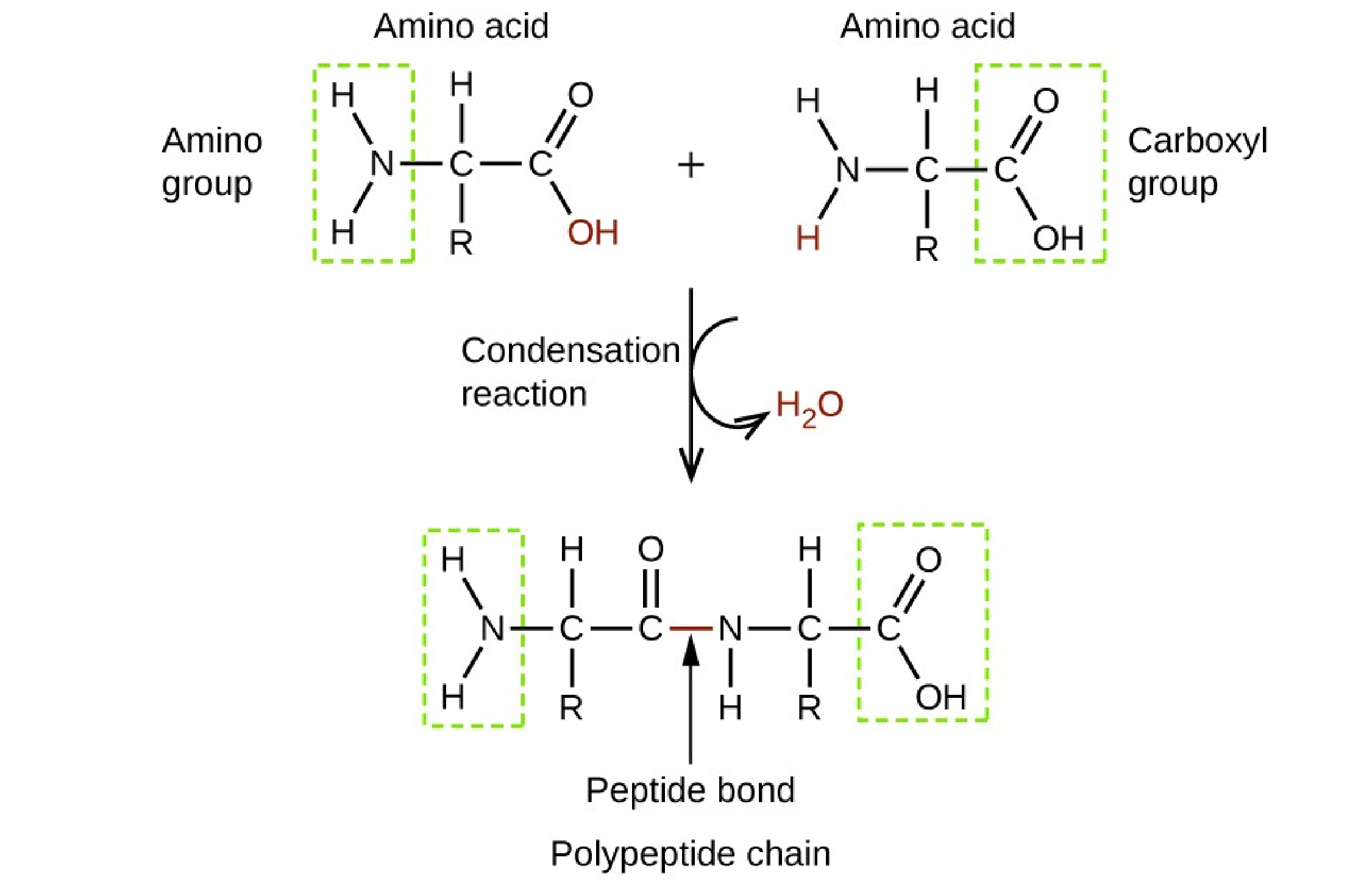
Proteins.
Proteins are made up of amino acids which are organic molecules that contain both an amine functional group (–NH2) and a carboxylic acid functional group (– COOH).
 |
Choice A, Lipids, is not the correct answer because lipids are a group of naturally occurring molecules that include fats, waxes, sterols, fat-soluble vitamins, monoglycerides, diglycerides, triglycerides, phospholipids, and others.
They do not contain both an amine and carboxyl group.
Choice B, Chitin, is not the correct answer because chitin is a long-chain polymer of N-acetylglucosamine, a derivative of glucose.
It does not contain both an amine and carboxyl group.
Choice C, Cellulose, is not the correct answer because cellulose is an organic compound with the formula (C6H10O5)n, a polysaccharide consisting of a linear chain of several hundred to many thousands of β(1→4) linked D-glucose units.
It does not contain both an amine and carboxyl group.
Correct Answer is A
Explanation
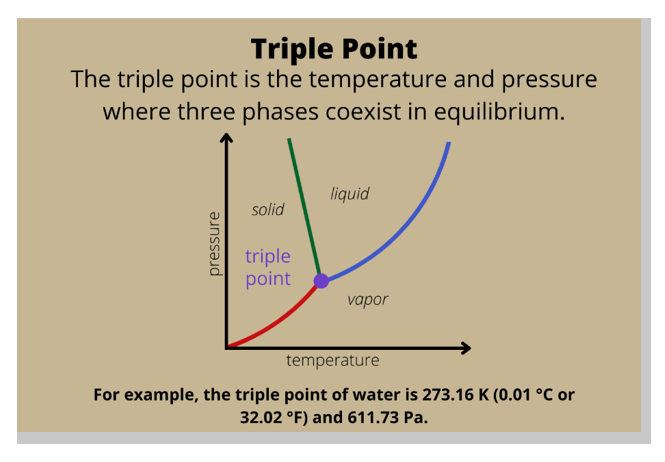
Triple point.
In a phase diagram, the term used for a substance held at a temperature and pressure where the solid, liquid, and gaseous states of a substance exist simultaneously is the triple point.
The triple point is a unique point on a phase diagram where the three states of matter (solid, liquid, and gas) can coexist in equilibrium.
At the triple point, the temperature and pressure of the substance are fixed.
Option B, critical temperature, is the temperature at which a gas cannot be liquefied, regardless of the pressure applied.
It is a characteristic property of a substance and is typically higher than the boiling point of the liquid at standard pressure.
Option C, critical point, is the point on a phase diagram where the liquid and gas phases of a substance become indistinguishable.
At the critical point, the distinction between the liquid and gas phases disappears, and the substance becomes a supercritical fluid.
Option D, absolute zero, is the theoretical temperature at which all matter has zero thermal energy.
At absolute zero, all substances are in their solid state, but it is not relevant to a phase diagram, as it is a temperature where no transitions between states occur.
In summary, the term used for a substance held at a temperature and pressure where the solid, liquid, and gaseous states of a substance exist simultaneously in a phase diagram is the triple point, whereas the other options provided are not relevant or are characteristic properties of substances in different contexts.
This question was extracted from the actual TEAS Exam. Ace your TEAS exam with the actual TEAS 7 questions, Start your journey with us today
Visit Naxlex, the Most Trusted TEAS TEST Platform With Guaranteed Pass of 90%.
Money back guarantee if you use our service and fail the actual exam. Option of personalised live tutor on your area of weakness.