
What is the name of the genetic disorder caused by the presence of an extra chromosome 21?
Turner syndrome
Klinefelter syndrome
Down syndrome
Huntington's disease
Correct Answer : C
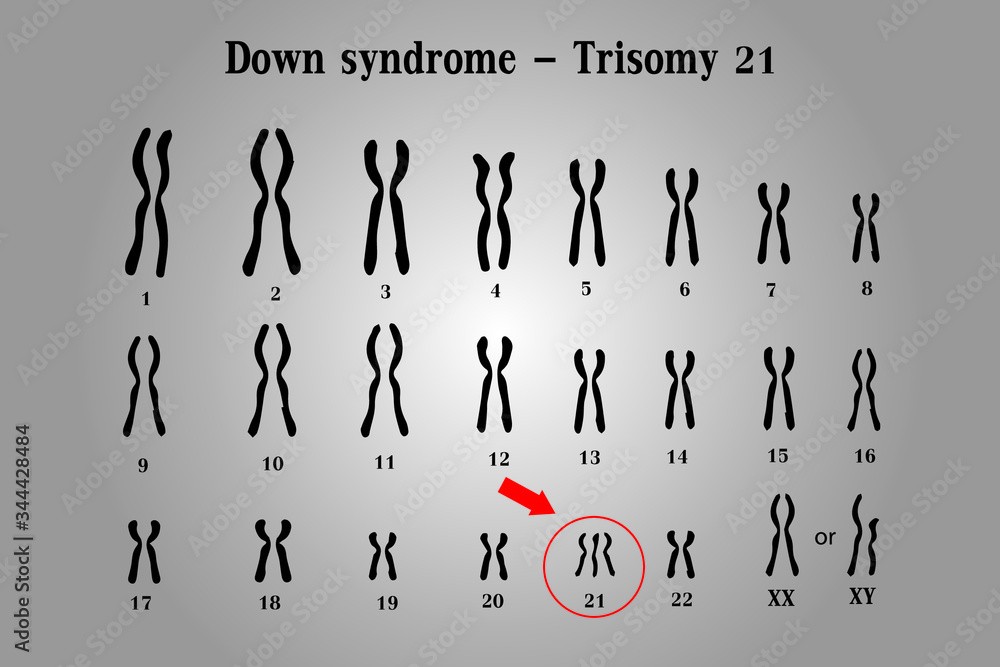
Down syndrome is a genetic disorder caused by the presence of an extra copy of chromosome 21. It is also known as trisomy 21, because affected individuals have three copies of chromosome 21 instead of the normal two.
The extra chromosome 21 in Down syndrome occurs due to a random error in cell division, which leads to the production of an abnormal gamete (egg or sperm) with an extra copy of the chromosome. When this gamete fuses with a normal gamete during fertilization, the resulting zygote has 47 chromosomes instead of the usual 46, and develops into a fetus with Down syndrome.
Down syndrome is characterized by a range of physical and intellectual symptoms, including developmental delays, intellectual disability, distinctive facial features, heart defects, and increased risk of certain medical conditions such as leukemia and Alzheimer's disease. However, the severity and expression of these symptoms can vary widely among affected individuals.
 |
TEAS 7 Exam Quiz Bank
HESI A2 Exam Quiz Bank
Find More Questions 📚
Teas 7 Questions: We got the latest updated TEAS 7 questions
100% Money Refund: 100% money back guarantee if you take our full
assessment pass with 80% and fail the actual exam.
Live Tutoring: Fully customized live tutoring lessons.
Guaranteed A Grade: All students who use our services pass with 90%
guarantee.
Related Questions
Correct Answer is B
Explanation
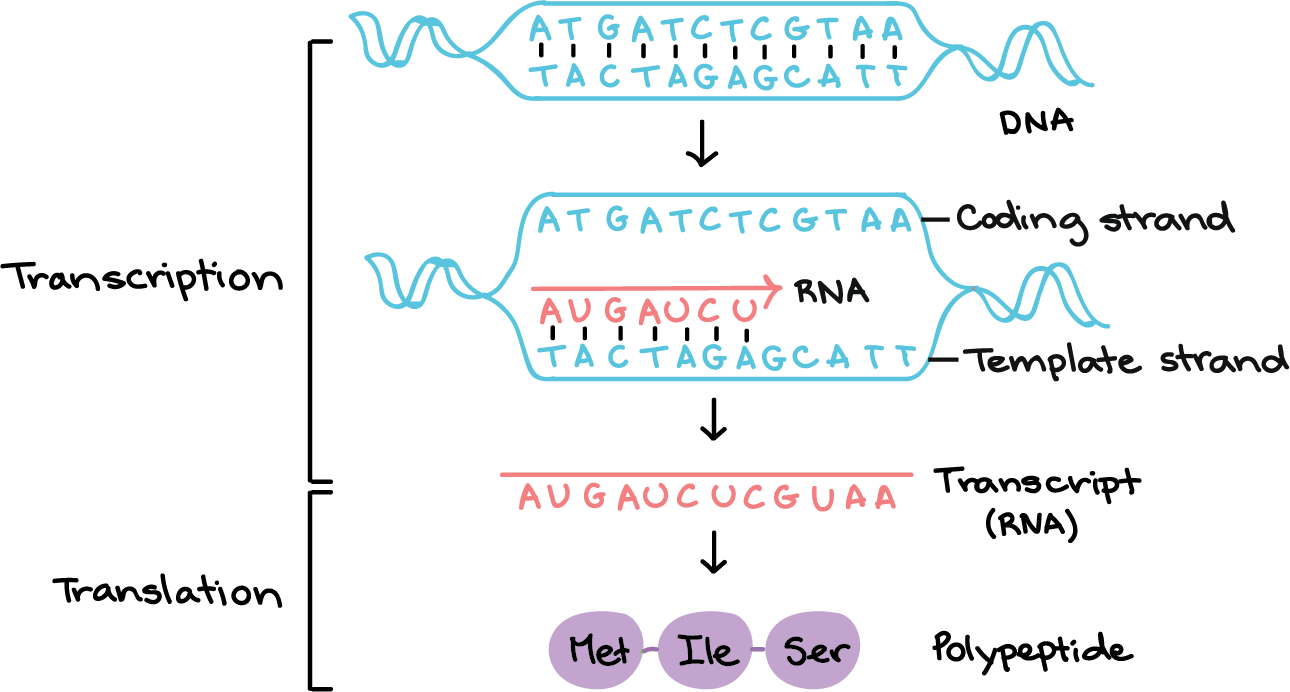
Transcription is the process by which DNA is copied into RNA. During transcription, the DNA molecule unwinds and RNA polymerase reads the DNA sequence and synthesizes a complementary RNA molecule using the DNA as a template.
Correct Answer is C
Explanation
Down syndrome is a genetic disorder caused by the presence of an extra copy of chromosome 21. It is also known as trisomy 21, because affected individuals have three copies of chromosome 21 instead of the normal two.
The extra chromosome 21 in Down syndrome occurs due to a random error in cell division, which leads to the production of an abnormal gamete (egg or sperm) with an extra copy of the chromosome. When this gamete fuses with a normal gamete during fertilization, the resulting zygote has 47 chromosomes instead of the usual 46, and develops into a fetus with Down syndrome.
Down syndrome is characterized by a range of physical and intellectual symptoms, including developmental delays, intellectual disability, distinctive facial features, heart defects, and increased risk of certain medical conditions such as leukemia and Alzheimer's disease. However, the severity and expression of these symptoms can vary widely among affected individuals.
|
Correct Answer is B
Explanation
In the given exothermic reaction:
CaO + H2O ⇌ Ca(OH)2 + heat
To increase the total yield of lime water (Ca(OH)₂), you can apply Le Chatelier's Principle, which states that if a dynamic equilibrium is disturbed, the system will shift in a direction that counteracts the disturbance.
- A. Continuously remove Ca(OH)₂: By removing the product (Ca(OH)₂) as it forms, the equilibrium will shift to the right, favoring the formation of more Ca(OH)₂. This is the most effective way to increase the yield.
The other options are less effective or counterproductive:
- B. Increase the temperature: Since the reaction is exothermic, increasing the temperature would shift the equilibrium to the left (toward the reactants), reducing the yield of Ca(OH)₂.
- C. Increase the pressure: This reaction does not involve gases, so changing the pressure would not significantly affect the equilibrium.
- D. Add an enzyme that can catalyze this reaction: While a catalyst speeds up the rate of reaction, it does not affect the equilibrium position or the total yield of products. It simply allows the system to reach equilibrium faster.
Thus, continuously removing Ca(OH)₂ is the best way to increase the total yield of lime water.
Correct Answer is D
Explanation
 |
Correct Answer is B
Explanation
A buffer is a solution that resists changes in pH when small amounts of an acid or base are added. Buffers work by neutralizing added hydrogen ions (H⁺) or hydroxide ions (OH⁻), thereby maintaining a relatively stable pH. Buffers are made up of a weak acid and its conjugate base or a weak base and its conjugate acid.
- A. It decreases the pH of the solution: This is incorrect because a buffer does not always decrease pH; it resists changes in both directions.
- C. It causes the pH of a solution to become neutral: Incorrect because buffers do not necessarily make a solution neutral; they stabilize pH around a certain value.
- D. It permanently binds hydrogen ions: Incorrect as the binding is reversible, which is essential for maintaining pH balance.
Correct Answer is C
Explanation
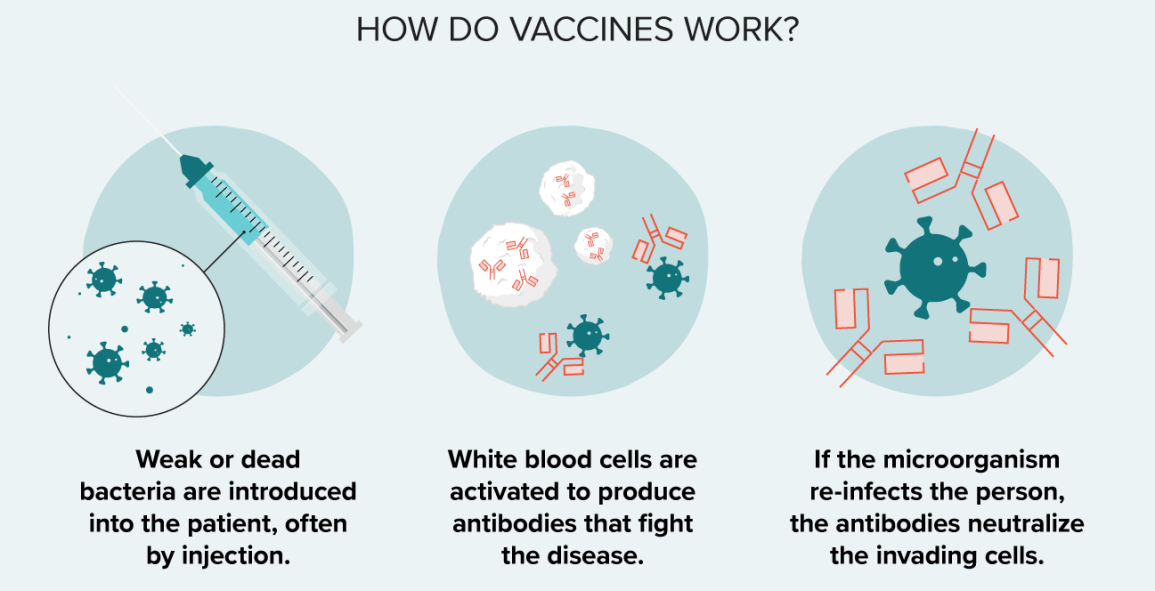
Vaccines are a type of preventative medicine that work by exposing the individual to a weakened or inactivated form of a pathogen (such as a virus or bacteria) or to a piece of the pathogen (such as a protein or sugar) that triggers an immune response in the body. This exposure allows the body to develop immunity to the pathogen without getting sick from the full-blown disease. Once the immune system has been primed, it can recognize and quickly respond to the pathogen if it is encountered again in the future, providing protection against the disease.
It is a common misconception that vaccines can cause the disease they are designed to protect against. This is not true. While some vaccines may cause mild symptoms such as a low-grade fever or soreness at the injection site, they do not cause the full-blown disease.
Vaccines provide active immunity, meaning that the body produces its own antibodies against the pathogen, rather than receiving pre-made antibodies as in passive immunity. Additionally, vaccines can be effective against both bacterial and viral infections, depending on the specific vaccine.
Correct Answer is D
Explanation
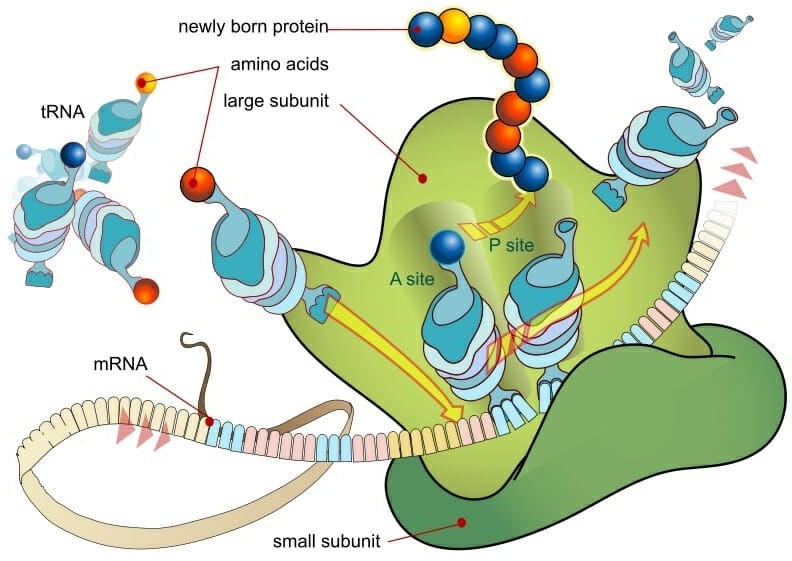
Ribosomes are small, spherical structures found in all living cells, including bacteria, archaea, and eukaryotes. Their primary function is to synthesize proteins using the genetic information stored in the cell's DNA. Ribosomes are composed of two subunits, one large and one small, that come together during protein synthesis.
Ribosomes read the genetic information stored in mRNA (messenger RNA) and use this information to assemble amino acids in the correct order to form a protein. The ribosome moves along the mRNA, adding one amino acid at a time to the growing protein chain until it reaches the end of the mRNA and the protein is complete.
Proteins are essential for a wide variety of cellular functions, including catalyzing chemical reactions, providing structural support, and transporting molecules across cell membranes. Therefore, ribosomes play a critical role in the overall function and survival of a cell.
Correct Answer is C
Explanation
Stomach acid is highly acidic, primarily composed of hydrochloric acid (HCl), which means it has a low pH (around 1 to 3). Acids release hydrogen ions (H⁺) in solution, which lowers the pH.
- A. It has a higher pH: Incorrect, as acidic solutions have a lower pH compared to neutral distilled water (which has a pH of 7).
- B. It contains nitrogen: Incorrect, stomach acid is composed mostly of HCl, not nitrogen-containing compounds.
- D. It has more hydroxyl ions: Incorrect, acidic solutions have fewer hydroxyl ions (OH⁻); hydroxyl ions are more common in basic (alkaline) solutions.
In comparison to distilled water, which is neutral, the stomach acid solution has significantly more hydrogen ions, making it more acidic.
Correct Answer is C
Explanation
Water molecules primarily enter cells through the process of facilitated diffusion, specifically via aquaporins, which are specialized channel proteins that facilitate the rapid transport of water across the cell membrane. This process does not require energy (ATP) as it relies on the concentration gradient of water, allowing water to move from areas of higher concentration to lower concentration.
Here’s why the other options are not correct in the context of water transport:
- A. Gated channels: While aquaporins can be gated, this term generally refers to channels that open and close in response to specific signals, which is not the primary mechanism for water transport in most cells.
- B. Electrochemical gradients: This term relates to the combined effect of electrical and chemical gradients across a membrane, typically for ions rather than water molecules directly. Water movement can be influenced by osmotic gradients but is not solely dependent on electrochemical gradients.
- D. Proton pumps: These are involved in transporting protons (H⁺ ions) across membranes, primarily for establishing an electrochemical gradient, not for the transport of water.
Thus, water molecules enter cells mainly by facilitated diffusion through aquaporins.
Correct Answer is A
Explanation
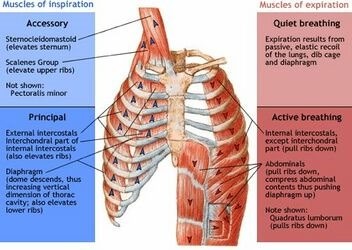
The diaphragm is a dome-shaped muscle that plays a key role in breathing. It separates the thoracic cavity, which contains the heart and lungs, from the abdominal cavity. When the diaphragm contracts, it moves downward and increases the volume of the thoracic cavity, allowing air to flow into the lungs. When it relaxes, it moves upward and decreases the volume of the thoracic cavity, forcing air out of the lungs.
 |
This question was extracted from the actual TEAS Exam. Ace your TEAS exam with the actual TEAS 7 questions, Start your journey with us today
Visit Naxlex, the Most Trusted TEAS TEST Platform With Guaranteed Pass of 90%.
Money back guarantee if you use our service and fail the actual exam. Option of personalised live tutor on your area of weakness.