
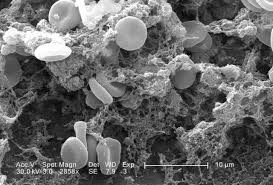
Which of the following microscopes would be used to produce the following image of blood clot?
Compound Light microscope
Transmission electron microscope
Scanning electron microscope
Stereoscope
Correct Answer : C
- The image shown is a highly detailed 3D surface view of a blood clot, which suggests that it was captured using a scanning electron microscope (SEM).
- SEM produces high-resolution, three-dimensional images by scanning a sample with a focused beam of electrons, making it ideal for studying surface structures like blood cells and clots.
Analysis of Other Options:
- A. Compound Light Microscope → Uses visible light to magnify samples but lacks the resolution and 3D detail seen in the image. ❌
- B. Transmission Electron Microscope (TEM) → Produces 2D images of ultra-thin sections, not detailed 3D surface views. ❌
- D. Stereoscope → A low-magnification microscope used for viewing larger objects, not detailed cellular structures. ❌
TEAS 7 Exam Quiz Bank
HESI A2 Exam Quiz Bank
Find More Questions 📚
Teas 7 Questions: We got the latest updated TEAS 7 questions
100% Money Refund: 100% money back guarantee if you take our full
assessment pass with 80% and fail the actual exam.
Live Tutoring: Fully customized live tutoring lessons.
Guaranteed A Grade: All students who use our services pass with 90%
guarantee.
Related Questions
Correct Answer is A
Explanation
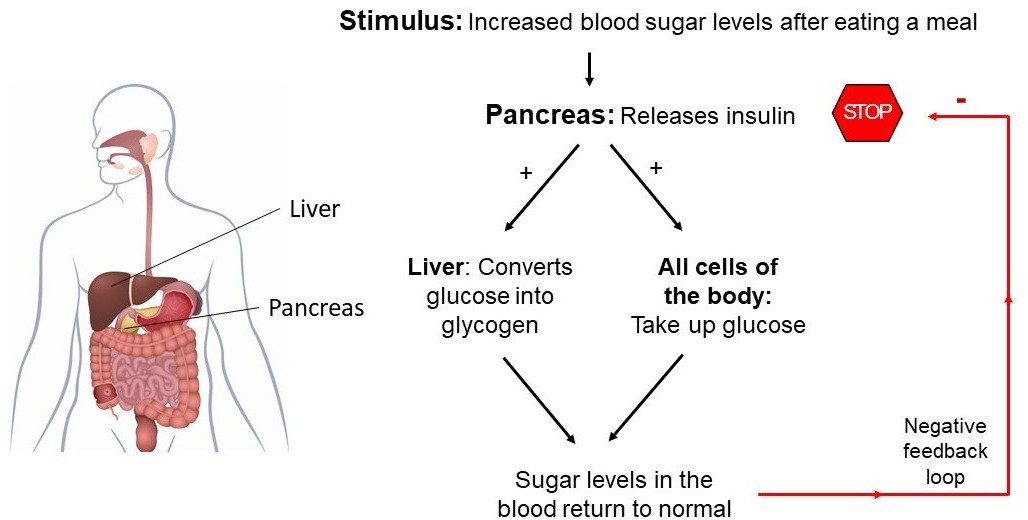
Insulin is a hormone produced by the pancreas that plays a crucial role in regulating the levels of glucose (sugar) in the blood. After a person eats a meal, the levels of glucose in the blood rise, which stimulates the pancreas to release insulin into the bloodstream. Insulin acts on various cells in the body, particularly those in the liver, muscles, and adipose tissue, to promote the uptake, use, and storage of glucose.
Insulin helps to lower the levels of glucose in the blood by increasing the uptake of glucose by cells, stimulating the liver and muscle cells to store glucose in the form of glycogen, and inhibiting the production and release of glucose by the liver. This process is known as glucose homeostasis, and it helps to keep the levels of glucose in the blood within a normal range.
Deficiencies or abnormalities in insulin production or function can lead to a range of metabolic disorders, including type 1 and type 2 diabetes. In type 1 diabetes, the body does not produce enough insulin, while in type 2 diabetes, the body becomes resistant to the effects of insulin, leading to elevated levels of glucose in the blood.
Correct Answer is C
Explanation
Innate immunity is a fundamental aspect of the body's defense mechanism that operates from birth. It offers immediate protection against a wide range of pathogens, such as bacteria, viruses, and fungi, without requiring prior exposure to these invaders.
This defense system is non-specific, meaning it doesn't target a particular pathogen but rather provides a generalized response to various threats. Innate immunity includes physical barriers like the skin and mucous membranes, as well as cellular components such as phagocytes and natural killer cells. These elements work together to detect and neutralize potential threats swiftly, preventing infections from taking hold in the body.
Correct Answer is D
Explanation
- A. Adduction → Moving a limb toward the midline of the body. ❌
- B. Extension → Increasing the angle of a joint (e.g., straightening the arm or leg). ❌
- C. Flexion → Decreasing the angle of a joint (e.g., bending the elbow or knee). ❌
- D. Abduction → Moving a limb away from the midline (e.g., raising the arm or leg sideways). ✅
Correct Answer is A
Explanation
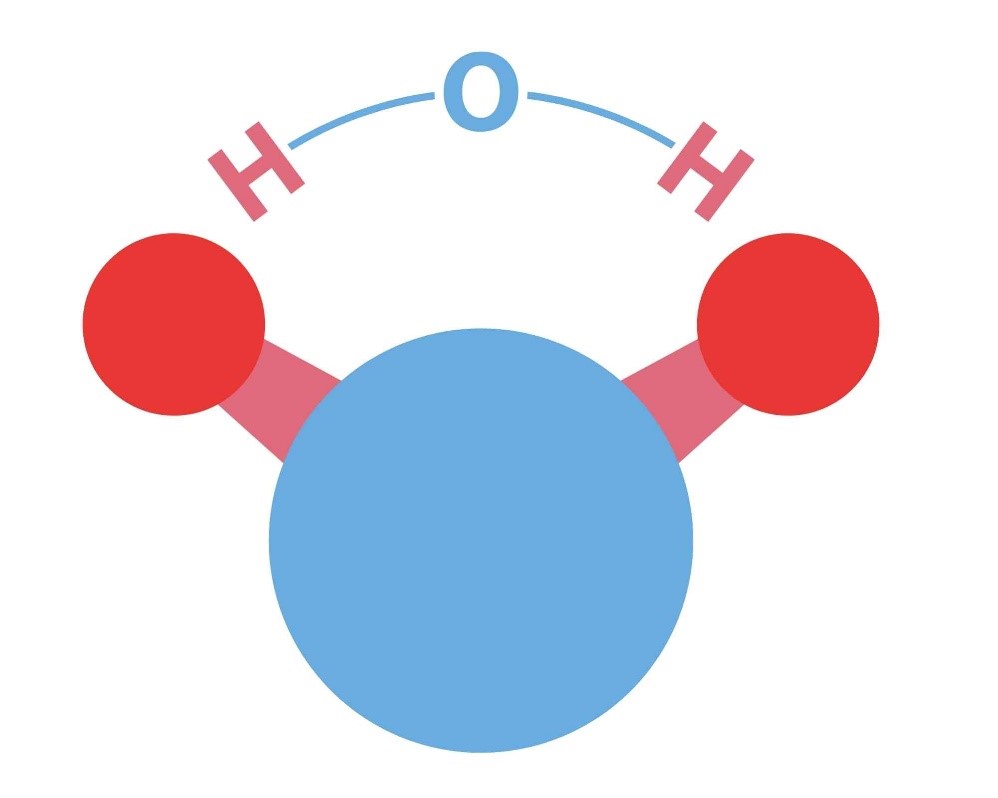
The chemical formula for water is H2O. It consists of two hydrogen atoms and one oxygen atom.
Correct Answer is C
Explanation
- The image shown is a highly detailed 3D surface view of a blood clot, which suggests that it was captured using a scanning electron microscope (SEM).
- SEM produces high-resolution, three-dimensional images by scanning a sample with a focused beam of electrons, making it ideal for studying surface structures like blood cells and clots.
Analysis of Other Options:
- A. Compound Light Microscope → Uses visible light to magnify samples but lacks the resolution and 3D detail seen in the image. ❌
- B. Transmission Electron Microscope (TEM) → Produces 2D images of ultra-thin sections, not detailed 3D surface views. ❌
- D. Stereoscope → A low-magnification microscope used for viewing larger objects, not detailed cellular structures. ❌
Correct Answer is D
Explanation
- A. Nanolitres (nL) → Extremely small unit (1 nL = 0.000000001 L), used for microscopic measurements. ❌
- B. Microlitres (µL) → Also very small (1 µL = 0.000001 L), used in lab settings. ❌
- C. Litres (L) → Too large, as typical urine output per hour is much less than 1 L. ❌
- D. Millilitres (mL) → Suitable, since normal urine output per hour is about 30-80 mL. ✅
Correct Answer is B
Explanation
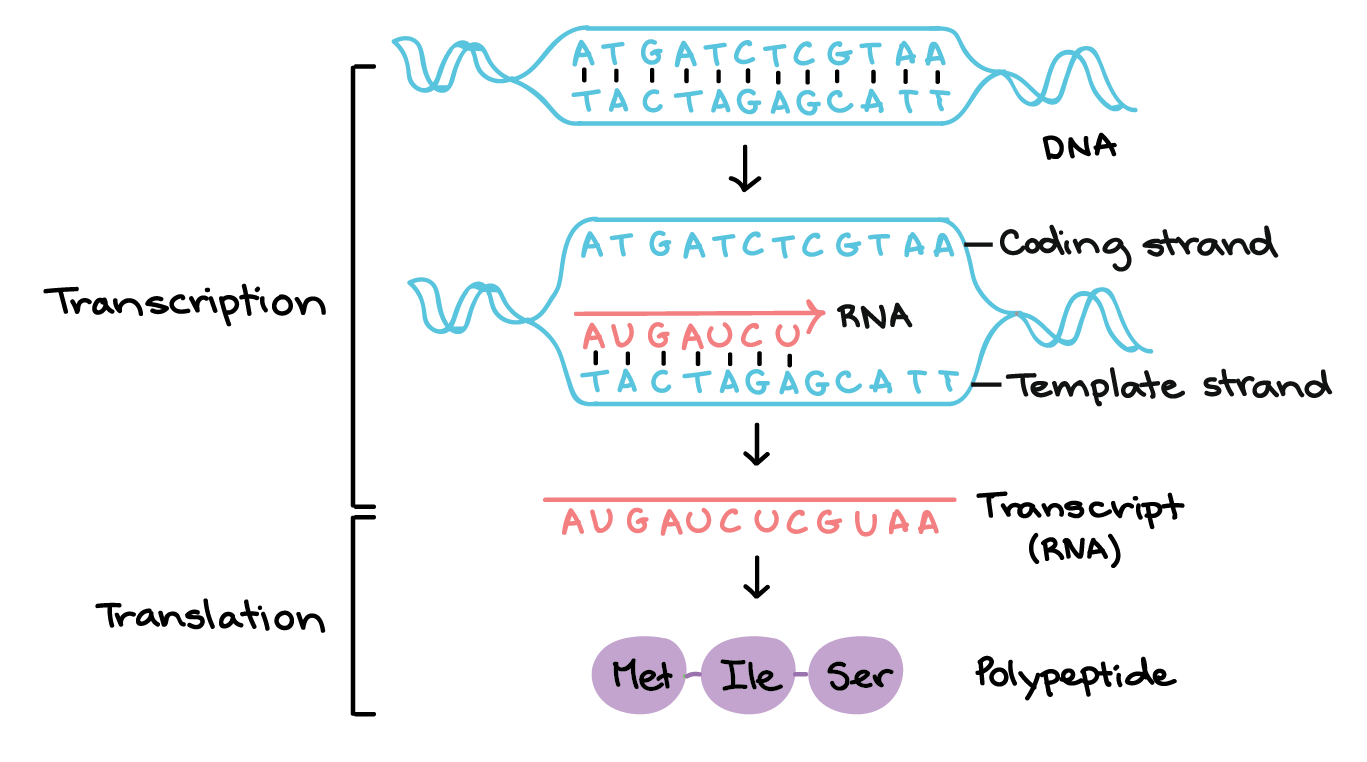
Transcription is the process by which DNA is copied into RNA. During transcription, the DNA molecule unwinds and RNA polymerase reads the DNA sequence and synthesizes a complementary RNA molecule using the DNA as a template.
Correct Answer is D
Explanation
In the diagram, the circular molecules represent sugar. The square molecules represent hormones that regulate blood sugar levels. Among the answer choices:
- Insulin (A): Lowers blood sugar by promoting glucose uptake in cells.
- Norepinephrine (B): Involved in the fight-or-flight response, not directly related to blood sugar regulation.
- Calcitonin (C): Regulates calcium levels, not glucose.
- Glucagon (D): Raises blood sugar by promoting glucose release from the liver.
Since the diagram involves sugar regulation and the square molecules are coming from the liver, the square molecules represent glucagon hormones.
Correct Answer is C
Explanation
A frameshift mutation is a type of genetic mutation that involves the insertion or deletion of one or more nucleotides in a DNA sequence. This can cause a shift in the reading frame of the genetic code, resulting in a change in the amino acid sequence of the resulting protein. Frameshift mutations can have significant effects on the function of the protein and can lead to genetic disorders or diseases.

Correct Answer is A
Explanation
The kidneys secrete a number of hormones, which are important for normal functioning of the body.
If blood pressure falls, renin is secreted by the kidneys to constrict the small blood vessels, thereby increasing blood pressure. If the kidneys aren’t functioning correctly, too much renin can be produced, increasing blood pressure and sometimes resulting in hypertension (high blood pressure). This is why a number of people with kidney diseases also have high blood pressure.
This question was extracted from the actual TEAS Exam. Ace your TEAS exam with the actual TEAS 7 questions, Start your journey with us today
Visit Naxlex, the Most Trusted TEAS TEST Platform With Guaranteed Pass of 90%.
Money back guarantee if you use our service and fail the actual exam. Option of personalised live tutor on your area of weakness.