
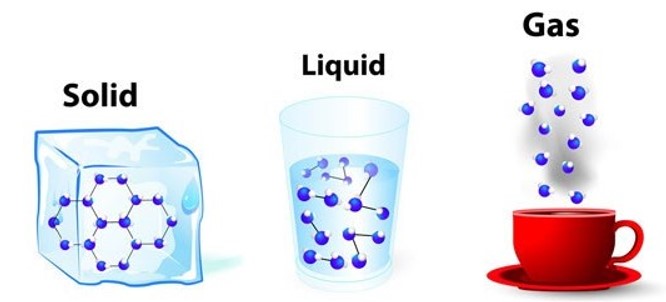
Which of the following summarizes a change that takes place as a solid turns to a liquid?
Particles have a decrease in mobility.
Particles become less ordered.
Particles move closer together.
Intermolecular forces between particles become stronger.
Correct Answer : B
A change that takes place as a solid turns to a liquid is that particles become less ordered ¹. When a solid is heated, its particles gain energy and begin to vibrate more rapidly ². As the temperature increases, the particles gain enough energy to overcome the forces holding them in place and begin to move more freely
². This results in a loss of order as the solid melts and becomes a liquid.
The other options are not correct because they do not accurately describe a change that takes place as a solid turns to a liquid. Particles do not have a decrease in mobility, move closer together, or experience stronger intermolecular forces between them as a solid turns to a liquid.
TEAS 7 Exam Quiz Bank
HESI A2 Exam Quiz Bank
Find More Questions 📚
Teas 7 Questions: We got the latest updated TEAS 7 questions
100% Money Refund: 100% money back guarantee if you take our full
assessment pass with 80% and fail the actual exam.
Live Tutoring: Fully customized live tutoring lessons.
Guaranteed A Grade: All students who use our services pass with 90%
guarantee.
Related Questions
Correct Answer is C
Explanation
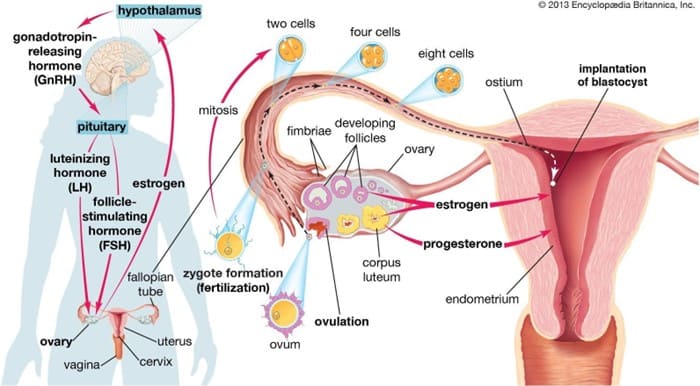
Ovulation is the process in which an ovarian follicle matures and releases a reproductive egg. During ovulation, the egg is released from the ovary and travels down the fallopian tube where it may be fertilized by sperm.
The other options are not processes in which an ovarian follicle matures and releases a reproductive egg. Oogenesis is the process of egg cell formation, menstruation is the shedding of the uterine lining, and fertilization is the fusion of an egg and sperm to form a zygote.
Correct Answer is D
Explanation
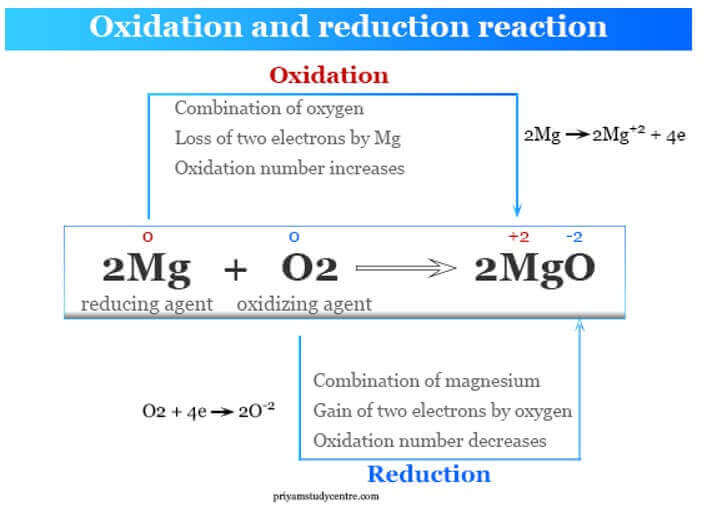
An oxidation reaction occurs when there is a removal of electrons ¹. Oxidation is the loss of electrons during a reaction by a molecule, atom or ion ¹. When oxidation occurs, the oxidation state of the chemical species increases ¹.
The other options are not correct because they do not accurately describe what occurs in an oxidation reaction. Removal of oxygen, addition of carbon, and addition of neutrons are not processes that occur in an oxidation reaction.
Correct Answer is A
Explanation
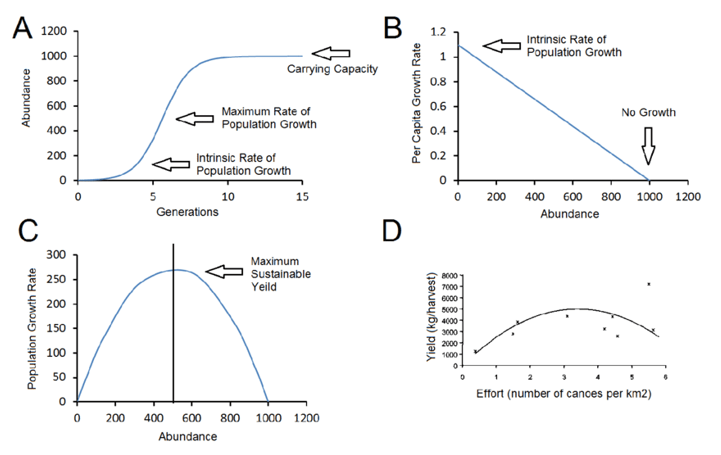
A population is said to be at its carrying capacity when it has reached the maximum number of individuals that can be sustained in a particular environment over a prolonged period of time, given the available resources and the prevailing environmental conditions.
In other words, carrying capacity refers to the maximum population size that a given ecosystem can support without being depleted of resources or experiencing environmental degradation. Once a population reaches its carrying capacity, its growth rate slows down and stabilizes, as individuals start to compete more intensely for resources such as food, water, and shelter, and mortality rates increase.
Carrying capacity is an important concept in ecology and population biology because it helps to explain the dynamics of natural populations and how they are influenced by changes in the environment, such as climate change, habitat loss, and human activities.
Correct Answer is B
Explanation
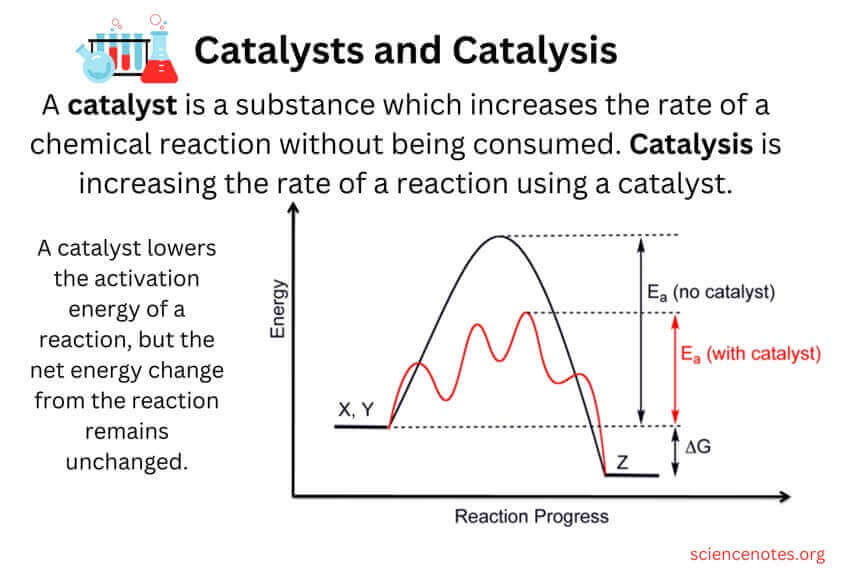
The result of using a catalyst in a chemical reaction is that the reaction is completed in a shorter amount of time ¹. A catalyst is a chemical substance that affects the rate of a chemical reaction by altering the activation energy required for the reaction to proceed ¹. This process is called catalysis ¹. A catalyst provides an alternative pathway for the reaction, one that has a lower activation energy than the uncatalyzed pathway .
The other options are not correct because they do not accurately describe the result of using a catalyst in a chemical reaction. A more desirable product is not necessarily formed, a greater amount of heat energy is not necessarily released by the reaction, and the yield of product is not necessarily increased as a result of using a catalyst.
Correct Answer is A
Explanation
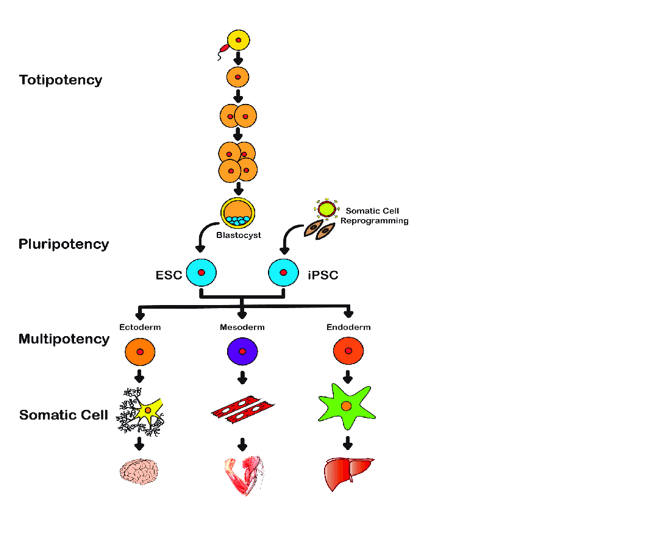
The function of a totipotent cell is to develop into any kind of cell ¹. Totipotent cells have the capacity to produce all adult cell types and can enter the germ line, contributing genetic material to succeeding generations ?. They have the ability to self-replicate, producing daughter cells that are identical to the parent ?.
The other options are incorrect because they do not accurately describe the function of a totipotent cell. Fighting infectious diseases, aiding in the maturation of sex cells, and carrying electrical impulses are not functions performed by totipotent cells.
Correct Answer is C
Explanation
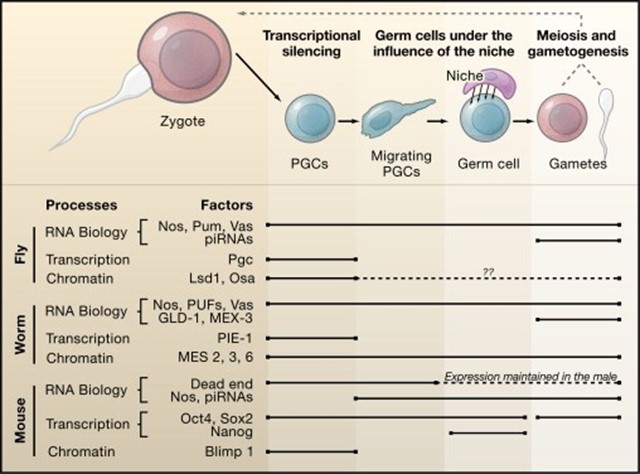
The correct answer is c. germ. If a mother's germ cell contains mutated DNA, this mutation can be passed to her offspring. Germ cells are the reproductive cells (eggs in females and sperm in males) that carry genetic information from one generation to the next.
a. Somatic cells are all the other cells in the body that are not germ cells. Mutations in somatic cells are not passed on to offspring.
b.White blood cells are a type of somatic cell that plays a role in the immune system.
d. Stem cells are undifferentiated cells that have the ability to develop into different types of cells in the
body.
Correct Answer is D
Explanation
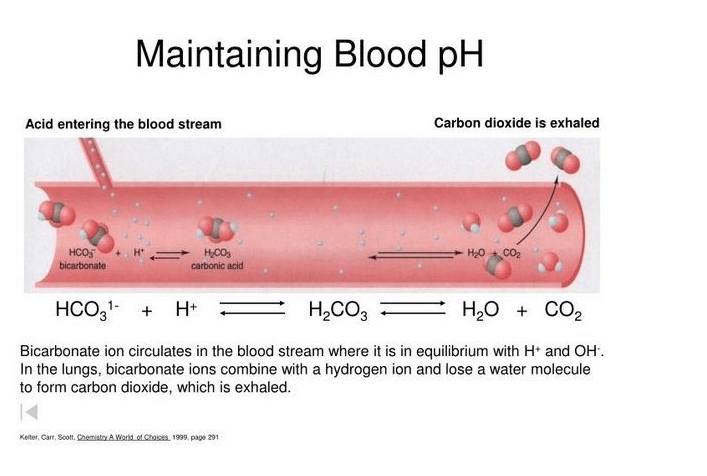
The correct answer is d. Carbonic acid. When blood pH rises, carbonic acid can donate H+ ions to act as a buffer and help maintain the pH within a normal range. Carbonic acid is formed when carbon dioxide dissolves in water and reacts with it.
A. Oxygen is not responsible for donating H+ ions to act as a buffer when blood pH rises.
B. Carbon monoxide is a toxic gas that does not play a role in buffering blood pH.
C. Carbon dioxide can dissolve in water to form carbonic acid, which can then donate H+ ions to act as a buffer.
Correct Answer is D
Explanation
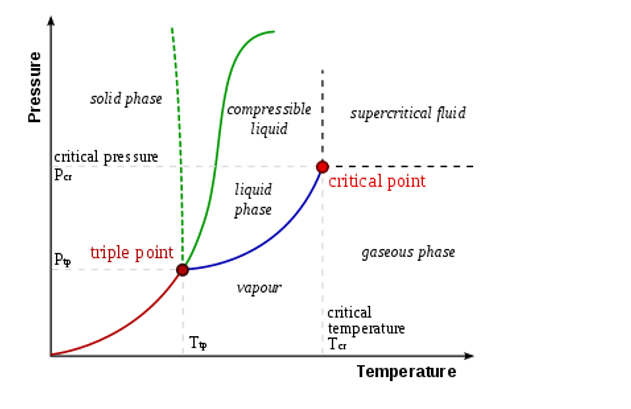
The triple point of a substance is the temperature and pressure at which the substance exists simultaneously in solid, liquid, and gas phases ¹. In thermodynamics, the triple point of a substance is the temperature and pressure at which the three phases (gas, liquid, and solid) of that substance coexist in thermodynamic equilibrium.
The other options are not correct because they do not accurately describe the triple point of a substance. Sol, gel, and plasma are not phases that coexist at the triple.
Correct Answer is B
Explanation
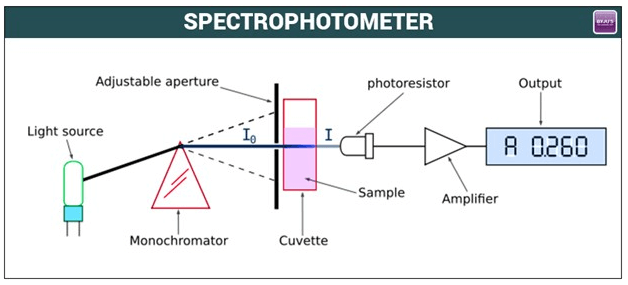
The correct answer is b. Spectrophotometer. A spectrophotometer is a tool that can be used to measure the turbidity of a liquid by measuring the transmission of light through the sample. Turbidity is a measure of the cloudiness or haziness of a liquid caused by the presence of suspended particles. A spectrophotometer measures the amount of light that passes through the sample and compares it to the amount of light that passes through a reference sample to determine the turbidity.
a. A centrifuge is a tool used to separate components of a mixture based on their densities, not to measure
turbidity.
c. A microdensitometer is a tool used to measure the optical density of an image, not to measure turbidity.
d. An electrophorometer is a tool used to separate charged particles based on their size and charge, not to measure turbidity.
Correct Answer is A
Explanation
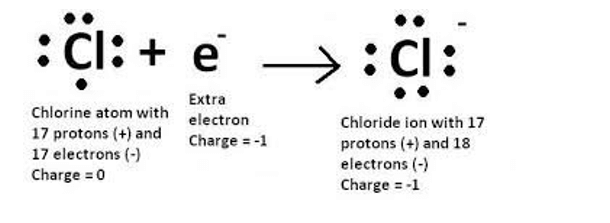
A chloride ion has a negative charge because it gained an electron. When an atom gains an electron, it becomes negatively charged because it now has more electrons than protons. In the case of a chloride ion, the neutral chlorine atom gains an electron to become a negatively charged chloride ion.
The other options are incorrect because they do not result in a negative charge. Losing an electron would result in a positive charge. Losing or gaining a proton would change the identity of the atom and is not related to the formation of a chloride ion.
This question was extracted from the actual TEAS Exam. Ace your TEAS exam with the actual TEAS 7 questions, Start your journey with us today
Visit Naxlex, the Most Trusted TEAS TEST Platform With Guaranteed Pass of 90%.
Money back guarantee if you use our service and fail the actual exam. Option of personalised live tutor on your area of weakness.