
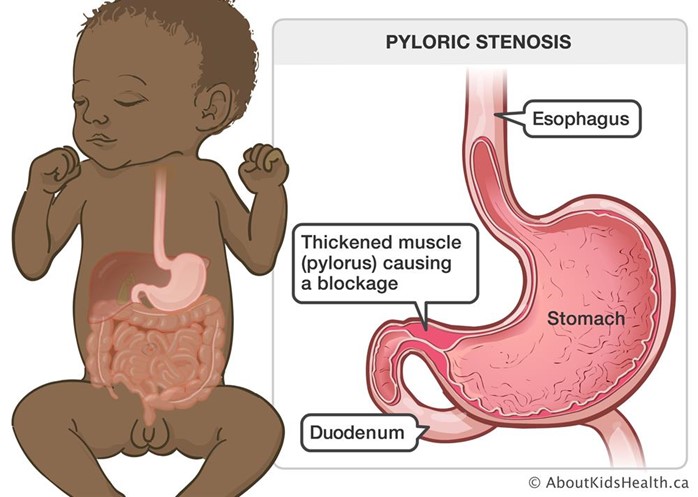
A 6-week-old infant with pyloric stenosis is scheduled for a pyloromyotomy. Which pre-operative nursing action has the highest priority?
Mark an outline of the "olive-shaped" mass in the right epigastric area.
Instruct parents regarding care of the incisional area.
Monitor amount of intake and infant's response to feedings.
Initiate a continuous infusion of IV fluids per prescription.
The Correct Answer is D
Choice A reason: Marking an outline of the "olive-shaped" mass in the right epigastric area is not a priority nursing action. The mass is caused by hypertrophy of the pyloric sphincter, which obstructs gastric emptying and causes projectile vomiting. The mass may not be palpable in all cases.
Choice B reason: Instructing parents regarding care of the incisional area is a post-operative nursing action, not a pre-operative one. The parents will need to learn how to keep the incision clean and dry, monitor for signs of infection, and administer pain medication as prescribed.
Choice C reason: Monitoring amount of intake and infant's response to feedings is important, but not the highest priority. The infant may have difficulty feeding due to nausea, vomiting, and abdominal pain.
Nursing Test Bank
Naxlex Comprehensive Predictor Exams
Related Questions
Correct Answer is ["4"]
Explanation
Step 1 is to convert the child’s weight from pounds to kilograms.
44 pounds ÷ 2.2 = 20 kilograms.
Result at each step = 20 kilograms.
Step 2 is to calculate the total dosage of furosemide in milligrams.
2 mg × 20 kg = 40 mg.
Result at each step = 40 mg.
Step 3 is to determine the volume of medication to administer in milliliters.
40 mg ÷ 10 mg/mL = 4 mL.
Result at each step = 4 mL.
The nurse should administer 4 mL.
Correct Answer is C
Explanation
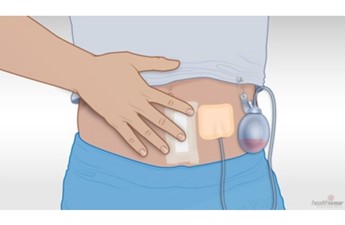
Choice C is correct because observing the incision site of a client who was discharged home with a suprapubic catheter can help detect signs of infection, bleeding, or healing problems. The nurse should inspect the incision site for redness, swelling, drainage, or odor and report any abnormal findings.
Choice A is incorrect because measuring abdominal girth of a client who was discharged home with a suprapubic catheter is not necessary unless there are signs of urinary retention or obstruction. The nurse should monitor the urine output and color and report any changes.
Choice B is incorrect because assessing perineal area of a client who was discharged home with a suprapubic catheter is not necessary unless there are signs of infection or irritation. The nurse should instruct the client on how to keep the perineal area clean and dry and report any discomfort or discharge.
Choice D is incorrect because palpating flank area of a client who was discharged home with a suprapubic catheter is not necessary unless there are signs of urinary tract infection or kidney involvement. The nurse should ask the client about any pain or tenderness in the flank area and report any positive findings.
Whether you are a student looking to ace your exams or a practicing nurse seeking to enhance your expertise , our nursing education contents will empower you with the confidence and competence to make a difference in the lives of patients and become a respected leader in the healthcare field.
Visit Naxlex, invest in your future and unlock endless possibilities with our unparalleled nursing education contents today