
A charge nurse is providing education to a group of newly-licensed nurses about the rights of clients who are involuntarily admitted. Which of the following responses by a newly-licensed nurse indicates understanding of the teaching?
These clients can receive packages after they are privately inspected by security.
These clients cannot be considered for a research study.
These clients can vote in local and federal elections.
These clients cannot refuse their prescribed antipsychotic medications.
The Correct Answer is C
A. These clients can receive packages after they are privately inspected by security: While security measures may be in place to ensure the safety and appropriateness of packages received by clients in a mental health facility, the ability to receive packages is not necessarily dependent on the client's involuntary admission status. Policies regarding package inspections may vary by facility and are not specific to involuntary admission status.
B. Involuntarily admitted clients can be considered for research studies, provided they give informed consent and the study meets ethical guidelines.
C. Clients who are involuntarily admitted retain their right to vote, provided they meet the usual eligibility requirements for voting. Their legal status regarding involuntary admission does not affect their voting rights.
D. Involuntarily admitted clients do have the right to refuse medications, unless a court order mandates treatment or an emergency situation exists where the client poses a danger to themselves or others.
Nursing Test Bank
Naxlex Comprehensive Predictor Exams
Related Questions
Correct Answer is B
Explanation
A. Leading a group discussion with several clients who have schizophrenia and are dealing with tardive dyskinesia: This activity involves providing support and education to individuals already experiencing a mental health condition and its associated complications. It falls under tertiary prevention, which focuses on minimizing the impact of established disease through treatment and rehabilitation.
B. Screening college students who demonstrate manifestations of depressive disorder: Screening individuals for depressive disorder symptoms, especially in a population known to be at risk (e.g., college students), aims to identify mental health issues early and intervene promptly. This falls under secondary prevention, which involves early detection and treatment to prevent the progression of a condition.
C. Training volunteers in an adult day care facility to communicate effectively with clients who have cognitive impairments: This activity focuses on improving communication and interaction skills with clients who have cognitive impairments. It falls under tertiary prevention, aiming to improve the quality of life and function of individuals already affected by cognitive impairment.
D. Teaching personal coping skills to a group of adults whose parents have Alzheimer's disease: This activity aims to empower individuals with coping skills to manage the stress and challenges associated with having a parent with Alzheimer's disease. It falls under tertiary prevention, focusing on minimizing the negative consequences of an already existing condition.
Correct Answer is ["B","C","E"]
Explanation
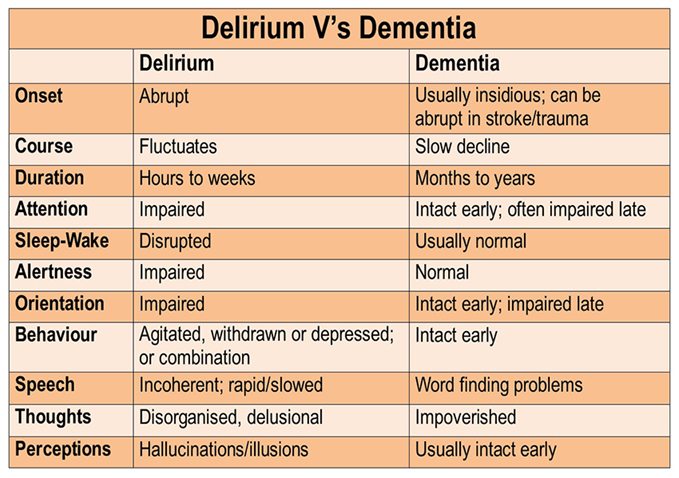
A. Delirium often causes disorganized thinking and communication, but speech can be either slow or rapid and incoherent. Slow speech is not a definitive sign of delirium.
B.Rapid mood changes are commonly seen in delirium. Clients may exhibit sudden shifts in mood, such as becoming agitated, anxious, irritable, or euphoric, often without apparent cause.
C.Hallucinations, both visual and auditory, are common manifestations of delirium. Clients may perceive things that are not present, hear voices, or experience other sensory distortions.
D.Delirium typically involves an altered level of consciousness, which can range from hyperalertness to lethargy. An unaltered level of consciousness is not characteristic of delirium.
E.Restlessness, agitation, and an inability to sit still are frequent manifestations of delirium. Clients may exhibit hyperactivity, fidgeting, pacing, or attempting to remove medical devices or clothing.
Whether you are a student looking to ace your exams or a practicing nurse seeking to enhance your expertise , our nursing education contents will empower you with the confidence and competence to make a difference in the lives of patients and become a respected leader in the healthcare field.
Visit Naxlex, invest in your future and unlock endless possibilities with our unparalleled nursing education contents today