
A client has been diagnosed with mumps as a child, the nurse concluded the client has which type of immunity?
species immunity
natural immunity
artificially acquired immunity
passive immunity
The Correct Answer is B
A. Species immunity refers to immunity shared by all members of a species to certain pathogens, which is not the case here.
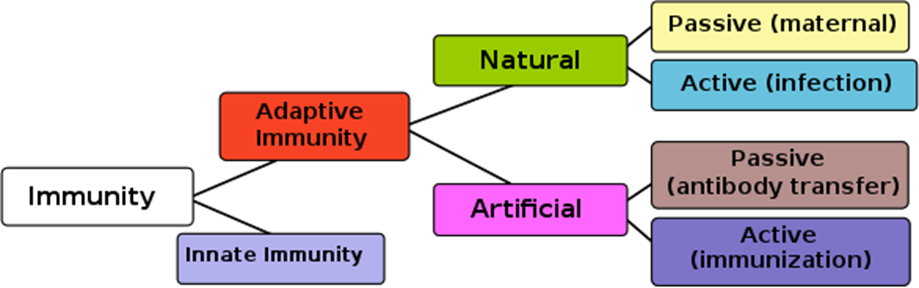
B. Natural immunity refers to immunity that is acquired naturally, often through exposure to a pathogen such as contracting mumps during childhood.
C. Artificially acquired immunity is acquired through deliberate actions such as vaccination, which does not apply in this scenario.
D. Passive immunity is temporary immunity transferred from one individual to another, such as through maternal antibodies passed to an infant, which does not apply in this case.
Nursing Test Bank
Naxlex Comprehensive Predictor Exams
Related Questions
Correct Answer is B
Explanation
A. Species immunity refers to immunity shared by all members of a species to certain pathogens, which is not the case here.
B. Natural immunity refers to immunity that is acquired naturally, often through exposure to a pathogen such as contracting mumps during childhood.
C. Artificially acquired immunity is acquired through deliberate actions such as vaccination, which does not apply in this scenario.
D. Passive immunity is temporary immunity transferred from one individual to another, such as through maternal antibodies passed to an infant, which does not apply in this case.
Correct Answer is ["C","D","F","G"]
Explanation
A. The absence of pain does not necessarily indicate the absence of infection.
B. An oral temperature of 98.9 degrees F is within the normal range and does not indicate infection.
C. Decreased level of consciousness can be a sign of systemic infection, especially if accompanied by other symptoms.
D. An elevated white blood cell count (WBC) is indicative of an inflammatory response, which can occur in infection.
E. A scab forming on the incision line is a normal part of wound healing and does not necessarily indicate infection.
F. Crackles in bilateral lung bases may indicate a possible infection.
G. Redness and warmth at the incision site are signs of inflammation and can indicate infection.
Whether you are a student looking to ace your exams or a practicing nurse seeking to enhance your expertise , our nursing education contents will empower you with the confidence and competence to make a difference in the lives of patients and become a respected leader in the healthcare field.
Visit Naxlex, invest in your future and unlock endless possibilities with our unparalleled nursing education contents today