
A middle-aged woman has been diagnosed with a vitamin D deficiency. How does this deficiency affect her musculoskeletal system?
Reduced calcium absorption leading to weak bones
Increased muscle mass
Enhanced collagen production
Hypercalcemia due to excess calcium
The Correct Answer is A
A. Enteric nervous system: The Enteric nervous system is a mesh-like system of neurons that governs the function of the gastrointestinal tract (the "brain of the gut"). It manages digestion, not the systemic stress response.
B. Central nervous system: While the brain (specifically the hypothalamus and amygdala) perceives the threat, the execution of the physiological "fight or flight" changes (racing heart, dilated pupils) is carried out by the autonomic nerves.
C. Peripheral nervous system: Similar to Question 45, this is a broad anatomical term. While the stress response nerves are located in the periphery, the specific functional system is the Autonomic Nervous System.
D. Autonomic nervous system: The Autonomic Nervous System has two main branches: the Sympathetic and the Parasympathetic. The Sympathetic division is directly responsible for the "fight or flight" response, mobilizing the body's energy during stress.
Question: 47 of 48
A middle-aged woman has been diagnosed with a vitamin D deficiency. How does this deficiency affect her musculoskeletal system?
- Reduced calcium absorption leading to weak bones
- Increased muscle mass
- Enhanced collagen production
- Hypercalcemia due to excess calcium
Correct answer: A
A. Reduced calcium absorption leading to weak bones: The primary physiological role of Vitamin D is to facilitate the absorption of calcium in the intestines. Without sufficient Vitamin D, the body cannot absorb enough calcium from the diet. To maintain blood calcium levels, the body will then leech calcium from the bones, leading to lower bone density (osteopenia/osteoporosis) and increased fracture risk.
B. Increased muscle mass: Vitamin D deficiency is actually associated with muscle weakness and pain (proximal myopathy), not an increase in muscle mass.
C. Enhanced collagen production: Vitamin D is not a primary driver of collagen synthesis; Vitamin C is the key nutrient for collagen production.
D. Hypercalcemia due to excess calcium: A deficiency in Vitamin D leads to hypocalcemia (low calcium levels) because the gut cannot absorb it efficiently. Hypercalcemia would be a sign of Vitamin D toxicity (overdose) or hyperparathyroidism.
Nursing Test Bank
Naxlex Comprehensive Predictor Exams
Related Questions
Correct Answer is C
Explanation
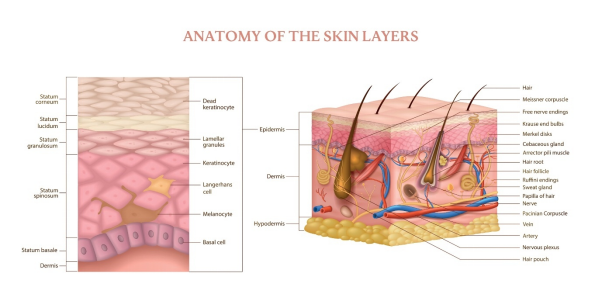
A. Adipose tissue:Adipose (fat) tissue is primarily located in the hypodermis(subcutaneous layer), which is the layer beneath the dermis.
B. Stratum lucidum:This is a specific layer of the epidermis(the outermost skin layer), found only in thick skin like the palms and soles. If the wound has reached the dermis, it has already passed through the epidermis.
C. Sweat glands:The functional units of sweat glands, hair follicles, and sebaceous (oil) glands are located within the dermis. A wound extending into this layer would disrupt these structures.
D. Melanocytes:Melanocytes are pigment-producing cells located in the stratum basale, which is the deepest layer of the epidermis, sitting just above the dermis.
Correct Answer is B
Explanation
A. Insulin: Insulin regulates blood glucose levels and promotes cellular uptake of glucose. It has no role in water conservation or fluid balance.
B. Antidiuretic hormone (ADH): ADH (also called vasopressin) is released by the posterior pituitary in response to increased plasma osmolality or dehydration.
ADH increases water reabsorption in the kidneys by making the renal collecting ducts more permeable to water. This conserves water, concentrates urine, and restores fluid balance.
C. Aldosterone: Aldosterone increases sodium reabsorption and potassium excretion in the kidneys. While water follows sodium, its primary role is electrolyte regulation, not direct water conservation like ADH.
D. Thyroxine: Thyroxine (T4) is a thyroid hormone regulating metabolism, energy production, and growth. It does not regulate body water balance.
Whether you are a student looking to ace your exams or a practicing nurse seeking to enhance your expertise , our nursing education contents will empower you with the confidence and competence to make a difference in the lives of patients and become a respected leader in the healthcare field.
Visit Naxlex, invest in your future and unlock endless possibilities with our unparalleled nursing education contents today