
How does the integumentary system contribute to homeostasis?
By regulating body temperature through sweat and blood flow
By producing digestive enzymes
By storing nutrients and minerals
By filtering blood to remove waste products
The Correct Answer is A
A. By regulating body temperature through sweat and blood flow: The skin (integument) plays a vital role in thermoregulation. When the body is hot, sweat glands release sweat (evaporative cooling) and blood vessels dilate (vasodilation) to release heat. When cold, vessels constrict (vasoconstriction) to retain heat.
B. By producing digestive enzymes: The production of digestive enzymes is the function of the digestive system organs, such as the stomach and pancreas.
C. By storing nutrients and minerals: While the skin synthesizes Vitamin D, the primary storage sites for nutrients and minerals are the liver (vitamins/glycogen) and bones (calcium/phosphorus).
D. By filtering blood to remove waste products: Filtration of blood to remove metabolic waste is the primary function of the urinary system (kidneys).
Nursing Test Bank
Naxlex Comprehensive Predictor Exams
Related Questions
Correct Answer is B
Explanation
A. Epithelial tissue:Epithelial tissue covers body surfaces and lines cavities. It is specialized for protection, secretion, and absorption, not electrical transmission.
B. Nervous tissue:Nervous tissue consists of neurons, which are highly specialized cells capable of generating and conducting electrical signals (action potentials) to communicate information throughout the body.
C. Muscle tissue:While muscle tissue is "excitable" and can conduct an electrical signal along its membrane to trigger contraction, its primary physiological specialization is contraction/movement, not the transmission of information.
D. Connective tissue:Connective tissue provides structural support, transport (blood), and energy storage (fat). It does not conduct electrical impulses.
Correct Answer is C
Explanation
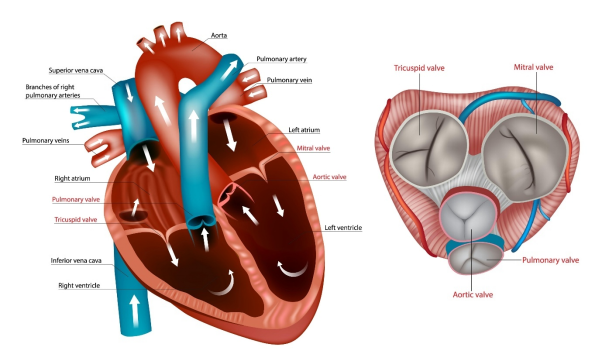
A. Tricuspid valve:The tricuspid valve is located on the right side of the heart. It prevents blood from flowing backward from the right ventricle into the right atrium during contraction (systole).
B. Pulmonary valve:The pulmonary valve is a semilunar valve located between the right ventricle and the pulmonary artery. It prevents blood from flowing back into the right ventricle after it has been pumped to the lungs.
C. Mitral valve:Also known as the bicuspid valve, this valve is located between the left atrium and the left ventricle. During ventricular contraction (systole), it closes tightly to prevent blood from regurgitating (flowing back) into the left atrium, ensuring blood exits through the aorta.
D. Aortic valve:The aortic valve is located between the left ventricle and the aorta. It prevents blood from flowing back into the left ventricle after it has been pumped out to the rest of the body.
Whether you are a student looking to ace your exams or a practicing nurse seeking to enhance your expertise , our nursing education contents will empower you with the confidence and competence to make a difference in the lives of patients and become a respected leader in the healthcare field.
Visit Naxlex, invest in your future and unlock endless possibilities with our unparalleled nursing education contents today