
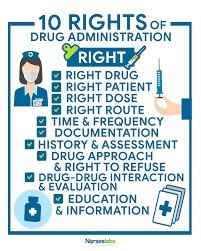
A nurse administers an incorrect dose of medication to a client. The nurse recognizes the error immediately and completes an incident report. Which of the following facts related to the incident should the nurse document in the client's medical record?
Completion of the incident report
Time the medication was given
Reason for the medication error
Notification of the pharmacist
The Correct Answer is B
A is incorrect because the completion of the incident report should not be documented in the client's medical record, but in a separate file for quality improvement purposes.
B is correct because the time the medication was given is an essential fact related to the incident that should be documented in the client's medical record.
C is incorrect because the reason for the medication error should not be documented in the client's medical record, but in the incident report for analysis and prevention of future errors.
D is incorrect because the notification of the pharmacist should not be documented in the client's medical record, but in the incident report for follow-up and corrective actions.
Nursing Test Bank
Naxlex Comprehensive Predictor Exams
Related Questions
Correct Answer is D
Explanation
Choice A rationale:
Protective environment isolation precautions are used for immunocompromised patients to protect them from infections in the environment. It is not the appropriate precaution for a patient with bacterial meningitis, which is spread through respiratory droplets.
Choice B rationale:
Airborne precautions are used for diseases that are spread through the air and require a negative pressure room. Examples include tuberculosis and chickenpox. Bacterial meningitis is spread through respiratory droplets, not airborne transmission.
Choice C rationale:
Contact precautions are used for diseases that are spread by direct or indirect contact. Examples include MRSA and Clostridium difficile. Bacterial meningitis is primarily spread through respiratory droplets, not direct contact.
Choice D rationale:
Droplet precautions are used for diseases that are spread by respiratory droplets, such as influenza and bacterial meningitis. Patients with bacterial meningitis should be placed in a private room and wear a mask, and healthcare providers should wear a mask and eye protection when within 3 feet of the patient. This precaution helps prevent the spread of respiratory droplets containing the bacteria.
Correct Answer is A
Explanation
a. Improves muscle strength.
Explanation:
Neostigmine is a medication used in the treatment of myasthenia gravis (MG). It belongs to a class of drugs called cholinesterase inhibitors. Neostigmine works by inhibiting the breakdown of acetylcholine, a neurotransmiter involved in muscle contraction. In MG, there is a decrease in the amount of acetylcholine available at the neuromuscular junction, leading to muscle weakness and fatigue.
By inhibiting the breakdown of acetylcholine, neostigmine helps to increase the concentration of acetylcholine at the neuromuscular junction. This, in turn, improves muscle strength and can alleviate the symptoms of weakness and fatigue associated with MG.
Option b, destroying the antibodies that cause MG, is not accurate. Myasthenia gravis is an autoimmune disorder characterized by the presence of antibodies that interfere with neuromuscular transmission.
Neostigmine does not directly target or eliminate these antibodies.
Option c, enhancing immune system function, is not accurate either. Neostigmine primarily acts on the neuromuscular junction to improve muscle strength and does not have a direct effect on immune system function.
Option d, preventing excessive coughing, is not the primary action of neostigmine. While increased muscle strength may indirectly improve respiratory function and reduce coughing in individuals with myasthenia gravis, it is not the primary indication or action of neostigmine.
Therefore, the most accurate information to include in teaching about neostigmine for a client with myasthenia gravis is that it improves muscle strength.
Whether you are a student looking to ace your exams or a practicing nurse seeking to enhance your expertise , our nursing education contents will empower you with the confidence and competence to make a difference in the lives of patients and become a respected leader in the healthcare field.
Visit Naxlex, invest in your future and unlock endless possibilities with our unparalleled nursing education contents today