
A nurse discovers that a client has been administered a higher dose of oxybutynin than the prescription indicates. The nurse should assess the client for which of the following adverse effects?
Increased salivation
Hyperthermia Urinary incontinence
Urinary incontinence
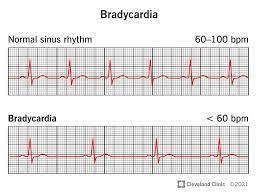
Bradycardia
The Correct Answer is D
Oxybutynin is an anticholinergic medication commonly used to treat urinary incontinence. One of the adverse effects of anticholinergic medications is the potential for bradycardia, which refers to a slower than normal heart rate. Anticholinergic medications can inhibit the effects of acetylcholine, a neurotransmitter responsible for regulating various bodily functions, including heart rate. Therefore, it is important to assess the client for signs of bradycardia after an unintended higher dose of oxybutynin.
Increased salivation (A) is not an expected adverse effect of oxybutynin. In fact, anticholinergic medications like oxybutynin often have the opposite effect, causing dry mouth and reduced salivation.
Hyperthermia (B) is not a typical adverse effect of oxybutynin. It is more commonly associated with other conditions or medications.
Urinary incontinence (C) is the condition that oxybutynin is intended to treat. It is not an adverse effect but rather the therapeutic effect of the medication.
Nursing Test Bank
Naxlex Comprehensive Predictor Exams
Related Questions
Correct Answer is B
Explanation
A. History of asthma:Verapamil is a calcium channel blocker and does not affect the airways or cause bronchospasm, unlike beta-blockers, which can exacerbate asthma.
B. History of heart failure:Verapamil has negative inotropic effects, meaning it decreases the strength of heart contractions. This can exacerbate heart failure, particularly in clients with reduced ejection fraction (systolic heart failure). It is generally contraindicated in clients with severe heart failure as it can worsen symptoms.
C. Systolic BP 110 mm Hg:While verapamil can cause a drop in blood pressure due to its vasodilatory effects, a systolic blood pressure of 110 mm Hg is not an absolute contraindication.
D. A blood creatinine level of 1.0 mg/dL is within the normal range (approximately 0.6–1.2 mg/dL for adults). Verapamil is not contraindicated in clients with normal renal function.
Correct Answer is D
Explanation
Furosemide, a loop diuretic, is known to cause orthostatic hypotension as an adverse effect. It works by increasing urine output and reducing fluid volume, which can lead to a decrease in blood pressure when standing up, causing dizziness or lightheadedness.
Dabigatran (A) is an anticoagulant used to prevent blood clots and does not typically cause orthostatic hypotension as a side effect.
Levothyroxine (B) is a thyroid hormone replacement medication used to treat hypothyroidism. It does not usually cause orthostatic hypotension.
Isoproterenol (C) is a non-selective beta-adrenergic agonist that is primarily used for cardiac stimulation. It can cause tachycardia and palpitations, but orthostatic hypotension is not a common side effect.
Whether you are a student looking to ace your exams or a practicing nurse seeking to enhance your expertise , our nursing education contents will empower you with the confidence and competence to make a difference in the lives of patients and become a respected leader in the healthcare field.
Visit Naxlex, invest in your future and unlock endless possibilities with our unparalleled nursing education contents today