
A nurse is caring for a 2-month-old infant who has Hirschsprung disease (HD). Which of the following areas should the nurse assess for manifestations of HD?
(You will find hot spots to select in the artwork below. Select only the hot spot that corresponds to your answer.)

A
B
C
The Correct Answer is C
A. Incorrect. HD does not affect the eyes.
B. Incorrect. HD does not affect the respiratory system or cause chest manifestations.
C. Correct. Hirschsprung disease (HD) is a congenital disorder that affects the nerve cells in the colon, causing a lack of peristalsis and bowel obstruction. Infants with HD may have a distended abdomen due to fecal accumulation and gas.
Nursing Test Bank
Naxlex Comprehensive Predictor Exams
Related Questions
Correct Answer is ["A","C","D"]
Explanation
A. Remove indwelling urinary catheter when no longer indicated: This action prevents urinary tract infections and promotes bladder function.
B. Elevate affected limb at chest level: This action is contraindicated because it increases venous pressure and edema in the affected extremity, which could compromise blood flow and nerve function.
C. Assist the adolescent with ambulation from bed to chair: This action prevents complications such as deep vein thrombosis, pulmonary embolism, pneumonia, and constipation by enhancing circulation, respiration, and bowel motility.
D. Perform neurovascular assessments every hour: This action monitors for signs of impaired blood flow or nerve function in the affected extremity, such as changes in color, temperature, sensation, movement, or pulse.
E. Apply warm packs to right extremity for the first 24hrs: This action is contraindicated because it increases blood flow and edema in the affected extremity, which could compromise blood flow and nerve function.
Correct Answer is D
Explanation
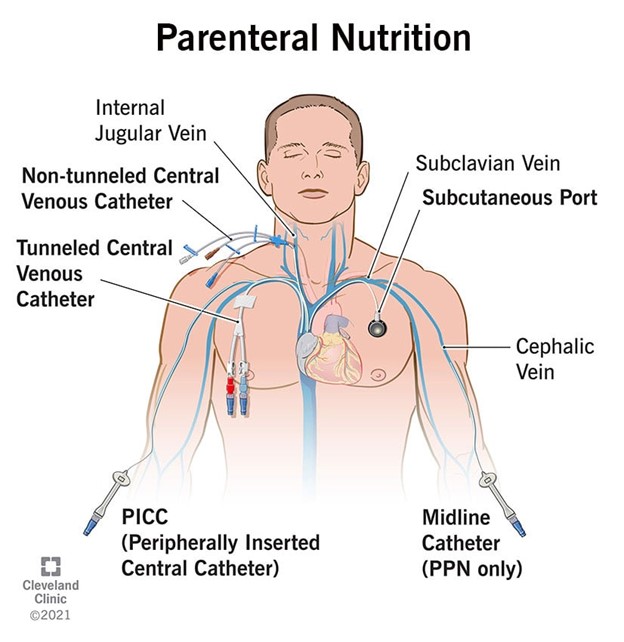
A is incorrect because IV tubing for total parenteral nutrition should be changed every 24 hours to prevent infection.
B is incorrect because abdominal distention is not an expected effect of total parenteral nutrition. It could indicate a complication such as fluid overload or bowel obstruction.
C is incorrect because gastric residual is not relevant for total parenteral nutrition, which bypasses the gastrointestinal tract.
D is correct because weight measurement is an important indicator of fluid balance and nutritional status for clients receiving total parenteral nutrition.
Whether you are a student looking to ace your exams or a practicing nurse seeking to enhance your expertise , our nursing education contents will empower you with the confidence and competence to make a difference in the lives of patients and become a respected leader in the healthcare field.
Visit Naxlex, invest in your future and unlock endless possibilities with our unparalleled nursing education contents today