
A nurse is caring for a client who is newly diagnosed with type 1 diabetes mellitus. The nurse should recognize that the client needs a referral for diabetic education when the client does which of the following?
Draws up regular insulin before NPH when demonstrating injection technique
Says that he will see a primary care provider to treat corns on his feet
States that he will treat hypoglycemic reactions with 15 g of carbohydrates
Lists sweating, shaking, and palpitations as symptoms of hyperglycemia
The Correct Answer is D
The nurse should recognize that the client needs a referral for diabetic education when the client lists sweating, shaking, and palpitations as symptoms of hyperglycemia. These symptoms are actually associated with hypoglycemia, not hyperglycemia. Hyperglycemia is characterized by symptoms such as increased thirst, frequent urination, and fatigue.
Option a is incorrect because drawing up regular insulin before NPH when demonstrating injection technique is the correct procedure.
Option b is incorrect because seeing a primary care provider to treat corns on the feet is an appropriate action for a client with diabetes.
Option c is incorrect because treating hypoglycemic reactions with 15 g of carbohydrates is the recommended treatment.
Nursing Test Bank
Naxlex Comprehensive Predictor Exams
Related Questions
Correct Answer is B
Explanation
Answer: B. Stiff posture
Rationale:
A. Lip-smacking : Lip-smacking is not typically an indication of pain in newborns. It may be associated with hunger or neurological responses, but it does not directly indicate discomfort or pain caused by shoulder dystocia or other injuries.
B. Stiff posture : A stiff posture can indicate pain in newborns, as they often exhibit hypertonicity or rigidity when experiencing discomfort. This response is a protective mechanism and may suggest the newborn is reacting to pain from potential nerve or tissue damage caused by shoulder dystocia.
C. Weak cry : While a weak cry may indicate neurological or respiratory distress, it is not a specific sign of pain. In the context of shoulder dystocia, a weak cry could reflect complications such as brachial plexus injury but does not directly signify the presence of pain.
D. Tongue-darting : Tongue-darting is more commonly associated with neurological issues or feeding difficulties rather than pain. It is not a typical behavioral response to discomfort or injury in newborns experiencing complications like shoulder dystocia.
Correct Answer is C
Explanation
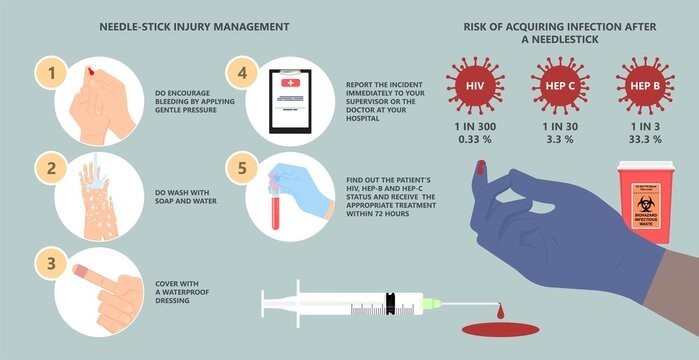
c. Dispose of the used needle immediately in a sharps container.
The nurse should dispose of the used needle immediately in a sharps container to reduce the risk of a needlestick injury. Sharps containers are specifically designed for the safe disposal of needles and other sharp objects. By placing the used needle directly into a sharps container, the nurse eliminates the need for handling or manipulating the needle further, reducing the risk of accidental needlestick injuries.
Explanation for the other options:
a. Place a cap holder securely on the used needle before disposal: Cap holders are not recommended for securing used needles before disposal. They may not provide adequate protection against needlestick injuries and can potentially increase the risk of accidental needlesticks when atempting to secure the cap holder.
b. Recap the needle for disposal later: Recapping the needle increases the risk of a needlestick injury. It is generally not recommended to recap needles after use, as it poses a greater risk of accidental puncture.
d. Detach the used needle and dispose of it promptly: Detaching the needle from the syringe before disposal is not recommended, as it increases the risk of a needlestick injury. It is safer to dispose of the needle and syringe as a unit in a sharps container to minimize the risk of accidental puncture.
Whether you are a student looking to ace your exams or a practicing nurse seeking to enhance your expertise , our nursing education contents will empower you with the confidence and competence to make a difference in the lives of patients and become a respected leader in the healthcare field.
Visit Naxlex, invest in your future and unlock endless possibilities with our unparalleled nursing education contents today