
A nurse is caring for a full-term newborn immediately following birth. Which of the following actions should the nurse take first?
Instill erythromycin ophthalmic ointment in the newborn's eyes.
Weigh the newborn.
Place identification bracelets on the newborn.
Dry the newborn.
The Correct Answer is D
A. Instilling erythromycin ophthalmic ointment in the newborn's eyes is important to prevent neonatal conjunctivitis, but drying the newborn takes precedence to prevent heat loss and stimulate breathing immediately after birth.
B. Weighing the newborn and placing identification bracelets can be done after drying the newborn.
C. Placing identification bracelets on the newborn is important for identification purposes but does not take precedence over drying the newborn to prevent heat loss and stimulate breathing.
D. Dry the newborn: Drying the newborn is the priority immediately after birth to prevent heat
loss and stimulate breathing. The newborn is wet from amniotic fluid and may be cold due to the temperature difference between the intrauterine and extrauterine environment. Drying the newborn with a warm, soft towel helps to prevent hypothermia and promotes the initiation of breathing, which is essential for oxygenation and lung expansion. This action supports the
newborn's transition to extrauterine life and sets the stage for subsequent assessments and interventions.
Nursing Test Bank
Naxlex Comprehensive Predictor Exams
Related Questions
Correct Answer is A
Explanation
A.
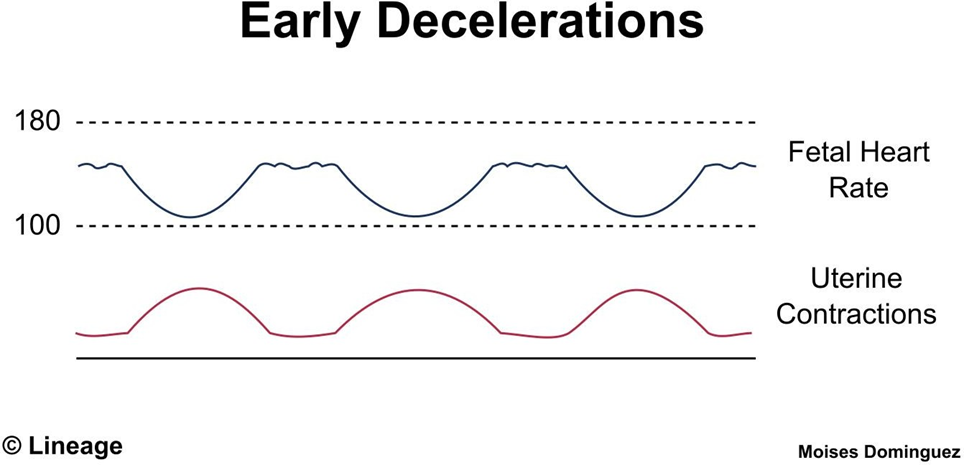
A. Early decelerations are typically benign and occur in response to head compression during contractions. They mirror the uterine contractions and are not associated with fetal distress.
B. Fetal hypoxia is associated with variable or late decelerations, not early decelerations.
C. Abruptio placentae is a medical emergency characterized by premature separation of the placenta from the uterine wall, which can lead to late decelerations due to fetal hypoxia.
D. Postmaturity is a term used to describe a pregnancy that extends beyond 42 weeks gestation and is not directly related to fetal heart rate patterns during labor.
Correct Answer is A
Explanation
A.
A. "Your PICC line will allow long-term access for antibiotic therapy." - PICC lines are often used for long-term administration of medications, including antibiotics, due to their durability and ease of use.
B. "You should use a 5-milliliter barrel syringe to flush your PICC line at home." - The size of the syringe used to flush a PICC line depends on the facility's protocol and the client's specific
needs. Specific instructions regarding syringe size should be provided by the healthcare provider or nurse.
C. "Your PICC line must be placed in your nondominant arm." - The choice of arm for PICC line placement depends on various factors, including vein integrity and the client's comfort. There is no strict requirement for the PICC line to be placed in the nondominant arm.
D. "You should immobilize the arm with the PICC line using a sling." - Immobilizing the arm with a sling is not typically necessary after PICC line placement. Clients are usually instructed to avoid excessive movement and to keep the arm clean and dry to prevent complications.
Whether you are a student looking to ace your exams or a practicing nurse seeking to enhance your expertise , our nursing education contents will empower you with the confidence and competence to make a difference in the lives of patients and become a respected leader in the healthcare field.
Visit Naxlex, invest in your future and unlock endless possibilities with our unparalleled nursing education contents today