
A nurse is caring for an adolescent who has a history of violent behavior and has asked the nurse to keep confidential information about he desire to kill several classmates and a school teacher. Which of the following responses by the nurse is appropriate to give?
"I can see that you trust me, but you should share those feelings with your psychiatrist, not me."
I will not violate our nurse-client relationship. The information we discuss will remain confidential between us."
"Because you are a minor, I have to share any information that I feel is important with your parents."
"I cannot promise that. I must share this information with other members of the team who are responsible for planning your care,"
The Correct Answer is D
A. "I can see that you trust me, but you should share those feelings with your psychiatrist, not me."
While encouraging the client to discuss their feelings with a mental health professional is important, this response does not address the immediate safety concern presented by the client's intent to harm others.
B. "I will not violate our nurse-client relationship. The information we discuss will remain confidential between us."
This response is inappropriate because it implies that the nurse will keep the information confidential, even though the client's statement raises concerns about the safety of others.
C. "Because you are a minor, I have to share any information that I feel is important with your parents."
While parents may have the right to be informed about their minor child's well-being, this situation goes beyond parental involvement. The nature of the threat requires immediate intervention from appropriate professionals and authorities.
"D. I cannot promise that. I must share this information with other members of the team who are responsible for planning your care."
Explanation: The client's statement about having a desire to harm others, especially classmates and a school teacher, raises significant concerns about the safety and well-being of not only the client but also the potential victims. In cases where the client poses a risk of harm to themselves or others, the nurse has a duty to breach confidentiality to ensure the safety of all involved parties. This response conveys the nurse's ethical obligation to involve other members of the treatment team and appropriate authorities to address the potential threat.
Nursing Test Bank
Naxlex Comprehensive Predictor Exams
Related Questions
Correct Answer is ["0.75"]
Explanation
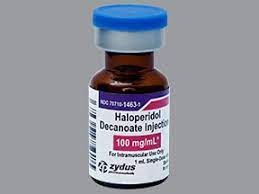
To calculate the volume (ml) of haloperidol decanoate needed for a dose of 75 mg, you can use the following formula:
Volume (ml) = Dose (mg) / Concentration (mg/ml)
Given:
Dose = 75 mg
Concentration = 100 mg/ml
Plugging in the values:
Volume (ml) = 75 mg / 100 mg/ml
Volume (ml) = 0.75 ml
Rounding to the nearest hundredth:
Volume (ml) = 0.75 ml
So, the nurse should administer 0.75 ml of haloperidol decanoate for the dose of 75 mg.
Correct Answer is ["C","D","E"]
Explanation
Fine hand tremors and pill rolling are not indicative of tardive dyskinesia. These symptoms are more commonly associated with other neurological or movement disorders.
B. Urinary retention and constipation:
Urinary retention and constipation are not symptoms of tardive dyskinesia. These symptoms are more related to anticholinergic effects of certain medications.
C. Facial grimacing and eye blinking:
Facial grimacing and repetitive, involuntary movements such as eye blinking are characteristic of tardive dyskinesia. These abnormal movements of the face and eyes are commonly seen in individuals who have been on long-term antipsychotic medications, especially older ones like haloperidol.
D. Involuntary pelvic rocking and hip thrusting movements:
TD often includes repetitive, purposeless movements of the limbs, trunk, and pelvis.
E. Tongue thrusting and lip-smacking:
Tongue thrusting and lip-smacking are classic symptoms of tardive dyskinesia. These repetitive, involuntary movements involving the mouth and tongue are often observed in individuals who have been on antipsychotic medications for an extended period of time.
Whether you are a student looking to ace your exams or a practicing nurse seeking to enhance your expertise , our nursing education contents will empower you with the confidence and competence to make a difference in the lives of patients and become a respected leader in the healthcare field.
Visit Naxlex, invest in your future and unlock endless possibilities with our unparalleled nursing education contents today