
A nurse is explaining to parents how the central nervous system of a child differs from that of an adult. Which statement accurately describes these differences?
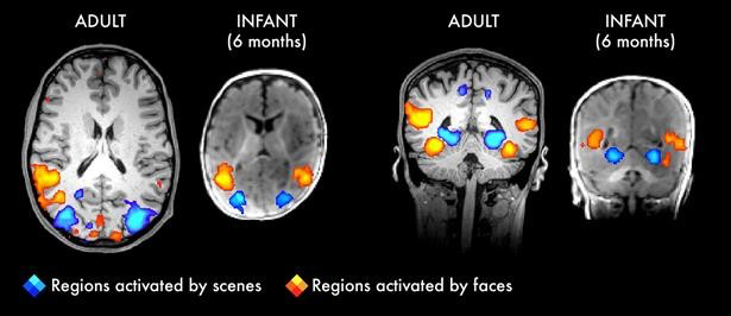
The brain of a term infant weighs less than half of the weight of the adult brain.
The infant has 150 mL of CSF compared with 50 mL in the adult.
Coordination and fine motor skills develop as myelinization of peripheral nerves progresses.
Papilledema is a common manifestation of ICP in the very young child.
The Correct Answer is A
The statement that accurately describes the difference between the central nervous system (CNS) of a child and an adult is option A. The brain of a term infant weighs less than half of the weight of the adult brain. The brain undergoes significant growth and development during childhood and continues to develop until early adulthood. At birth, the brain is only a fraction of its adult weight, and it continues to grow and mature over time.
infant has 150 mL of cerebrospinal fluid (CSF) compared with 50 mL in the adult in (option B), is incorrect. The volume of CSF in the CNS is not a significant difference between children and adults.
coordination and fine motor skills develop as myelination of peripheral nerves progresses in (option C), is an incorrect statement. Myelination is an ongoing process that occurs throughout childhood and contributes to the development of coordination and fine motor skills.
papilledema is a common manifestation of increased intracranial pressure (ICP) in the very young child in (option D), is not correct. Papilledema refers to swelling of the optic disc and is not commonly seen in very young children. Signs of increased ICP in young children may present differently compared to adults and can include altered mental status, irritability, vomiting, and changes in vital signs.
Nursing Test Bank
Naxlex Comprehensive Predictor Exams
Related Questions
Correct Answer is C
Explanation
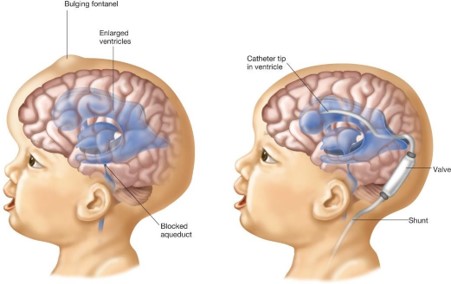
Hydrocephalus refers to a condition characterized by an abnormal accumulation ofcerebrospinal fluid (CSF) within the ventricles of the brain. In infants, hydrocephalus cancause the head to enlarge rapidly as a result of the increased pressure exerted by theaccumulatingfluid.Thisisknownas"rapidheadgrowth."Theincreasedintracranialpressurecanlead to irritabilityand poorappetite in infants.
The distended scalp veins are another common sign of hydrocephalus. As the fluidaccumulates,itputs pressureon thebloodvessels inthe brain,causingtheveinsin thescalptobecome morevisible and distended.
Cerebral palsy in (option A) is incorrect because is a neurological disorder that affects bodymovementandmusclecoordination,butitdoesnottypicallypresentwithrapid headgrowthordistended scalp veins.
Syndrome of inappropriate antidiuretic hormone (SIADH) in (option B) is incorrect becauseitisacondition characterized byexcessivesecretionofantidiuretichormone,leadingtofluidimbalance, but it does not usually cause rapid head growth or distended scalp veins. Reye'ssyndrome (D) is a rare condition that primarily affects the liver and brain, and it does nottypicallypresent with rapid headgrowthor distended scalp veins.
Therefore, based on the signs described, hydrocephalus (C) is the most likely disorder in thiscase.Itisimportantto seekmedicalattentionpromptlyforaproperdiagnosisand appropriatemanagementofhydrocephalus in infants.
Correct Answer is B
Explanation
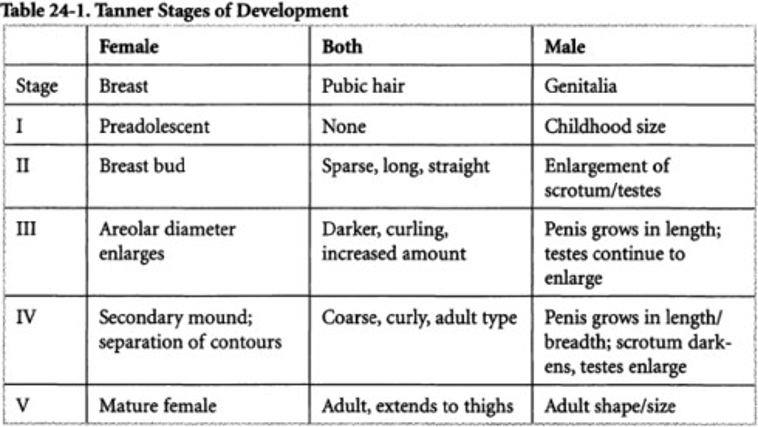
The statement that best describes Tanner staging is option B. Tanner staging is a system used
to classify and assess the progression of puberty based on the development of both primary
and secondary sexual characteristics. It provides a framework for evaluating the physical
changes that occur during puberty, such as breast development in females, testicular
enlargement in males, pubic hair growth, and other secondary sexual characteristics. The
Tanner staging system includes several stages that represent the sequential progression of
puberty in individuals.
staging of puberty based on the initiation of primary sexual characteristics in (option A) is not
correct because it, does not encompass the full scope of Tanner staging, as it does not
consider the progression of secondary sexual characteristics.
staging of puberty based on the initiation of menarche (the onset of menstruation) and
nocturnal emissions, in (option C) is not correct. While menarche and nocturnal emissions are
significant events that occur during puberty, they do not encompass the entire Tanner staging
system, which involves a broader range of physical changes.
predictable stages of puberty based on chronologic age, in (option D) is not correct. Tanner
staging is based on the progression of physical changes and sexual maturation, rather than
being solely determined by chronological age. Puberty can vary in onset and duration among
individuals, making chronological age an unreliable indicator of pubertal development.
Whether you are a student looking to ace your exams or a practicing nurse seeking to enhance your expertise , our nursing education contents will empower you with the confidence and competence to make a difference in the lives of patients and become a respected leader in the healthcare field.
Visit Naxlex, invest in your future and unlock endless possibilities with our unparalleled nursing education contents today