
Which factor predisposes the urinary tract to infection?
Prostatic secretions in males
Short urethra in young girls
Frequent emptying of the bladder
increased fluid intake
The Correct Answer is B
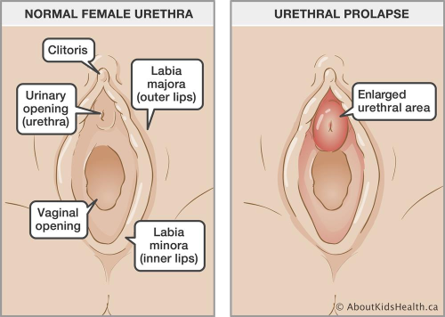
The anatomy of the urinary tract can influence the susceptibility to urinary tract infections (UTIs). In the case of young girls, their urethra is shorter compared to adult females, which increases the likelihood of bacteria reaching the bladder. The shorter urethra provides a shorter distance for bacteria to travel from the outside of the body to the bladder, making it easier for bacteria to enter and cause an infection.
Prostatic secretions in males in (option A) is incorrect because they are not directly related to the increased susceptibility to UTIs. Prostatic secretions can, however, contribute to conditions like prostatitis, which is an inflammation of the prostate gland that can be associated with urinary symptoms and sometimes bacterial infections.
Frequent emptying of the bladder in (option C) is incorrect because it is generally considered a healthy practice as it helps to flush out any potential bacteria in the urinary tract. It does not predispose the urinary tract to infection.
Increased fluid intake in (option D) is incorrect because it is generally encouraged to maintain proper hydration and urinary tract health. It can help to flush out bacteria from the urinary system, reducing the risk of infection.
While these factors may have implications for urinary tract health, the specific factor that predisposes the urinary tract to infection, particularly in young girls, is the short urethra (B).
Nursing Test Bank
Naxlex Comprehensive Predictor Exams
Related Questions
Correct Answer is B
Explanation
The statement that best describes why infants are at greater risk for dehydration than older children is option B. Infants have an increased extracellular fluid volume compared to older children. This means that a larger proportion of their total body fluid is located outside the cells, in the extracellular compartment. This higher extracellular fluid volume makes infants more susceptible to fluid losses and dehydration if they experience inadequate fluid intake or increased fluid losses.
infants have an increased ability to concentrate urine in (option A), is incorrect. Infants have limited renal function and may have difficulty concentrating urine compared to older children and adults. This can contribute to a higher risk of dehydration in infants.
infants have a greater volume of intracellular fluid in (option C), is incorrect. The volume of intracellular fluid is not the primary factor contributing to the increased risk of dehydration in infants.
infants have a smaller body surface area in (option D) is incorrect because it, is not directly related to the increased risk of dehydration. Body surface area influences heat exchange and fluid loss through sweating but is not the main factor contributing to the higher risk of dehydration in infants.
Correct Answer is C
Explanation
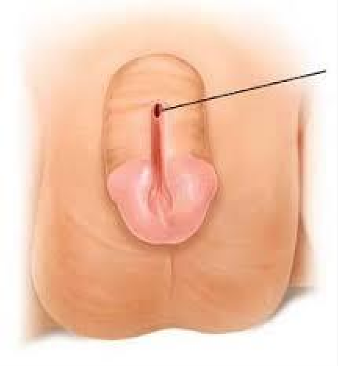
Epispadias is a congenital condition in which the urethral opening is not located at the tip of the penis as is typical but rather along the ventral surface (underside) of the penis. In severe cases, the urethral opening may extend all the way to the bladder.
absence of a urethral opening in (option A) is incorrect because it, describes a condition called urethral agenesis or aplasia, where the urethral opening is completely absent. This is a different condition from epispadias.
a penis shorter than usual for age, in (option B) is incorrect because it is not specific to epispadias and could be caused by various factors unrelated to the condition.
a urethral opening along the dorsal surface (topside) of the penis in (option D) is incorrect because it, is a condition called hypospadias. Hypospadias is another congenital anomaly where the urethral opening is located on the underside or along the ventral surface of the penis, but it is not synonymous with epispadias.
Therefore, epispadias specifically refers to the urethral opening being situated along the ventral surface of the penis.
Whether you are a student looking to ace your exams or a practicing nurse seeking to enhance your expertise , our nursing education contents will empower you with the confidence and competence to make a difference in the lives of patients and become a respected leader in the healthcare field.
Visit Naxlex, invest in your future and unlock endless possibilities with our unparalleled nursing education contents today