
A nurse is preparing to administer a medication that is available in a glass ampule.
Which of the following actions should the nurse plan to take?
The nurse should use a filter needle to withdraw the medication.
The nurse should break the neck of the ampule toward their body.
The nurse should use the same needle to draw up and inject the client.
The nurse should dispose of the ampule in the trash can.
The Correct Answer is A
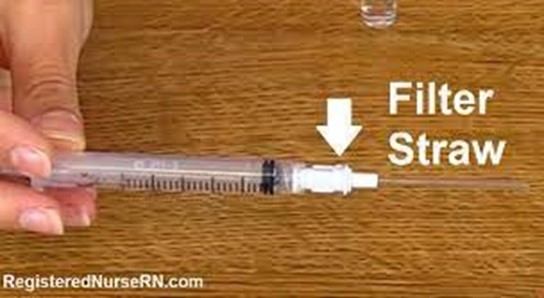
This is because glass ampules can leave small shards of glass in the solution, which can be harmful if injected into the client. A filter needle has a small mesh that traps any glass particles and prevents them from entering the syringe.
Choice B is wrong because the nurse should break the neck of the ampule away from their body to avoid injury from the glass.
Choice C is wrong because the nurse should use a different needle to inject the client after withdrawing the medication with a filter needle. This is to prevent contamination and reduce pain for the client.
Choice D is wrong because the nurse should dispose of the ampule in a sharps container, not in the trash can. This is to prevent injury and infection from the broken glass.
Nursing Test Bank
Naxlex Comprehensive Predictor Exams
Related Questions
Correct Answer is B
Explanation
Choice A rationale: Testing skin turgor on the abdomen is common in infants and young children, but in older adults, abdominal skin often loses elasticity due to aging, making it an unreliable site for assessment.
Choice B rationale: The skin over the sternum or the subclavicular area (shoulder/chest) is the most reliable site for older adults. These areas typically maintain more elastic tissue, providing a more accurate reflection of hydration.
Choice C rationale: Assessing the stomach is essentially the same as the abdomen. This site is prone to skin sagging and loss of subcutaneous fat in elderly patients, which can lead to false-positive signs of dehydration.
Choice D rationale: The skin on the neck is thin and highly susceptible to wrinkles and sun damage. Lifting the skin here in an older adult will often show "tenting" even if the patient is well-hydrated.
Correct Answer is D
Explanation
The correct answer is choice D. The client is oriented times three.
This means that the client knows who they are, where they are, and what time it is. This indicates a high level of consciousness and a normal Glasgow coma scale (GCS) rating of 15.
Choice A is wrong because the client withdraws from pain.
This means that the client reacts to a painful stimulus by pulling away from it. This indicates a lower level of consciousness and a GCS rating of 4 for motor response.
Choice B is wrong because the client is unable to obey commands.
This means that the client does not follow simple instructions such as moving a limb or opening their eyes. This indicates a lower level of consciousness and a GCS rating of 1 or 2 for motor response.
Choice C is wrong because the client opens eyes to sound.
This means that the client does not open their eyes spontaneously, but only when they hear a loud noise. This indicates a lower level of consciousness and a GCS rating of 3 for eye opening.
The Glasgow coma scale is a clinical tool used to assess the level of consciousness of a person after a brain injury.
It consists of three tests: eye opening, verbal response, and motor response.
Each test has a score range from 1 to 6, with higher scores indicating higher levels of consciousness. The total score ranges from 3 to 15, with lower scores indicating higher risk of death.
Whether you are a student looking to ace your exams or a practicing nurse seeking to enhance your expertise , our nursing education contents will empower you with the confidence and competence to make a difference in the lives of patients and become a respected leader in the healthcare field.
Visit Naxlex, invest in your future and unlock endless possibilities with our unparalleled nursing education contents today