
A nurse is preparing to administer an osmotic diuretic IV to a client with increased intracranial pressure. Which of the following should the nurse identify as the purpose of the medication?
Reduce edema of the brain.
Increase cell size in the brain.
Expand extracellular fluid volume.
Provide fluid hydration.
The Correct Answer is A
Choice A Reason: This is correct because an osmotic diuretic, such as mannitol, works by creating an osmotic gradient that draws fluid from the brain tissue into the blood vessels, thereby reducing cerebral edema and intracranial pressure.
Choice B Reason: This is incorrect because an osmotic diuretic would decrease, not increase, the cell size in the brain by removing fluid from the intracellular space.
Choice C Reason: This is incorrect because an osmotic diuretic would decrease, not expand, the extracellular fluid volume by increasing the urine output and excreting excess fluid from the body.
Choice D Reason: This is incorrect because an osmotic diuretic would not provide fluid hydration, but rather cause fluid loss and dehydration.
Nursing Test Bank
Naxlex Comprehensive Predictor Exams
Related Questions
Correct Answer is B
Explanation
Choice A: Drainage of clear fluid from the ears is not an expected finding for a client who has an epidural hematoma, but rather a sign of a basilar skull fracture, which is a different type of head injury. The clear fluid is cerebrospinal fluid (CSF), which leaks from the brain through the fractured skull.
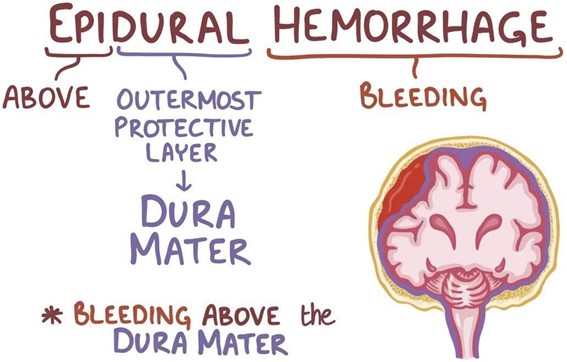
Choice B: Alternating periods of alertness and unconsciousness is an expected finding for a client who has an epidural hematoma, because it indicates a rapid increase in intracranial pressure (ICP) due to bleeding between the dura mater and the skull. The client may have a brief loss of consciousness at the time of injury, followed by a lucid interval, and then a rapid deterioration of mental status.
Choice C: Narrowing pulse pressure is not an expected finding for a client who has an epidural hematoma, but rather a sign of increased ICP due to any cause. Pulse pressure is the difference between systolic and diastolic blood pressure. As ICP rises, it compresses the brainstem and causes bradycardia and hypertension, resulting in a decreased pulse pressure.
Choice D: Extensive bruising in the mastoid area is not an expected finding for a client who has an epidural hematoma, but rather a sign of a basilar skull fracture, which is a different type of head injury. The bruising is also known as Batle's sign, and it occurs due to blood pooling behind the ear.
Correct Answer is ["167 "]
Explanation
To calculate the dose of enoxaparin, follow these steps:
1) Convert the client's weight from pounds to kilograms:
245 lbs / 2.2046 (kg/lb) = 111.13 kg (rounded to the nearest whole number, it's 111 kg).
2) Multiply the weight in kilograms by the prescribed dose per kilogram:
111 kg x 1.5 mg/kg = 166.5 mg.
Round the answer to the nearest whole number, so the nurse should administer 167 mg per dose of enoxaparin every 12 hours to the client with a pulmonary embolism.

Whether you are a student looking to ace your exams or a practicing nurse seeking to enhance your expertise , our nursing education contents will empower you with the confidence and competence to make a difference in the lives of patients and become a respected leader in the healthcare field.
Visit Naxlex, invest in your future and unlock endless possibilities with our unparalleled nursing education contents today