
A nurse is preparing to administer dextrose 5% in water (DSW) 1,200 ml. IV to infuse over 24 hr. The drop factor of the manual IV tubing is 15 gtt/mL. The nurse should set the manual IV infusion to deliver how many gtt/min? (Round to the nearest whole number. Use a leading zero if it applies. Do not use a trailing zero.)
The Correct Answer is ["13"]
To calculate the infusion rate in drops per minute (gtt/min), we can use the following formula: Infusion rate (gtt/min) = (Volume to be infused (ml) * Drop factor) / Time (min) Given:
Volume to be infused: 1,200 ml
Drop factor: 15 gtt/ml
Time: 24 hr
First, we need to convert the time from hours to minutes:
24 hr * 60 min/hr = 1,440 min
Now, we can calculate the infusion rate:
Infusion rate (gtt/min) = (1,200 ml * 15 gtt/ml) / 1,440 min
Simplifying the equation:
Infusion rate (gtt/min) = 18,000 gtt / 1,440 min
Dividing both sides:
Infusion rate (gtt/min) ≈ 12.5 gtt/min
Rounding the answer to the nearest whole number, the nurse should set the manual IV infusion to deliver approximately 13 gtt/min.
Nursing Test Bank
Naxlex Comprehensive Predictor Exams
Related Questions
Correct Answer is ["1"]
Explanation
The nurse typically auscultates the abdomen for bowel sounds before meals or at least 1-2 hours after meals. This timing allows for the assessment of both the presence and character of bowel sounds. It is important to note that bowel sounds can vary depending on factors such as the client's activity level, diet, and any underlying gastrointestinal conditions. Therefore, a comprehensive assessment of bowel sounds should be conducted at different times to obtain an accurate representation of the client's bowel function.
Correct Answer is D
Explanation
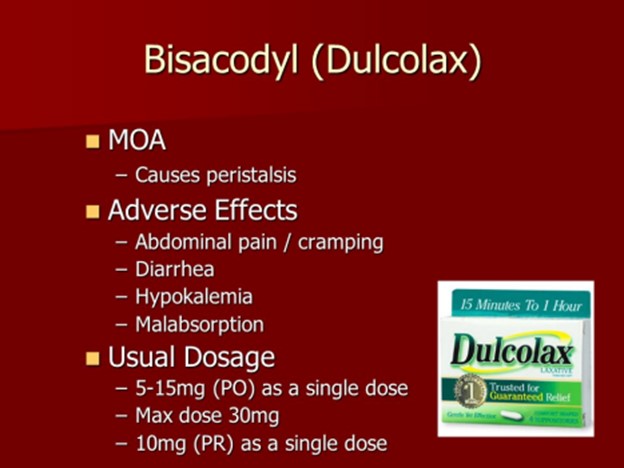
Bisacodyl is a stimulant laxative commonly used to treat constipation. However, it is important to educate the client about the potential risks associated with chronic laxative use. The statement regarding electrolyte imbalance is important because excessive or prolonged use of laxatives can lead to electrolyte disturbances, such as low potassium levels (hypokalemia), which can have adverse effects on various body functions.
"Daily bowel movements are necessary for good intestinal health": While regular bowel movements are generally desirable, stating that daily bowel movements are necessary for good intestinal health is an overgeneralization. Bowel movement frequency can vary among individuals, and it is important to consider other factors such as diet, hydration, and overall health.
"Chronic use of laxatives can lead to a tear in the rectal mucosa": While chronic use of laxatives can lead to complications such as dependence and potential damage to the digestive system, specifically mentioning a tear in the rectal mucosa (rectal mucosal injury) is not the most commonly associated concern.
"Decrease your intake of high-fiber foods": It is generally recommended to increase fiber intake for individuals with constipation. Decreasing high-fiber foods would counteract the benefits of dietary fiber in promoting regular bowel movements and alleviating constipation.
Whether you are a student looking to ace your exams or a practicing nurse seeking to enhance your expertise , our nursing education contents will empower you with the confidence and competence to make a difference in the lives of patients and become a respected leader in the healthcare field.
Visit Naxlex, invest in your future and unlock endless possibilities with our unparalleled nursing education contents today