
A nurse is reinforcing teaching about cimetidine with a client who has peptic ulcer disease. Which of the following information should the nurse include in the teaching?
Expect breast tenderness while taking this medication
Wait at least 1 hr after taking the medication before taking an antacid.
Take ibuprofen for occasional aches and pains
Take this medication on an empty stomach
The Correct Answer is B
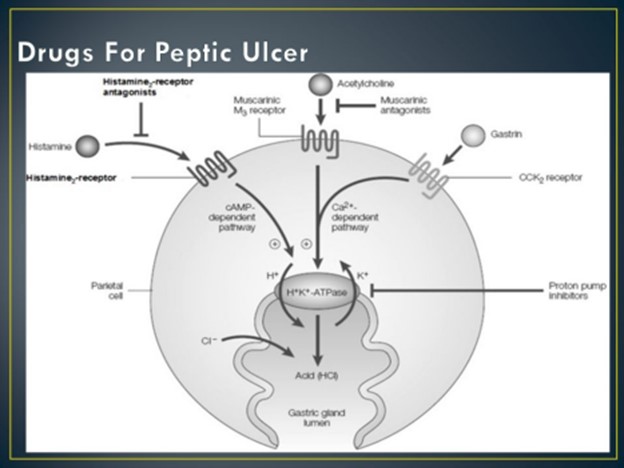
Cimetidine is a medication known as a histamine H2 receptor antagonist, commonly used in the treatment of peptic ulcer disease. It works by reducing the production of stomach acid. When teaching a client about cimetidine, it is important to inform them about the timing of taking other medications, specifically antacids.
Antacids, which are used to neutralize stomach acid, can interfere with the absorption of cimetidine if taken simultaneously. Therefore, it is generally recommended to wait at least 1 hour after taking cimetidine before taking an antacid. This allows sufficient time for the cimetidine to be absorbed and start working effectively before neutralizing stomach acid with an antacid.
Nursing Test Bank
Naxlex Comprehensive Predictor Exams
Related Questions
Correct Answer is ["13"]
Explanation
To calculate the infusion rate in drops per minute (gtt/min), we can use the following formula: Infusion rate (gtt/min) = (Volume to be infused (ml) * Drop factor) / Time (min) Given:
Volume to be infused: 1,200 ml
Drop factor: 15 gtt/ml
Time: 24 hr
First, we need to convert the time from hours to minutes:
24 hr * 60 min/hr = 1,440 min
Now, we can calculate the infusion rate:
Infusion rate (gtt/min) = (1,200 ml * 15 gtt/ml) / 1,440 min
Simplifying the equation:
Infusion rate (gtt/min) = 18,000 gtt / 1,440 min
Dividing both sides:
Infusion rate (gtt/min) ≈ 12.5 gtt/min
Rounding the answer to the nearest whole number, the nurse should set the manual IV infusion to deliver approximately 13 gtt/min.
Correct Answer is A
Explanation
The purpose of the stool guaiac test, also known as the fecal occult blood test (FOBT), is to identify the presence of hidden or occult blood in the stool. This test is commonly performed to screen for gastrointestinal bleeding, which can indicate various conditions such as colorectal cancer, ulcers, polyps, or other sources of bleeding in the digestive tract.
The other options mentioned are not specifically detected by the stool guaiac test:
Parasites: The stool guaiac test does not directly detect parasites in the feces. Parasite testing requires a different type of analysis, such as microscopic examination or specialized laboratory tests.
Bacteria: The stool guaiac test does not specifically detect bacteria in the feces. If a bacterial infection is suspected, other diagnostic tests such as stool culture or polymerase chain reaction (PCR) may be ordered.
Fat: The stool guaiac test is not designed to detect fat in the feces. If there is a concern about fat malabsorption, other tests such as fecal fat analysis or Sudan stain may be used.
Whether you are a student looking to ace your exams or a practicing nurse seeking to enhance your expertise , our nursing education contents will empower you with the confidence and competence to make a difference in the lives of patients and become a respected leader in the healthcare field.
Visit Naxlex, invest in your future and unlock endless possibilities with our unparalleled nursing education contents today