
A nurse is preparing to administer nitroglycerin topical ointment to a client. Which of the following actions should the nurse plan to take?
Measure the dosage of medication using the applicator paper.
Spread the medication over a 12.7 cm (5 in) area of the client's skin.
Cover the medication on the client's skin with a sterile gauze pad.
Apply the medication to the same site for three consecutive days.
The Correct Answer is B
Choice A Reason:
Using the applicator paper is appropriate for measuring the dosage accurately, but simply measuring the dosage is not the only step; the medication needs to be spread over the specified area of the skin.
Choice B Reason:
Spread the medication over a 12.7 cm (5 in) area of the client's skin. Nitroglycerin ointment is typically measured using a specific paper or measuring tape provided with the medication to ensure accurate dosing. The ointment is spread thinly and evenly over a specific measured area of the skin, usually about 12.7 cm (5 inches) in length, to maintain consistent dosing.
Choice C Reason:
Covering the medication with a sterile gauze pad is not typically done with nitroglycerin ointment. The ointment is meant to be absorbed through the skin, and covering it may interfere with its absorption.
Choice D Reason:
Nitroglycerin ointment is often applied to different sites to prevent skin irritation and tolerance from developing at one site. It's usually rotated to different clean areas of the skin to prevent skin irritation and tolerance buildup. Applying it to the same site for three consecutive days is not standard practice.
Nursing Test Bank
Naxlex Comprehensive Predictor Exams
Related Questions
Correct Answer is D
Explanation
Choice A Reason:
Decreased respiratory rate is incorrect. Heparin administration and an elevated aPTT typically do not directly cause a decrease in respiratory rate. Respiratory rate changes might occur due to other factors such as respiratory conditions, pain, or medications affecting the respiratory center, but they are not commonly linked to heparin therapy.
Choice B Reason:
Increased blood pressure is incorrect. Heparin therapy and an elevated aPTT do not typically result in increased blood pressure. Heparin's primary effect is on preventing blood clotting, and while it can indirectly affect blood pressure by preventing clot formation, it doesn't typically cause a significant increase in blood pressure.
Choice C Reason:
Decreased temperature is incorrect. Heparin therapy and an elevated aPTT do not generally cause a decrease in body temperature. Changes in body temperature might occur due to various reasons such as infection, environmental factors, or certain medications, but they are not directly linked to heparin administration.
Choice D Reason:
Increased pulse rate is correct. An increased pulse rate can be an early indicator of bleeding or a potential side effect of heparin administration. Heparin's anticoagulant effect might predispose individuals to bleeding, so an increased pulse rate could indicate a response to potential bleeding complications rather than a direct effect of heparin itself.
Correct Answer is B
Explanation
Choice A Reason:
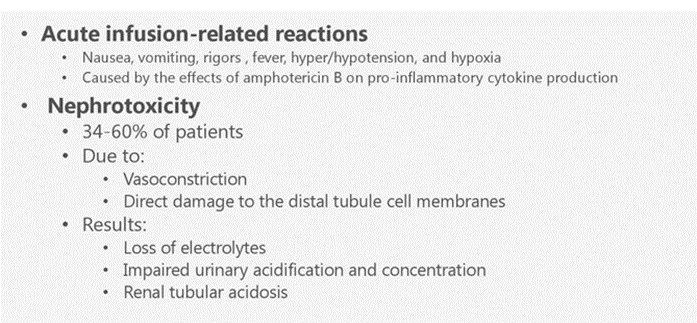
Dry cough is incorrect. While cough can be a side effect of amphotericin B, it's not a hallmark sign of an acute infusion reaction.
Choice B Reason:
Fever is correct. Acute infusion reactions to amphotericin B can manifest in various ways, and fever is a common sign indicating an immediate adverse reaction during the infusion. Other potential signs of an acute infusion reaction may include chills, rigors, hypotension, flushing, headache, or nausea.
Choice C Reason:
Pedal edema is incorrect. Swelling of the feet or pedal edema is not a typical manifestation of an acute infusion reaction to amphotericin B.
Choice D Reason:
Hyperglycemia is incorrect. Increased blood glucose levels (hyperglycemia) are not commonly associated with an acute infusion reaction to amphotericin B. However, amphotericin B may have effects on electrolytes and kidney function that could indirectly impact glucose levels.
Whether you are a student looking to ace your exams or a practicing nurse seeking to enhance your expertise , our nursing education contents will empower you with the confidence and competence to make a difference in the lives of patients and become a respected leader in the healthcare field.
Visit Naxlex, invest in your future and unlock endless possibilities with our unparalleled nursing education contents today