
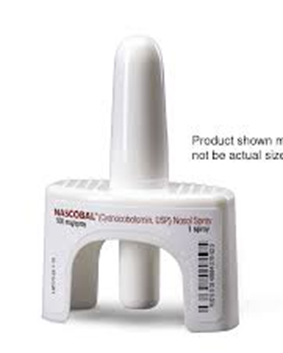
A nurse is teaching a client who has pernicious anemia to self-administer nasal cyanocobalamin. Which of the following information should the nurse include in the teaching?
"Lie down for 1 hour after administering the medication."
"Plan to self-administer this medication for the next 6 months."
"Administer the medication into one nostril once per week."
"Use a nasal decongestant 15 minutes before the medication if you have a stuffy nose."
The Correct Answer is C
Choice A Reason:
There's no requirement to lie down for an hour after administering nasal cyanocobalamin.
Choice B Reason:
The duration of treatment might vary depending on the healthcare provider's instructions and the client's response, so stating a specific duration of 6 months may not be accurate.
Choice C Reason:
"Administer the medication into one nostril once per week. “Nasal cyanocobalamin is typically used weekly for the treatment of pernicious anemia. It's administered into one nostril as directed by a healthcare provider. This method allows for the absorption of vitamin B12 through the nasal mucosa.
Choice D Reason:
Using a nasal decongestant before administering the medication is not typically part of the recommended administration protocol for nasal cyanocobalamin.
Nursing Test Bank
Naxlex Comprehensive Predictor Exams
Related Questions
Correct Answer is C
Explanation
Choice A Reason:
Serum osmolarity 310 mOsm/L is incorrect. Serum osmolarity measures the concentration of particles in the blood. While an elevated serum osmolarity might indicate dehydration, it's not a direct indicator of the effectiveness of treatment. It signifies the concentration of solutes in the blood rather than reflecting hydration improvement after treatment.
Choice B Reason:
Serum hematocrit 55%m is incorrect. Elevated hematocrit levels can occur in dehydration because of hemoconcentration (an increase in the concentration of red blood cells due to reduced fluid volume). However, similar to serum osmolarity, while it can indicate dehydration, it doesn't specifically reflect the effectiveness of treatment.
To determine effective treatment of dehydration, the nurse should consider the laboratory values that reflect hydration status:
Choice C Reason:
Urine specific gravity 1.020 is correct. Urine specific gravity measures the concentration of solutes in the urine, indicating the kidneys' ability to concentrate urine. A higher specific gravity (typically above 1.020) suggests more concentrated urine, which can indicate dehydration. As hydration improves, the urine becomes less concentrated, so a decrease in urine specific gravity toward the normal range (around 1.010-1.020) indicates effective rehydration and improved kidney function in retaining fluids.
Choice D Reason:
BUN 28 mg/dL is incorrect. Blood urea nitrogen (BUN) levels can also rise in dehydration due to reduced kidney perfusion. However, like serum osmolarity and hematocrit, while it can indicate dehydration, it doesn't directly show the effectiveness of treatment or the improvement in hydration status after treatment.
Correct Answer is C
Explanation
Choice A Reason:
Hypomagnesemia is incorrect. Lithium therapy itself is not a direct cause of hypomagnesemia. While exercise can affect magnesium levels to some extent, it's not a primary electrolyte imbalance that is typically associated with lithium use or considered a significant concern specifically due to lithium.
Choice B Reason:
Hypocalcemia is incorrect. Similarly, lithium therapy is not a direct cause of hypocalcemia. Exercise can affect calcium metabolism, but it's not a primary electrolyte imbalance typically associated with lithium use or considered a significant concern specifically due to lithium.
When a client taking lithium begins a new exercise program, the nurse should primarily assess for the risk of:
Choice C Reason:
Hyponatremia is correct. Lithium can affect the body's regulation of sodium, and excessive sweating due to increased exercise can lead to sodium loss. This combination can potentially contribute to the development of hyponatremia (low sodium levels). Therefore, when a client on lithium starts a new exercise regimen that may induce sweating, monitoring for signs of hyponatremia becomes crucial. Symptoms of hyponatremia can include confusion, headaches, nausea, and in severe cases, seizures or coma.
Choice D Reason:
Hypokalemia is incorrect. Lithium itself does not commonly cause hypokalemia. Exercise can lead to potassium loss through sweating, but hypokalemia is not the primary electrolyte imbalance typically associated with lithium use or considered a significant concern specifically due to lithium.
Whether you are a student looking to ace your exams or a practicing nurse seeking to enhance your expertise , our nursing education contents will empower you with the confidence and competence to make a difference in the lives of patients and become a respected leader in the healthcare field.
Visit Naxlex, invest in your future and unlock endless possibilities with our unparalleled nursing education contents today