
A nurse is providing anticipatory guidance to a client who has phenylketonuria (PKU) and is planning a pregnancy. Which of the following information should the nurse include in the discussion?
"Diet sodas should not be consumed more than two or three times per week."
"A low-protein diet should be followed for 3 months prior to conception."
"Serum bilirubin should be monitored one to two times per month during pregnancy."
"Breastfeeding will prevent your baby from developing PKU."
The Correct Answer is B
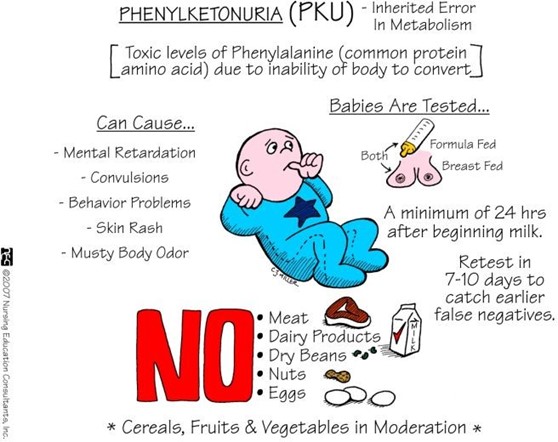
Phenylketonuria (PKU) is an inherited metabolic disorder in which the body cannot properly process an amino acid called phenylalanine. If left untreated, phenylalanine can build up to harmful levels in the body, leading to intellectual disability and other health problems. Managing PKU involves following a strict low-phenylalanine diet.
When discussing anticipatory guidance for a client with PKU who is planning a pregnancy, it is important to focus on monitoring the maternal phenylalanine levels during pregnancy. Serum bilirubin is not directly related to PKU management and would not require specific monitoring in this context.
Regarding the other options:
"Diet sodas should not be consumed more than two or three times per week": While it is generally advisable to limit the consumption of diet sodas due to their artificial sweeteners, this statement does not directly relate to PKU management or pregnancy planning.
"A low-protein diet should be followed for 3 months prior to conception": A low-protein diet is a fundamental aspect of managing PKU. However, the timeline mentioned (3 months prior to conception) is not supported by current guidelines. PKU management should be ongoing and tailored to the individual's needs, with dietary adjustments made as necessary throughout pregnancy.
"Breastfeeding will prevent your baby from developing PKU": This statement is incorrect. Breast milk naturally contains phenylalanine, which could be harmful to an infant with PKU. Infants with PKU must receive a specialized formula that is low in phenylalanine from birth. Breastfeeding is not recommended for infants with PKU unless specifically guided by a healthcare professional.
Nursing Test Bank
Naxlex Comprehensive Predictor Exams
Related Questions
Correct Answer is A
Explanation
Folate, also known as vitamin B9, is an essential nutrient during pregnancy as it plays a crucial role in the development of the baby's neural tube. When teaching a client about increasing folate in their diet during pregnancy, it's important to recommend foods that are rich in this nutrient.
1/2 cup cooked asparagus: Asparagus is a good source of folate, and 1/2 cup of cooked asparagus contains approximately 134 micrograms of folate.
1/2 cup plain low-fat yogurt: While yogurt is a healthy food choice, it is not a significant source of folate.
1 medium apple: Apples are generally low in folate content and not considered a rich source of this nutrient.
1 small banana: Bananas are also not known for their folate content and do not provide a significant amount of this nutrient.
Given the options provided, 1/2 cup cooked asparagus is the best source of folate. It is important to note that other food sources rich in folate include dark leafy greens, legumes, fortified cereals, and citrus fruits. Encouraging a varied and balanced diet that incorporates these folate-rich foods can help ensure adequate folate intake during pregnancy.
Correct Answer is B
Explanation
Corn: Corn is a gluten-free grain and can be included in a gluten-free diet for individuals with celiac disease.
Wheat germ: Wheat germ is derived from wheat and contains gluten. Therefore, it should be avoided by individuals with celiac disease.
Salami: Salami is a processed meat product that may contain gluten-containing additives or fillers. Therefore, it is important for individuals with celiac disease to carefully read the ingredient labels of processed meat products or opt for certified gluten-free alternatives.
Barley: Barley is a gluten-containing grain and should be strictly avoided by individuals with celiac disease.
It is important for individuals with celiac disease to carefully read food labels and select gluten-free alternatives. Gluten-containing grains and their derivatives, such as wheat, barley, and wheat germ, should be avoided. Safe alternatives, such as corn, rice, quinoa, and Gluten-free oats, can be included in the diet.
Whether you are a student looking to ace your exams or a practicing nurse seeking to enhance your expertise , our nursing education contents will empower you with the confidence and competence to make a difference in the lives of patients and become a respected leader in the healthcare field.
Visit Naxlex, invest in your future and unlock endless possibilities with our unparalleled nursing education contents today