
A nurse is providing discharge teaching for a client who is receiving treatment for genital herpes.
Which of the following statements by the client indicates the effectiveness of the teaching?
"I should apply antibiotic ointment to the lesions.".
"I should expect my lesions to resolve in 6 weeks.".
"I should use natural skin condoms during sexual intercourse.".
"I should expect to take my medication for 3 weeks.".
"I should expect to take my medication for 3 weeks.".
The Correct Answer is B
This statement indicates that the client understands that genital herpes lesions can take time to heal and that they may not resolve immediately.
Choice A is incorrect because antibiotic ointment is not used to treat genital herpes lesions.
Antiviral medication is used to manage symptoms and prevent outbreaks.
Choice C is incorrect because natural skin condoms are not effective in preventing the spread of genital herpes.
Latex condoms should be used during sexual intercourse to reduce the risk of transmission.
Choice D is incorrect because the duration of antiviral medication treatment for genital herpes varies and may be longer than 3 weeks.
It’s important for the client to follow their healthcare provider’s instructions for taking medication.
Nursing Test Bank
Naxlex Comprehensive Predictor Exams
Related Questions
Correct Answer is B
Explanation
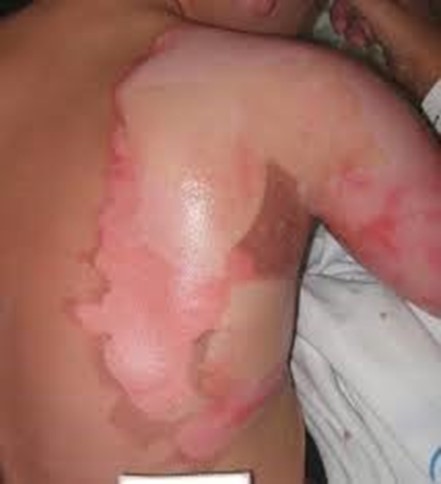
A full-thickness burn injury can result in fluid loss and low blood volume (hypovolemia), which can lead to hypotension.
Choice A, Urinary diuresis, is not the correct answer because it refers to increased production of urine and is not a common symptom of a full-thickness burn injury.
Choice C, Decreased respiratory rate, is not the correct answer because it refers to a decrease in the number of breaths per minute and is not a common symptom of a full-thickness burn injury.
Choice D, Bradycardia, is not the correct answer because it refers to a slow heart rate and is not a common symptom of a full-thickness burn injury.
Correct Answer is B
Explanation
A client reports having a fever, night sweats, and cough for 2 days.
These symptoms are associated with infectious diseases such as tuberculosis.
In order to prevent the spread of infection to other patients, this client would require a private room.
A client with diabetes mellitus and acute ketoacidosis does not require a private room based on their diagnosis.
C)A client with a compound fracture of the right femur does not require a private room based on their diagnosis.
D)An older adult client with aspiration pneumonia does not require a private room based on their diagnosis.
Whether you are a student looking to ace your exams or a practicing nurse seeking to enhance your expertise , our nursing education contents will empower you with the confidence and competence to make a difference in the lives of patients and become a respected leader in the healthcare field.
Visit Naxlex, invest in your future and unlock endless possibilities with our unparalleled nursing education contents today