
A nurse is providing nutritional education to a client who is obese. The nurse should include in the information that which of the following gastrointestinal disorders is commonly associated with obesity?
Gastroesophageal reflux disease
Crohn's disease
Peptic ulcer disease
Celiac disease
The Correct Answer is A
GERD is a chronic condition in which stomach acid and contents flow back into the esophagus, leading to symptoms such as heartburn, regurgitation, and chest pain. Obesity is a significant risk factor for developing GERD. The excess weight can put pressure on the stomach, causing the contents to reflux into the esophagus more easily. Additionally, obesity is associated with a higher prevalence of hiatal hernia, which can further contribute to the development of GERD
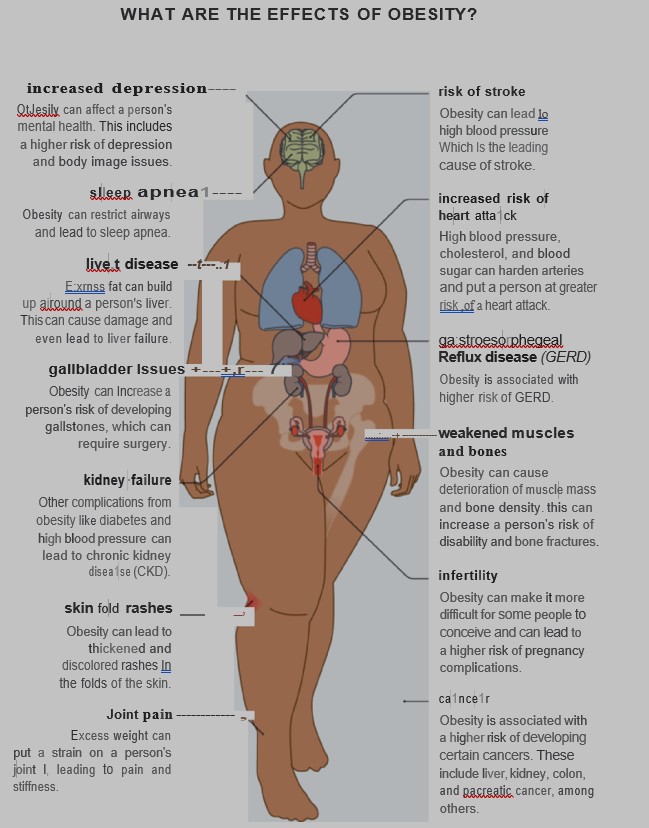
Crohn's disease, Peptic ulcer disease, and Celiac disease are not commonly associated with obesity:
Crohn's disease is a type of inflammatory bowel disease that can affect any part of the gastrointestinal tract. It is not specifically associated with obesity but rather has complex genetic and environmental factors as its causes.
Peptic ulcer disease refers to the presence of open sores in the lining of the stomach or small intestine. While obesity may be a risk factor for gastric ulcers, the association is not as strong as with GERD.
Celiac disease is an autoimmune disorder triggered by the ingestion of gluten, a protein found in wheat, barley, and rye. It is not directly related to obesity but is associated with a specific immune response to gluten in genetically susceptible individuals.
Nursing Test Bank
Naxlex Comprehensive Predictor Exams
Related Questions
Correct Answer is B
Explanation
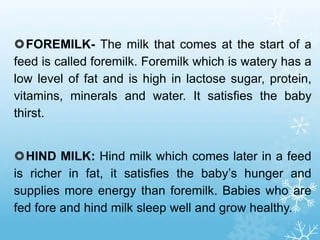
"My baby will receive the most milk within the first 10 minutes of the feeding": This statement is correct. During the first few minutes of breastfeeding, the baby receives the foremilk, which is more watery and quenches their thirst. The hindmilk, which is higher in fat and provides more calories, is obtained as the feeding progresses.
"I need to supplement feedings with water once my baby is 4 months old": Breast milk provides all the necessary fluids for the baby, and additional water supplementation is generally not needed for exclusively breastfed infants.
"The purpose of alternating breasts during feedings is to promote comfort": The purpose of alternating breasts during feedings is to ensure that the baby receives both foremilk and hindmilk from each breast and to stimulate milk production in both breasts. It is not primarily for promoting comfort.
"During the first few weeks, I should nurse my baby every 4 hours": Breastfed newborns typically feed more frequently than every 4 hours, especially during the early weeks.
On-demand feeding is recommended, which means feeding the baby whenever they show hunger cues, which can be more frequent than every 4 hours.
Correct Answer is A
Explanation
Omega-3 fatty acids, specifically eicosapentaenoic acid (EPA) and docosahexaenoic acid (DHA), are mainly found in fatty fish. Since vegans avoid animal products, they may not consume adequate amounts of EPA and DHA. Plant-based sources of omega-3 fatty acids, such as flaxseeds, chia seeds, and walnuts, provide a different type of omega-3 called
alpha-linolenic acid (ALA), which can be converted to EPA and DHA in the body to some extent. However, this conversion is not very efficient, and the amount of EPA and DHA obtained from plant-based sources may be insufficient to meet the body's needs. Therefore, vegan individuals are at greater risk of omega-3 fatty acid deficiency.
Magnesium, potassium, and vitamin A deficiencies are not specifically associated with a vegan diet. These nutrients can be obtained from various plant-based sources. Magnesium can be found in foods such as legumes, nuts, seeds, whole grains, and leafy green vegetables.
Potassium is abundant in fruits, vegetables, legumes, and whole grains.
Vitamin A can be obtained from plant-based sources like carrots, sweet potatoes, spinach, and other dark leafy greens. However, it is important for individuals following a vegan diet to ensure they consume a varied and balanced diet to meet their nutritional needs for these and other essential nutrients.
Whether you are a student looking to ace your exams or a practicing nurse seeking to enhance your expertise , our nursing education contents will empower you with the confidence and competence to make a difference in the lives of patients and become a respected leader in the healthcare field.
Visit Naxlex, invest in your future and unlock endless possibilities with our unparalleled nursing education contents today