
A nurse is providing teaching about preventing back strain to the caregiver of a client who is immobile and requires assistance to reposition in bed. Which of the following statements by the caregiver indicates an understanding of the teaching?
"I will twist at the waist while pulling the draw sheet."
"I will keep my legs straight to provide more power in the lift."
"I will tighten my abdominal muscles prior to moving."
"I will place the bed in the lowest position."
The Correct Answer is C
Tightening the abdominal muscles prior to moving helps to stabilize the spine and prevent back strain. This is an important technique for caregivers to use when assisting a client who is immobile and requires repositioning in bed.
a. Twisting at the waist while pulling the draw sheet can cause strain on the back muscles and should be avoided.
b. Keeping the legs straight does not provide more power in the lift and can also cause strain on the back muscles.
d. Placing the bed in the lowest position does not necessarily prevent back strain and is not related to the proper technique for repositioning a client in bed.
Nursing Test Bank
Naxlex Comprehensive Predictor Exams
Related Questions
Correct Answer is A
Explanation
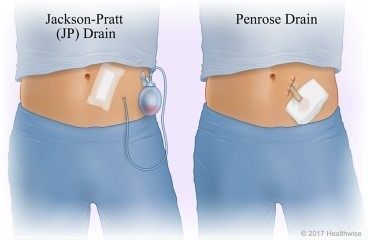
When completing a dressing change on a client who has a surgical wound drain, the nurse should use a separate, sterile swab for each stroke when cleaning the wound. This helps to prevent the spread of infection and ensures that the wound is properly cleaned.
Option b is incorrect because the nurse should first clean the incision and then clean the drain site.
Option c is incorrect because the nurse should don sterile gloves before cleaning the wound.
Option d is incorrect because the nurse should not cut a 4 x 4 piece of gauze to place around the drain site; instead, the nurse should use a pre-cut drain sponge.
Correct Answer is ["480"]
Explanation
480 mL.
The client's total oral intake over the 4-hour period is 3 ounces of milk + 2 ounces of orange juice + 3 ounces of tea + 4 ounces of water = 12 ounces. Since there are approximately 30 mL in 1 ounce, the client's oral intake in mL is 12 ounces * 30 mL/ounce = 360 mL.
The client is also receiving dextrose 5% in 0.45% sodium chloride at a rate of 30 mL/hr by continuous IV infusion. Over a 4-hour period, the client will receive a total of 30 mL/hr * 4 hours = 120 mL from the IV infusion.
Therefore, the client's total intake for that 4-hour period is 360 mL (oral intake. + 120 mL (IV infusion) = 480 mL.
Whether you are a student looking to ace your exams or a practicing nurse seeking to enhance your expertise , our nursing education contents will empower you with the confidence and competence to make a difference in the lives of patients and become a respected leader in the healthcare field.
Visit Naxlex, invest in your future and unlock endless possibilities with our unparalleled nursing education contents today