
A nurse is providing teaching to a client who has a new diagnosis of multiple sclerosis. Which of the following statements should the nurse make?
"Use a cane when walking to maintain your balance."
"Plan to take a hot bath once a week to reduce stress."
"Engage in a rigorous exercise program to maintain muscle tone."
"Place a scatter rug in your bathroom to prevent falling"
The Correct Answer is A
Choice A reason:
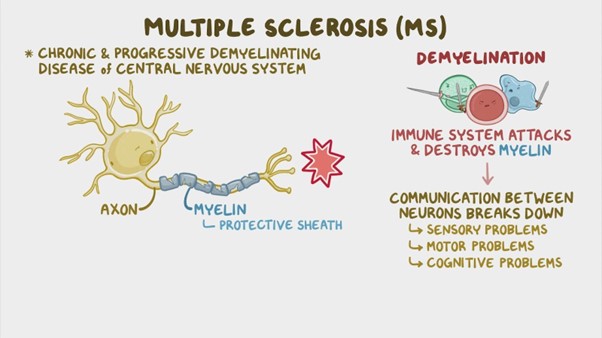
"Use a cane when walking to maintain your balance" is the correct statement Multiple sclerosis (MS) is a chronic autoimmune condition that affects the central nervous system, leading to various neurological symptoms. Mobility and balance issues are common among individuals with MS, and using a cane can be helpful in providing stability and support while walking. It can also reduce the risk of falls and improve the client's overall safety and confidence when ambulating.
Choice B reason:
"Plan to take a hot bath once a week to reduce stress” is not appropriate statement. Heat sensitivity is a common symptom in individuals with MS, and exposure to heat, such as hot baths or saunas, can exacerbate MS symptoms. It is generally advisable for individuals with MS to avoid excessive heat exposure as it can worsen fatigue and other neurological symptoms.
Choice C reason:
"Engage in a rigorous exercise program to maintain muscle tone" is not appropriate. While exercise is beneficial for individuals with MS, particularly in maintaining muscle strength and flexibility, it is essential to avoid a rigorous or overly strenuous exercise program. High-intensity exercise may lead to increased fatigue and exacerbation of MS symptoms. A personalized exercise plan that considers the individual's specific abilities and limitations is recommended.
Choice D reason
"Place a scatter rug in your bathroom to prevent falling" is not appropriate statement. Placing a scatter rug in the bathroom is not advisable, especially for individuals with mobility and balance issues like those with MS. Scatter rugs can create tripping hazards and increase the risk of falls. It is essential to keep the bathroom floor clear and use non-slip mats to improve safety.
Nursing Test Bank
Naxlex Comprehensive Predictor Exams
Related Questions
Correct Answer is D
Explanation
A. Instructing the client about the importance of regular medical appointments is important, but not the priority. The nurse should first ensure that the client knows how to manage their blood glucose levels and administer insulin at home.
B. Encouraging the client to participate in daily exercise is beneficial, but not the priority. The nurse should first ensure that the client knows how to monitor their blood glucose levels and adjust their insulin dose accordingly.
C. Explaining proper foot care techniques to the client is essential, but not the priority. The nurse should first ensure that the client knows how to prevent and treat hypoglycemia and hyperglycemia, which can have serious complications.
D. Ensuring that the client understands the medication regimen is the priority. The nurse should teach the client about the types, actions, doses, and administration times of insulin, as well as how to store and dispose of it safely.
Correct Answer is D
Explanation
A. Incorrect. Aspirin can trigger asthma attacks in some children and should be avoided.
B. Incorrect. The peak expiratory flow meter should be used daily, not just when the child has symptoms, and the highest reading should be recorded, not the average.
C. Incorrect. Carpet can harbor dust mites, mold, and other allergens that can worsen asthma. It is better to have hardwood or tile floors and washable rugs.
D. Correct. Influenza immunization can prevent serious complications from respiratory infections in children with asthma.
Whether you are a student looking to ace your exams or a practicing nurse seeking to enhance your expertise , our nursing education contents will empower you with the confidence and competence to make a difference in the lives of patients and become a respected leader in the healthcare field.
Visit Naxlex, invest in your future and unlock endless possibilities with our unparalleled nursing education contents today