
A nurse is reinforcing teaching with the guardian of a preschooler who has a new diagnosis of enterobiasis.Which of the following information should the nurse include in the teaching?
a. "One dose of medication is all that will be necessary."
"Everyone who lives in the home will need medication."
"Allow the child to take tub baths instead of showers."
"Wash all clothes and bed linens in cold water."
The Correct Answer is B
b. "Everyone who lives in the home will need medication."
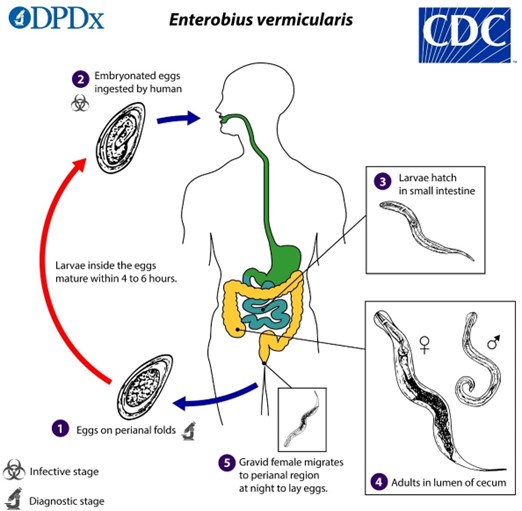
The nurse should inform the guardian that everyone who lives in the home will need medication when reinforcing teaching about enterobiasis. Enterobiasis, also known as pinworm infection, is highly contagious, and it can easily spread from person to person within the household. Treating only the affected individual may not be sufficient to eliminate the infection completely, as other household members may also be infected or at risk of reinfection.
Explanation for the other options:
a. "One dose of medication is all that will be necessary." Enterobiasis is typically treated with a medication regimen that involves taking multiple doses over a period of time. This is to ensure that all stages of the pinworm life cycle are targeted and eradicated. A single dose is usually not sufficient to eliminate the infection completely.
c. "Allow the child to take tub baths instead of showers." The choice of tub baths or showers does not directly impact the treatment or prevention of enterobiasis. Both methods of bathing can be used, but it is important to maintain good hygiene practices, such as regular handwashing and proper cleaning of the perianal area, to reduce the risk of reinfection.
d. "Wash all clothes and bed linens in cold water." While proper hygiene practices and laundering of clothes and bed linens are important in preventing the spread of enterobiasis, using cold water alone may not be sufficient. Washing clothes and bed linens in hot water (at a temperature of at least 60°C or 140°F) is recommended to kill any pinworm eggs that may be present.
Nursing Test Bank
Naxlex Comprehensive Predictor Exams
Related Questions
Correct Answer is B
Explanation
The correct answer is b. "I will apply petroleum jelly to the penis with each diaper change."
Choice A rationale:
- It is incorrect to focus on removing all yellow exudate.A small amount of yellow exudate is normal during the healing process after circumcision.Attempting to aggressively clean it off can irritate the delicate healing tissues and cause discomfort for the baby.
- Instead,parents should gently cleanse the area with warm water during diaper changes,allowing any mild exudate to naturally drain.
Choice B rationale:
- Applying petroleum jelly with each diaper change is an essential step in promoting healing and preventing discomfort after circumcision.Here's why:
- Protects against moisture:Petroleum jelly forms a barrier that protects the delicate healing tissues from moisture from urine and feces.This helps to prevent irritation and keeps the area clean.
- Reduces friction:The lubricating properties of petroleum jelly reduce friction between the penis and the diaper,which can minimize discomfort and pain for the baby.
- Promotes healing:Petroleum jelly creates a moist environment that promotes healing and reduces scab formation.This helps the circumcision site to heal faster and more comfortably.
Choice C rationale:
- While ensuring a proper diaper fit is important for overall hygiene,it's not the most crucial aspect of post-circumcision care.A snug diaper can put unnecessary pressure on the healing penis,potentially causing irritation and discomfort.It's generally recommended to choose a diaper that fits comfortably without being too tight.
Choice D rationale:
- Using soap to wash the penis is not recommended during the healing process.Soap can be harsh and drying to the delicate tissues,potentially causing irritation and delaying healing.
- Warm water is sufficient for cleansing the area during diaper changes.

Correct Answer is C
Explanation
Correct answer: C
A) Start the first patch on the seventh day of the menstrual cycle: The patch is typically applied on the first day of the menstrual cycle or the first Sunday after the menstrual period begins, not on the seventh day. This helps ensure effective contraception from the start of use.
B) The contraceptive effect will continue for 6 months following discontinuation of the medication: The contraceptive effect of the patch does not last for 6 months after discontinuation. Once the patch is removed and not replaced, hormone levels drop, and fertility can return relatively quickly, typically within a few days to weeks.
C) Apply the patch to the lower abdomen: The patch should be applied to clean, dry, and intact skin on areas such as the lower abdomen, upper outer arm, buttock, or upper torso (excluding the breasts). This location allows for consistent hormone absorption.
D) Expect to have a headache during the first month: While some individuals may experience headaches as a side effect of hormonal contraceptives, this is not an expected or guaranteed outcome. Any persistent or severe headache should be reported to the healthcare provider, as it could indicate other concerns.
Whether you are a student looking to ace your exams or a practicing nurse seeking to enhance your expertise , our nursing education contents will empower you with the confidence and competence to make a difference in the lives of patients and become a respected leader in the healthcare field.
Visit Naxlex, invest in your future and unlock endless possibilities with our unparalleled nursing education contents today