
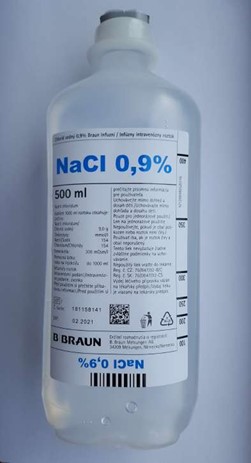
A nurse started a continuous IV infusion of 1 L of normal saline (NS) at 06:57, and the infusion is completed at 15:45. What is the flow rate of infusion in this situation?
114 mL/hr
124 mL/hr
125 mL/hr
130 mL/hr
The Correct Answer is A
The infusion was started at 06:57 and completed at 15:45, which is a total time of: 15 hours and 45 minutes - 6 hours and 57 minutes = 8 hours and 48 minutes
To calculate the flow rate, we need to know the total amount of fluid infused and divide it by the total time of infusion:
1 L = 1000 mL
Total time of infusion = 8 hours and 48 minutes = 528 minutes Flow rate = Total amount of fluid infused / Total time of infusion Flow rate = 1000 mL / 528 minutes
Flow rate = 1.89394 mL/min
To convert mL/min to mL/hr, we multiply by 60:
Flow rate = 1.89394 mL/min x 60 min/hr Flow rate = 113.6364 mL/hr
Therefore, the flow rate of infusion in this situation is approximately 114 mL/hr, which corresponds to option A.
Nursing Test Bank
Naxlex Comprehensive Predictor Exams
Related Questions
Correct Answer is A
Explanation
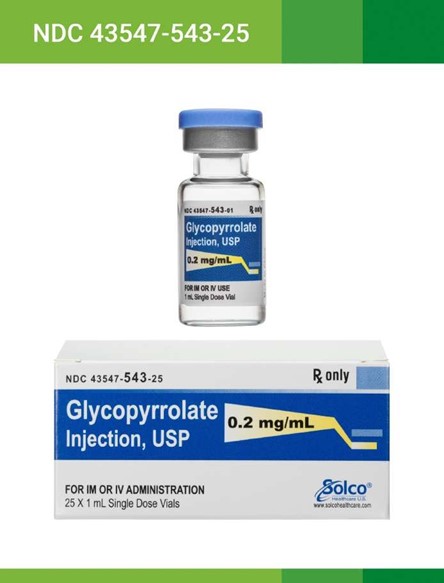
First, we need to convert the weight of the child from pounds to kilograms:. 44 lb / 2.2046 = 19.958 kg (rounded to three decimal places).
Next, we can calculate the dose of glycopyrrolate:. 0.02 mg/kg x 19.958 kg = 0.39916 mg.
We should always check our calculation and verify that the dose is appropriate and safe for the child. In this case, the dose of 0.39916 mg seems reasonable for a child with chronic severe drooling..
Now, we need to determine how much medication to administer to the child. We know that 5 mL of medication contains 1 mg of drug. Therefore, to administer 0.39916 mg of glycopyrrolate, we need to administer:
(0.39916 mg / 1 mg) x 5 mL = 1.9958 mL.
We should round this dose to the nearest appropriate unit of measure. In this case, we can round to 2 mL to make it easier to measure and administer..
Therefore, the nurse should administer 2 mL of glycopyrrolate to the child three times a day (tid) to treat chronic severe drooling.
Correct Answer is B
Explanation
To calculate the dose of digoxin in micrograms (mcg) that the child should receive, we need to first convert the weight of the child from pounds to kilograms:.
30 lb / 2.205 = 13.61 kg.
Next, we can calculate the dose of digoxin in mcg:. Dose (in mcg) = Weight (in kg) x Dose (in mcg/kg). Dose (in mcg) = 13.61 kg x 10 mcg/kg.
Dose (in mcg) = 136.1 mcg.
Now we need to calculate the volume of digoxin solution to administer. Since the concentration of the digoxin solution is 1 mg/mL, we can use proportion to calculate the volume:.
1 mg is to 1 mL as 136.1 mcg is to X mL. 1/1 = 136.1/X.
Cross-multiplying, we get:. 1X = 136.1 x 1.
X = 136.1 mL.
Therefore, the nurse should administer 0.1361 mL (136.1 mcg) of digoxin to the child.
Whether you are a student looking to ace your exams or a practicing nurse seeking to enhance your expertise , our nursing education contents will empower you with the confidence and competence to make a difference in the lives of patients and become a respected leader in the healthcare field.
Visit Naxlex, invest in your future and unlock endless possibilities with our unparalleled nursing education contents today