
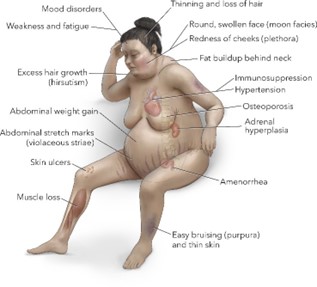
A nursing assessment of a patient with Cushing syndrome reveals that the patient has truncal obesity and thin and legs. An additional manifestation of Cushing syndrome that the nurse would expect to find is:
decreased axillary and pubic hair.
chronically low blood pressure,
bronzed appearance of the skin.
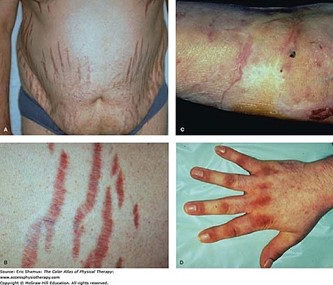
purplish red streaks on the abdomen.
The Correct Answer is D
Cushing syndrome is a hormonal disorder caused by prolonged exposure to high levels of cortisol hormone in the body. It can cause a variety of physical manifestations, including truncal obesity, thin arms, and legs, decreased axillary and pubic hair, hypertension, glucose intolerance, osteoporosis, and purple striae (stretch marks) on the abdomen.
Out of the options given, the nurse would expect to find purplish-red streaks on the abdomen as an additional manifestation of Cushing syndrome.
Nursing Test Bank
Naxlex Comprehensive Predictor Exams
Related Questions
Correct Answer is D
Explanation
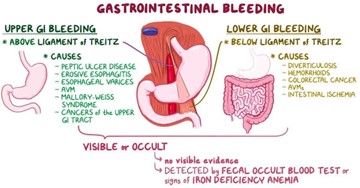
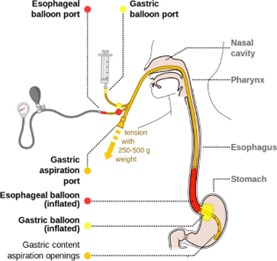
Coffee-ground material in the NG suction indicates that there is active bleeding in the upper gastrointestinal tract, which could be a life-threatening situation. This requires immediate medical attention and intervention to control the bleeding and stabilize the patient.
Options A, B, and C are also important assessment data, but they are not as urgent as option D in this scenario.
Correct Answer is A
Explanation
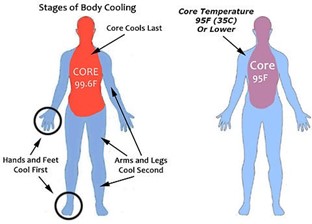
The plan of care for a patient with hypothermia and fluid volume excess would typically include measures to increase the patient's body temperature and decrease their fluid volume. Therefore, option a (fluid restriction) would be appropriate for this patient.
Options b (administration of hypotonic IV fluids) and d (administration of ion-exchange resin) would not be appropriate because they would increase the patient's fluid volume rather than decrease it.
Option c (placement of an indwelling urinary catheter) may be appropriate to closely monitor the patient's urine output, which is an important indicator of their fluid status. However, this alone would not be sufficient to manage the patient's hypothermia and fluid volume excess.
Whether you are a student looking to ace your exams or a practicing nurse seeking to enhance your expertise , our nursing education contents will empower you with the confidence and competence to make a difference in the lives of patients and become a respected leader in the healthcare field.
Visit Naxlex, invest in your future and unlock endless possibilities with our unparalleled nursing education contents today