
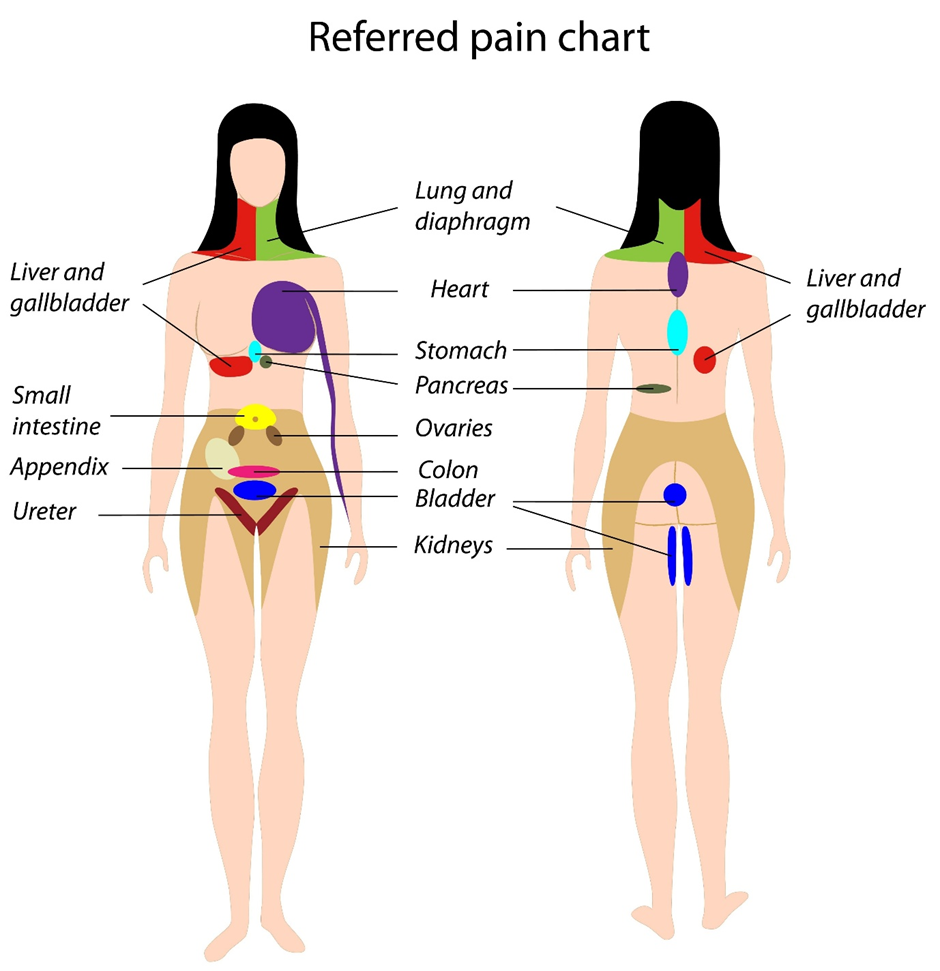
A patient reports an upper right quadrant abdominal pain that radiates to the back and shoulder. Additionally, the patient is complaining of nausea, vomiting, and heartburn.
Which disorder is described?
Hiatal hernia
Peptic ulcers
Crohn disease
Cholelithiasis
The Correct Answer is D
A. Hiatal hernia: This typically presents with substernal (chest) pain or "heartburn" when lying down, but it does not specifically localize to the URQ or radiate to the right shoulder.
B. Peptic ulcers: Pain from ulcers is usually located in the epigastric region (upper middle) and is often described as a burning sensation related to eating, rather than URQ pain radiating to the shoulder.
C. Crohn disease: This is an inflammatory bowel disease usually affecting the lower right quadrant (ileum) or the colon, presenting with diarrhea and cramping rather than upper quadrant radiating pain.
D. Cholelithiasis: Gallstones (cholelithiasis) typically cause pain in the Upper Right Quadrant. This pain often radiates to the right scapula (shoulder blade) or back-a phenomenon known as referred pain-and is commonly accompanied by nausea and vomiting.
Nursing Test Bank
Naxlex Comprehensive Predictor Exams
Related Questions
Correct Answer is C
Explanation
A. Hashimoto thyroiditis: This is an autoimmune condition that usually leads to hypothyroidism (low T3/T4), resulting in weight gain and cold intolerance, the opposite of this patient.
B. Myxedema: This is a term for severe, advanced hypothyroidism. It presents with lethargy and swelling, not tachycardia or heat intolerance.
C. Graves' disease: This is a form of hyperthyroidism. The hallmark signs include "protruding eyeballs" (exophthalmos), heat intolerance, weight loss, and elevated thyroid hormones (T3 and T4).
D. Simple goiter: This is an enlargement of the thyroid gland, often due to iodine deficiency, but it does not typically cause the systemic hyperthyroid symptoms or the eye changes seen here.
Correct Answer is B
Explanation
A. Phlebitis. Phlebitis is inflammation of a vein, typically causing localized redness and warmth, not severe abdominal/back pain.
B. Aneurysm. Specifically, this describes an abdominal aortic aneurysm (AAA). Sudden, severe back/abdominal pain in a patient with hypertension is a classic sign of an aneurysm that is enlarging or rupturing.
C. Embolus. An embolus would cause sudden lack of blood flow to a distal limb or organ (ischemia), rather than a localized dilation of a major artery.
D. Thrombus. A thrombus is the clot itself; while it can form inside an aneurysm, the "dilation" of the artery is the aneurysm.
Whether you are a student looking to ace your exams or a practicing nurse seeking to enhance your expertise , our nursing education contents will empower you with the confidence and competence to make a difference in the lives of patients and become a respected leader in the healthcare field.
Visit Naxlex, invest in your future and unlock endless possibilities with our unparalleled nursing education contents today