
A phlebotomist finds a patient who is unresponsive and not breathing. In which of the following positions should the phlebotomist place the patient before initiating CPR?
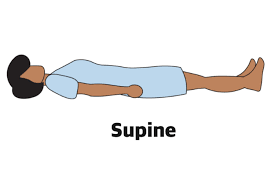
Supine
Semi-Fowler's
Prone
Side-lying
The Correct Answer is A
Choice A Reason:
The supine position, where the patient lies flat on their back with the face upward, is the correct position for initiating CPR. This position allows for proper chest compressions and airway management, which are critical components of CPR.
Choice B Reason:
The Semi-Fowler's position, where the patient is partially sitting up with the head of the bed raised to 30-45 degrees, is not suitable for CPR. This position would make it difficult to perform effective chest compressions.
Choice C Reason:
The prone position, where the patient lies flat on their stomach, is not appropriate for CPR. Chest compressions cannot be effectively delivered in this position, and it would also complicate airway management.
Choice D Reason:
The side-lying position is not appropriate for CPR. While this position can be used for an unconscious patient who is breathing normally to maintain an open airway and prevent aspiration, it is not suitable for CPR, which requires the patient to be on their back.
Nursing Test Bank
Naxlex Comprehensive Predictor Exams
Related Questions
Correct Answer is D
Explanation
Choice A reason:
Immunization schedules are not regulated by OSHA. They are typically overseen by public health agencies such as the Centers for Disease Control and Prevention (CDC) in the United States. These agencies provide guidelines on when and which vaccines should be administered to various populations.
Choice B reason:
Patient privacy is primarily regulated by the Health Insurance Portability and Accountability Act (HIPAA), not OSHA. HIPAA sets the standard for protecting sensitive patient health information from being disclosed without the patient's consent or knowledge.
Choice C reason:
The accuracy of laboratory results falls under the purview of the Clinical Laboratory Improvement Amendments (CLIA), which are federal regulatory standards that apply to all clinical laboratory testing performed on humans in the United States, except for clinical trials and basic research.
Choice D reason:
Universal precautions are indeed regulated by OSHA. These are a set of infection control practices used to prevent transmission of diseases that can be acquired by contact with blood, body fluids, non-intact skin (including rashes), and mucous membranes. These precautions are designed to protect workers from exposure to diseases spread by blood and certain body fluids.
Correct Answer is A
Explanation
Choice A reason:
The lateral section of the plantar heel is the recommended site for capillary blood collection in infants, particularly those under 6 months of age. This area is preferred because it is sufficiently vascularized for blood collection and poses less risk of injury to bones and nerves compared to other areas.
Choice B reason:
The central area of the heel is not recommended for capillary blood collection in infants due to the higher risk of injury to the calcaneus (heel bone) and potential for calcaneal osteomyelitis, an infection of the bone.
Choice C reason:
The posterior curvature of the heel is also not an appropriate site for capillary blood collection in infants. This area has a higher likelihood of causing pain and injury, as well as being less accessible for a proper puncture technique.
Choice D reason:
The palmer surface of the distal phalanx (fingertip) is not a recommended site for capillary blood collection in infants under 1 year of age. The fingertips of infants are small and more prone to injury, and the procedure may be more painful compared to a heel stick.
Whether you are a student looking to ace your exams or a practicing nurse seeking to enhance your expertise , our nursing education contents will empower you with the confidence and competence to make a difference in the lives of patients and become a respected leader in the healthcare field.
Visit Naxlex, invest in your future and unlock endless possibilities with our unparalleled nursing education contents today