
An older client comes to the clinic with a family member. When the nurse attempts to take the client's health history, the client does not respond to questions in a clear manner. Which action should the nurse implement first?
Provide a printed health care assessment form.
Defer the health history until the client is less anxious.
Ask the family member to answer the questions.
Assess the surroundings for noise and distractions.
The Correct Answer is D
The ability to effectively communicate and provide accurate information can be impacted by external factors such as noise, distractions, or an unfamiliar environment. By assessing the surroundings, the nurse can identify and address any potential barriers to communication.
Once the nurse has addressed any environmental factors that may be hindering communication, they can proceed with other strategies to facilitate the health history assessment. This may include providing a printed healthcare assessment form to assist the client in organizing their thoughts or deferring the assessment until the client is less anxious.
Asking the family member to answer the questions should be considered if the client is unable to provide accurate information or is cognitively impaired. However, it is important to first address any environmental factors and attempt to engage the client directly in the assessment process.
Nursing Test Bank
Naxlex Comprehensive Predictor Exams
Related Questions
Correct Answer is {"A":{"answers":"A"},"B":{"answers":"B"},"C":{"answers":"B"},"D":{"answers":"A,B"},"E":{"answers":"B"}}
Explanation
Course breath sounds - Respiratory Distress
Decreased level of consciousness - Cerebral Edema
Seizure activity - Cerebral Edema
Irritability - Both (Can be associated with both cerebral edema and respiratory distress)
Bradycardia - Cerebral Edema
Rationale:
Course breath sounds - Respiratory Distress
Course breath sounds could indicate the presence of secretions or fluid in the airways, which is a sign of respiratory distress. It suggests that there might be a problem with the airway or lung function.
Decreased level of consciousness - Cerebral Edema
A decreased level of consciousness can be a sign of cerebral edema, which is the swelling of the brain due to increased intracranial pressure. This can lead to changes in the child's mental status and responsiveness.
Seizure activity - Cerebral Edema
Seizure activity can be a manifestation of cerebral edema. Swelling and pressure in the brain can irritate brain tissue and lead to seizures.
Irritability - Both (Can be associated with both cerebral edema and respiratory distress) Irritability can be seen in both cerebral edema and respiratory distress. In cerebral edema, the pressure on the brain can cause discomfort and irritability. In respiratory distress, the child may be uncomfortable due to difficulty breathing.
Bradycardia - Cerebral Edema
Bradycardia (slow heart rate) can be associated with increased intracranial pressure and cerebral edema. It can be a response to the pressure on the brain.
Correct Answer is D
Explanation
A) Incorrect- Observing for swelling at the fracture site is important for assessing the client's musculoskeletal condition, but it is not the priority intervention in this situation. The absence of spontaneous respirations and palpable carotid pulse indicates cardiac arrest, and immediate intervention is needed.
B) Incorrect- Analyzing the cardiac rhythm in another lead is not the first priority when the client is in cardiac arrest. Cardiopulmonary resuscitation (CPR) should be initiated immediately to restore circulation.
C) Incorrect- Obtaining a 12-lead electrocardiogram is not the initial intervention in a client in cardiac arrest. CPR and defibrillation (if indicated) are the immediate actions to provide circulation and oxygenation to the vital organs.
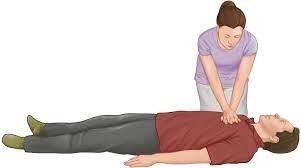
D) Correct- The absence of spontaneous respirations and palpable carotid pulse indicates cardiac arrest. In this situation, immediate initiation of cardiopulmonary resuscitation (CPR) is critical to provide circulation and oxygenation to the vital organs. Chest compressions are the initial step to address cardiac arrest and ensure blood flow to the body.
Whether you are a student looking to ace your exams or a practicing nurse seeking to enhance your expertise , our nursing education contents will empower you with the confidence and competence to make a difference in the lives of patients and become a respected leader in the healthcare field.
Visit Naxlex, invest in your future and unlock endless possibilities with our unparalleled nursing education contents today